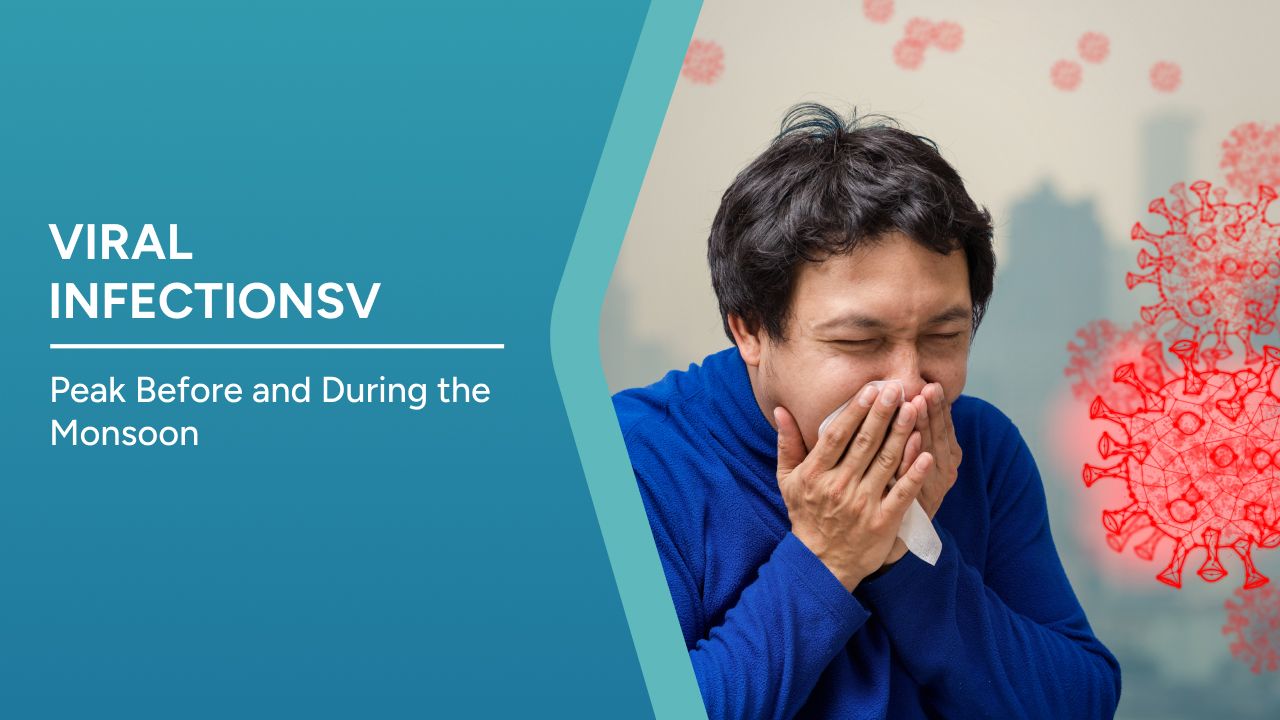
Why Viral Infections Often Peak Before and During the Monsoon
By Dr. Harshad Limaye in Internal Medicine
Aug 05 , 2026 | 3 min read

Every year, as the weather begins to change and the first spells of rain arrive, many families notice a familiar pattern: fever, cough, cold, body aches, stomach infections, dengue-like illness, and viral fever cases begin to rise. This is not a coincidence. The period before and during the monsoon creates the perfect environment for many infections to spread faster.
How Weather Changes Support the Spread of Viruses
Before the monsoon fully sets in, humidity starts increasing, and temperatures remain warm. This combination helps certain viruses survive longer and spread more easily.
People also tend to spend more time indoors when the weather becomes cloudy, humid or rainy. Closed rooms, crowded public transport, schools, offices, and homes make it easier for respiratory viruses such as flu-like illnesses to pass from one person to another through:
- Coughing
- Sneezing
- Close personal contact
Mosquito-Borne Viral Infections During the Monsoon
The monsoon also changes our surroundings. Rainwater collects in flowerpots, tyres, terraces, construction sites, drains, and uncovered containers. These small pockets of stagnant water become breeding places for mosquitoes.
This is why viral infections spread by mosquitoes, such as dengue and chikungunya, often rise during and shortly after rainy periods. The rise may not be immediate. Mosquitoes need a few days to breed, and symptoms appear only after the infection develops in the body. This delay is why cases often peak after repeated spells of rain.
Read More about the Monsoon Health Tips For Mumbaikars
Water Contamination and Seasonal Viral Illnesses
Water contamination is another major concern. Heavy rainfall and flooding can disturb drainage systems and allow sewage to mix with drinking water sources.
When water is not stored or treated safely, viruses that spread through contaminated water can cause outbreaks of jaundice-like illnesses, especially hepatitis A and E.
Common Symptoms May Include:
- Fever
- Weakness
- Nausea
- Abdominal discomfort
- Yellowing of the eyes
- Dark urine
Why Respiratory Infections Become More Common
Respiratory infections also become common during this season. High humidity, damp walls, poor ventilation, and indoor crowding can increase cough, cold, and flu-like illnesses.
People Who Need Extra Care During the Monsoon
The following groups may be more vulnerable to seasonal infections:
- Children
- Elderly individuals
- Pregnant women
- People with diabetes
- Individuals with asthma
- People with heart disease
- Individuals with kidney disease
- People with weakened immunity
For these individuals, even a seemingly simple viral illness can become more troublesome.
Preventing Viral Infections During the Monsoon
The most important message is that monsoon infections are preventable to a large extent.
Simple Steps to Reduce Your Risk
- Do not allow water to collect around the house
- Keep water containers covered
- Use mosquito protection, especially during the day, for dengue prevention
- Drink boiled or filtered water
- Avoid roadside food during heavy rains
- Wash hands frequently, especially before eating
- Keep rooms well ventilated
- Avoid sending children to school when they have a fever
When Should You Seek Medical Advice?
One should seek medical advice if fever:
- Lasts more than two days
- Is associated with a rash
- Causes severe body ache
- Is accompanied by breathlessness
- Leads to repeated vomiting
- Causes reduced urination
- Results in drowsiness
- Is associated with bleeding
- Causes yellowing of the eyes
- Leads to worsening weakness
Timely diagnosis helps prevent complications and protects others in the family.
Conclusion
The monsoon brings relief from the heat, but it also demands caution. Changes in weather, mosquito breeding, water contamination, and indoor crowding can all contribute to a rise in viral infections. A few simple preventive habits before and during the rains can go a long way in reducing the risk of seasonal illnesses and keeping families healthy.
Frequently Asked Questions
1. Why do viral infections increase during the monsoon?
Viral infections become more common during the monsoon because increased humidity, indoor crowding, stagnant water, and contaminated water sources create ideal conditions for viruses and disease-carrying mosquitoes to spread.
2. Which viral infections are common during the monsoon season?
Common viral infections during the monsoon include viral fever, influenza (flu), dengue, chikungunya, and hepatitis A and E, caused by contaminated food or water.
3. How can I prevent viral infections during the monsoon?
You can reduce your risk by preventing water stagnation, using mosquito repellents, drinking clean filtered or boiled water, maintaining hand hygiene, eating freshly prepared food, and keeping indoor spaces well ventilated.
4. What are the early symptoms of a viral infection during the rainy season?
Early symptoms may include fever, cough, sore throat, body aches, fatigue, headache, nausea, abdominal discomfort, and, in some cases, skin rash or vomiting, depending on the infection.

Written and Verified by:

Related Blogs

Medical Expert Team
Oct 06 , 2026 | 8 min read

Medical Expert Team
Oct 06 , 2026 | 9 min read

Blogs by Doctor

Chickenpox Home Care Tips: How to Relieve Itching and Fever Safely
Dr. Harshad Limaye In Internal Medicine
Oct 06 , 2026 | 4 min read

Chicken Pox Symptoms and Causes: What You Need to Know
Dr. Harshad Limaye In Internal Medicine
Oct 06 , 2026 | 6 min read

Cholera in Children: Symptoms Parents Should Never Ignore
Dr. Harshad Limaye In Internal Medicine
Oct 06 , 2026 | 4 min read
Most read Blogs



Related Blogs
Medical Expert Team
Oct 06 , 2026 | 8 min read
Medical Expert Team
Oct 06 , 2026 | 9 min read
Blogs by Doctor
Chickenpox Home Care Tips: How to Relieve Itching and Fever Safely
Dr. Harshad Limaye In Internal Medicine
Oct 06 , 2026 | 4 min read
Chicken Pox Symptoms and Causes: What You Need to Know
Dr. Harshad Limaye In Internal Medicine
Oct 06 , 2026 | 6 min read
Cholera in Children: Symptoms Parents Should Never Ignore
Dr. Harshad Limaye In Internal Medicine
Oct 06 , 2026 | 4 min read
Most read Blogs