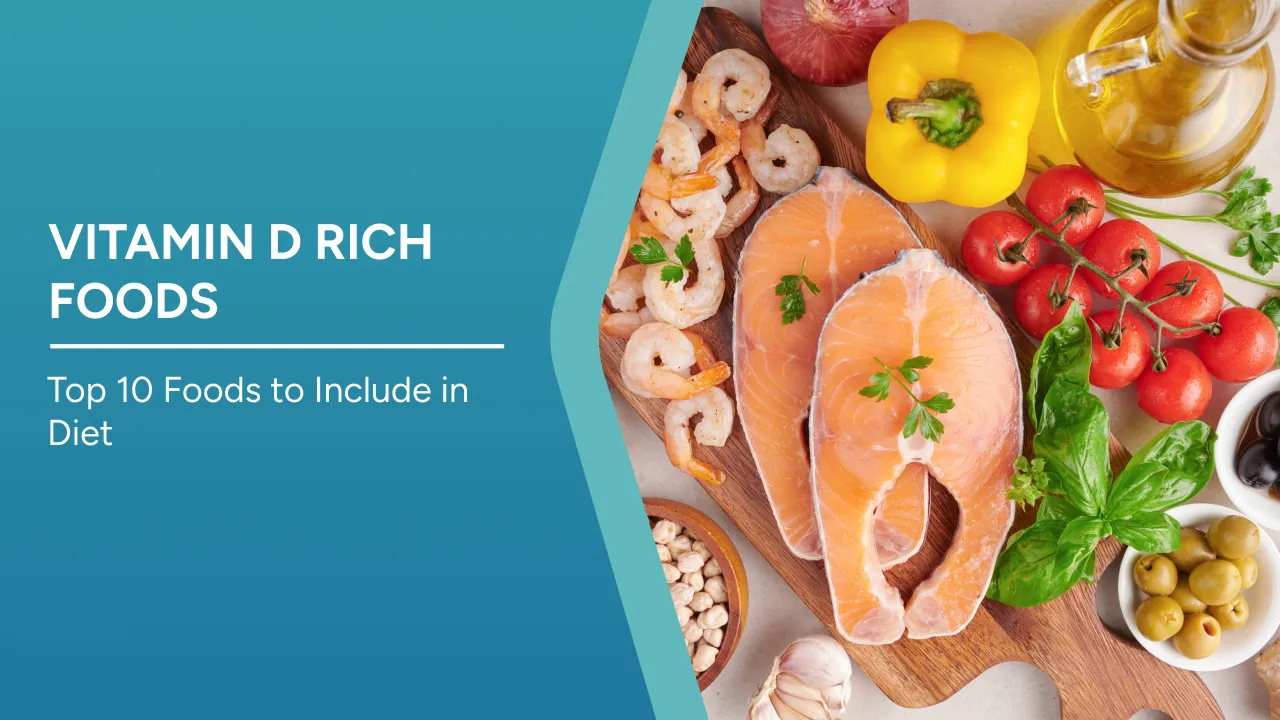
Top 10 Vitamin D Foods You Can Include in Your Daily Diet
By Dr. Girish Parmar in Internal Medicine
Aug 19 , 2026 | 9 min read

Vitamin D - the "sunshine vitamin" - plays a vital role in bone strength, immunity, muscle function, and even mood regulation. Despite India getting abundant sunlight, an estimated 70–90% of Indians are deficient in vitamin D. The reasons? Indoor lifestyles, air pollution, sunscreen use, darker skin tones (which need more sun exposure), traditional clothing that covers most of the skin, and diets low in vitamin D-rich foods.
A balanced intake of foods with vitamin D supports bone health, muscle function, immune function, and overall well-being. Nutrition is an important part of preventive healthcare, making it essential to understand how dietary choices can impact vitamin D levels. This guide walks you through the top 10 vitamin D-rich foods - including options for both vegetarians and non-vegetarians in Indian diets - how much vitamin D each provides, and how to absorb the most from what you eat.
Why Vitamin D Matters
The Essential Role of Vitamin D Foods in Your Health
Beyond Bone Health
While vitamin D is widely known for supporting bone density by aiding calcium absorption, its benefits extend beyond this. It contributes to immune system regulation and plays a role in muscle function and strength. Regular consumption of foods rich in vitamin D can help support these functions.
Countering Seasonal Deficiencies
During winter or when sunlight exposure is limited, vitamin D levels may decline. In such situations, dietary intake becomes important. Including vitamin D-rich foods in your diet can help support adequate levels throughout the year.
Natural vs Fortified Sources
Vitamin D can be obtained through both natural and fortified foods. Natural sources include fatty fish and egg yolks, while fortified foods such as milk and cereals may be enriched with vitamin D. Understanding this distinction helps individuals diversify their intake effectively.
Read More about the Eating Habits: Benefits and Tips for a Balanced Diet
How Much Vitamin D Do You Need?
Vitamin D requirements vary by age. India's ICMR guidelines and global recommendations broadly agree on these values.
|
Age Group |
Daily Requirement (IU) |
Daily Requirement (mcg) |
|---|---|---|
|
Infants (0–12 months) |
400 IU |
10 mcg |
|
Children (1–18 years) |
600 IU |
15 mcg |
|
Adults (19–70 years) |
600 IU |
15 mcg |
|
Adults (over 70) |
800 IU |
20 mcg |
|
Pregnant / breastfeeding women |
600 IU |
15 mcg |
|
People with deficiency (under medical supervision) |
1,000–4,000 IU |
25–100 mcg |
Note: 1 microgram (mcg) = 40 IU. Blood levels should ideally be 30–50 ng/mL. Above 100 ng/mL is potentially toxic. Get your vitamin D level tested every 6–12 months if you're at risk.
Top 10 Vitamin D Foods to Add to Your Diet
Fatty Fish
Vitamin D: 270–1,000 IU per 100 g
Fatty fish such as hilsa, mackerel (bangda), sardines, tuna, and salmon can provide vitamin D along with healthy fats. The exact amount may vary depending on the type of fish and how it is sourced. Fatty fish are the richest natural source of vitamin D3.
Cod Liver Oil
Vitamin D: 1,360 IU per tablespoon
Cod liver oil provides a concentrated source of vitamin D and vitamin A. Even small amounts can significantly boost vitamin D intake. However, it should be used only in appropriate amounts and preferably after medical advice, especially in children, pregnant women, or people taking supplements.
Egg Yolks
Vitamin D: 40 IU per yolk
Egg yolks contain moderate levels of vitamin D and are one of the most accessible and affordable sources in many Indian households.
UV-Exposed Mushrooms
Vitamin D: 300–450 IU per 100 g
Mushrooms are one of the few plant-based natural sources of vitamin D - but only if they've been exposed to UV light. They are versatile and can be added to various dishes.
Fortified Milk
Vitamin D: 100–120 IU per 250 ml
Some dairy and plant-based milk options are fortified with vitamin D. Checking the nutrition label can help confirm whether the product contains added vitamin D.
Fortified Lassi/Dahi and Paneer
Vitamin D: 40–80 IU per cup / 100 g
Fortified curd or lassi (chaas) can fit easily into daily Indian meals and may help improve vitamin D intake if the product is specifically fortified.
Fortified Breakfast Cereals
Many breakfast cereals - cornflakes, muesli, oat-based - are fortified with vitamin D. Paired with fortified milk, this can be a simple 200 IU vitamin D breakfast. Choose low-sugar varieties. Traditional Indian breakfasts like poha, idli, or paratha don't naturally contain vitamin D, but pairing them with fortified milk boosts intake.
Fortified Edible Oils
Vitamin D: 40–50 IU per teaspoon
Some packaged edible oils in India may be fortified with vitamins A and D. Since oil is used in many Indian dishes, fortified oil can contribute to regular intake when used in recommended amounts. Consumers should check the label or fortification logo "F+" to confirm whether the oil is fortified.
Tofu (Fortified)
Vitamin D: 100–120 IU per 100 g
Fortified tofu is a great option for vegetarians and vegans. It's a good source of protein and calcium too, making it a nutritional double-win. Regular, unfortified tofu has minimal vitamin D - always check the label.
Fortified Orange Juice and Plant Milks
Vitamin D: 100–140 IU per 250 ml
Some brands of orange juice, soya milk, almond milk, and oat milk are fortified with vitamin D. A great option for children who don't drink dairy or people with lactose intolerance. Look for "vitamin D added" on the label.
Learn More about the Indian Weight Gain Diet Plan & Chart
How to Absorb More Vitamin D from Your Food
The Importance of Dietary Fats
Vitamin D is fat-soluble, meaning it is better absorbed when consumed with foods that contain fat. Pairing vitamin D foods with sources such as nuts, seeds, dairy products, eggs, avocado, or healthy oils can help improve absorption.
Magnesium: The Silent Partner
Magnesium plays a role in vitamin D metabolism. Including magnesium-rich foods such as nuts, seeds, whole grains, legumes, and leafy greens can support overall nutrient balance.
Cooking Tips
Vitamin D is relatively stable during most cooking methods, though prolonged high-heat cooking may reduce nutrient content in some foods. Gentle cooking methods such as steaming, grilling, baking, or light sautéing can help preserve nutrients.
Best Vitamin D Sources for Vegetarians in India
Since most naturally rich sources of vitamin D come from animal products, vegetarians need to be extra mindful. Here's your practical guide:
The Best Vegetarian Sources
- UV-exposed mushrooms: The only significant plant-based natural source - 300–450 IU per 100 g.
- Fortified dairy: Fortified milk, curd, lassi, paneer - 40–120 IU per serving.
- Fortified plant milks: Soya, almond, oat milk - 100–140 IU per glass.
- Egg yolks (for lacto-ovo vegetarians): 40 IU per yolk.
- Fortified breakfast cereals: 40–100 IU per serving.
- Fortified edible oils: Small but consistent amounts across the day.
- Fortified tofu: 100–120 IU per 100 g.
A Practical Vegetarian Day (Approximate Vitamin D)
|
Meal |
Foods |
Approx Vitamin D |
|---|---|---|
|
Breakfast |
Fortified milk (250 ml) + fortified cereal (30 g) |
180–220 IU |
|
Lunch |
Fortified paneer sabzi with roti cooked in fortified oil |
80–100 IU |
|
Snack |
Fortified lassi + handful of nuts |
80 IU |
|
Dinner |
UV-mushroom curry with roti + fortified curd |
300–400 IU |
Are You Getting Enough Vitamin D Foods?
Vitamin D deficiency can often go unnoticed. Possible symptoms may include fatigue, bone discomfort, muscle weakness, and slower recovery from illness or injury. Individuals with darker skin tones, older adults, people with limited sun exposure, those following restrictive diets, and people with absorption-related conditions may be at higher risk.
Healthcare professionals at Nanavati Max Super Speciality Hospital often highlight the importance of early detection and dietary correction to prevent long-term complications associated with low vitamin D levels.
Sample Daily Menu Featuring Vitamin D Foods
Incorporating vitamin D foods into your daily routine does not require drastic changes. Here is a simple meal plan:
Non-Vegetarian Day (Approx 800–1,000 IU)
- Breakfast: Poha or idli with a glass of fortified milk (120 IU) + 2 boiled eggs (80 IU)
- Lunch: Fish curry (bangda or surmai) with roti and sabzi (360–500 IU)
- Snack: Fortified lassi (80 IU) with nuts
- Dinner: Grilled fish or egg curry with roti and green salad (200–300 IU)
Vegetarian Day (Approx 500–700 IU)
- Breakfast: Fortified cereal with fortified milk (200 IU)
- Lunch: Paneer or tofu sabzi with roti cooked in fortified oil (150 IU)
- Snack: Fortified curd or lassi with nuts (80 IU)
- Dinner: UV-mushroom curry with roti + salad (300 IU)
Consistency matters more than perfection. Even hitting 400–600 IU daily from food, combined with regular sunlight, is enough for most people to stay above the deficiency threshold.
Read More about the Detox Diet: Science, Myths, Benefits & Risks Explained
How Much Vitamin D Is Too Much?
While vitamin D is essential, excessive intake can lead to toxicity, particularly from high-dose supplements rather than food sources. The recommended intake varies by age, health condition, blood levels, and medical needs. Most individuals should avoid taking high-dose vitamin D supplements without medical supervision.
Signs You May Be Vitamin D Deficient
Vitamin D deficiency often goes unnoticed because symptoms build slowly. Watch for these signs:
- Persistent tiredness and low energy - not explained by sleep or workload
- Bone or joint pain - especially in the back, hips, or legs
- Muscle weakness or cramps
- Frequent infections, colds, or slow recovery from illness
- Hair loss or thinning
- Low mood or depressive symptoms - especially in winter
- Slow wound healing
- Bone loss/osteoporosis in older adults
Disclaimer: The information provided in this blog is for educational purposes only and should not be considered a substitute for professional medical advice, diagnosis, or treatment. Always seek the advice of your physician or other qualified health provider with any questions you may have regarding a medical condition.
Conclusion
Incorporating foods rich in vitamin D into your daily diet is an effective way to support overall health. From fatty fish and egg yolks to fortified milk and dairy products, there are practical options suited to Indian diets.
Small, consistent changes can lead to better long-term benefits. By prioritising vitamin D-rich foods, safe sun exposure, and supplementation only when medically advised, you can support bone health, muscle function, immune function, and overall wellbeing. If you suspect vitamin D deficiency or are experiencing related symptoms, Nanavati Max Hospital provides expert consultation and diagnostic testing to assess and manage your vitamin D levels. Book an appointment today!
Frequently Asked Questions
1. Can I get enough vitamin D from food alone?
Food can contribute to vitamin D intake, but it may not be enough for everyone because only a limited number of foods naturally contain vitamin D. Many people need a combination of safe sun exposure, vitamin D-rich foods, fortified foods, and supplements when advised by a doctor.
2. Are vegetarian sources of vitamin D effective?
Yes, options such as UV-exposed mushrooms and fortified foods can be useful sources of vitamin D for vegetarians. However, intake may still be limited, so testing and medical guidance may be needed for people at risk of deficiency.
3. How often should I consume vitamin D-rich foods?
Including vitamin D-rich or fortified foods regularly in your meals can help maintain more consistent levels. The exact requirement depends on age, lifestyle, sun exposure, diet, and existing vitamin D levels.
4. Is fortified food as good as natural sources?
Both can be useful. Natural sources provide vitamin D along with other nutrients, while fortified foods help fill gaps when intake or sunlight is limited. Checking food labels can help confirm the amount of vitamin D added.
5. When should I consider supplements?
Supplements should be considered when dietary intake and sun exposure are insufficient, or when a deficiency has been diagnosed. They should be taken under medical guidance to avoid excessive intake or toxicity.
6. What are the symptoms of vitamin D deficiency in adults?
Common symptoms include persistent tiredness, bone or joint pain, muscle weakness or cramps, low mood, frequent infections, hair loss, and slow wound healing. Many people have no symptoms at all - the only reliable way to confirm deficiency is a 25(OH)D blood test.
7. Which doctor should I consult for vitamin D deficiency?
Start with a general physician or family doctor for a 25(OH)D blood test and initial guidance. If your deficiency is severe or linked to hormonal or bone-metabolism issues, an endocrinologist can guide long-term management.
References
1. Vitamin D - Health Professional Fact Sheet https://ods.od.nih.gov/factsheets/VitaminD-HealthProfessional/
2. Which foods are high in vitamin D? https://www.bhf.org.uk/informationsupport/heart-matters-magazine/nutrition/ask-the-expert/foods-high-in-vitamin-d
3. NHS UK https://www.nhs.uk/conditions/vitamins-and-minerals/vitamin-d/

Written and Verified by:

Related Blogs
Dr. Hemalata Arora In Internal Medicine
Oct 21 , 2026 | 4 min read

Medical Expert Team
Oct 06 , 2026 | 8 min read

Medical Expert Team
Oct 06 , 2026 | 9 min read
Blogs by Doctor
Insulin Resistance: Early Signs, Risks, and Testing Guidelines
Dr. Girish Parmar In Endocrinology
Sep 10 , 2026 | 8 min read
Sources of Vitamin D: Natural Ways to Boost Your Levels
Dr. Girish Parmar In Internal Medicine
Aug 12 , 2026 | 6 min read

Hypothyroidism (Underactive Thyroid): Symptoms, Causes, Types and Diet to Follow
Dr. Girish Parmar In Endocrinology
Aug 05 , 2026 | 7 min read
Most read Blogs



Related Blogs
Dr. Hemalata Arora In Internal Medicine
Oct 21 , 2026 | 4 min read
Medical Expert Team
Oct 06 , 2026 | 8 min read
Medical Expert Team
Oct 06 , 2026 | 9 min read
Blogs by Doctor
Insulin Resistance: Early Signs, Risks, and Testing Guidelines
Dr. Girish Parmar In Endocrinology
Sep 10 , 2026 | 8 min read
Sources of Vitamin D: Natural Ways to Boost Your Levels
Dr. Girish Parmar In Internal Medicine
Aug 12 , 2026 | 6 min read
Hypothyroidism (Underactive Thyroid): Symptoms, Causes, Types and Diet to Follow
Dr. Girish Parmar In Endocrinology
Aug 05 , 2026 | 7 min read
Most read Blogs