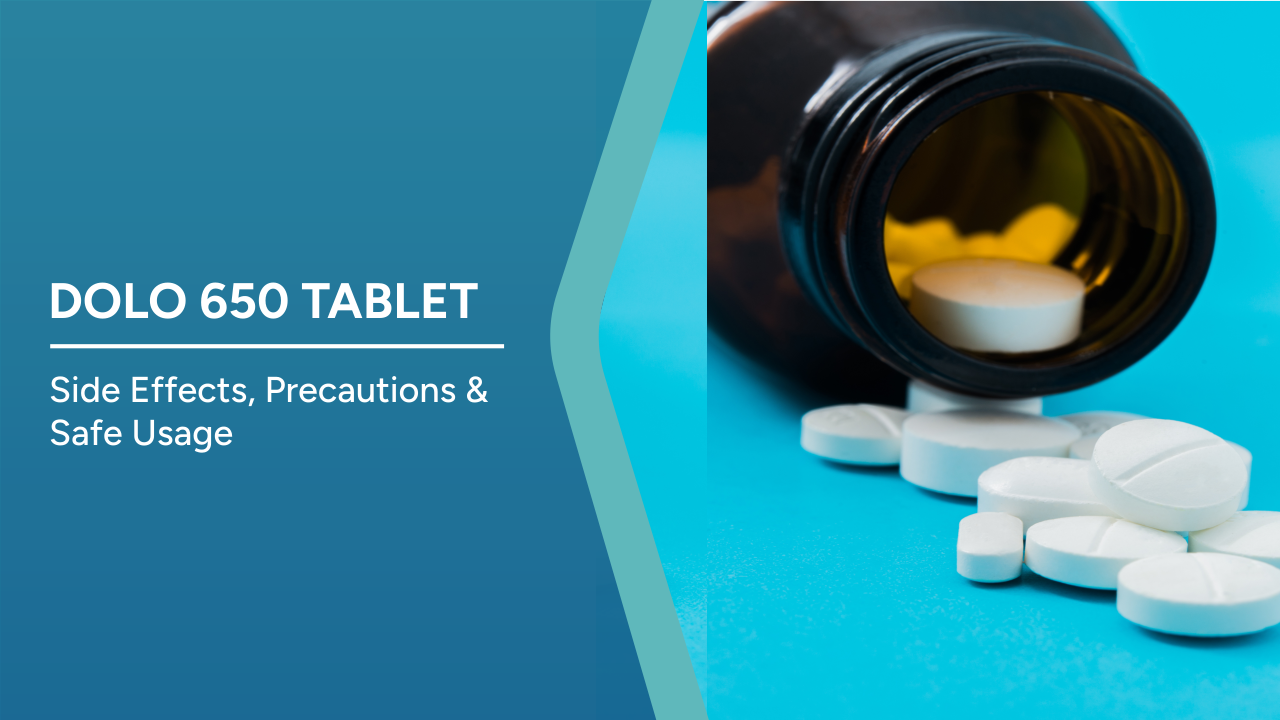
Dolo 650 Tablet: Side Effects, Precautions, and Safe Usage Guide
By Dr. Nitin Rathod in Internal Medicine
Aug 12 , 2026 | 6 min read

Fever, body pain, and headaches are among the most common health concerns people experience. One of the most widely used and over-the-counter (OTC) available medicines for these symptoms is Dolo 650 Tablet.
It offers quick and effective relief from such symptoms. While this medicine is generally considered safe when taken correctly, understanding its side effects, precautions, and proper usage is essential for avoiding health complications.
What is Dolo 650 Tablet?
Dolo 650 Tablet is a Non-steroidal anti-inflammatory drug (NSAID) that contains paracetamol 650 mg, also known as acetaminophen. It is mainly used to reduce fever and relieve mild to moderate pain.
Paracetamol within the tablet blocks the production of prostaglandins, which are substances linked to pain and inflammation. It also acts on the temperature-regulating centre in the brain to reduce fever.
Common Uses of Dolo 650 Tablet
Doctors may recommend Dolo 650 for:
- Fever management
- Headaches
- Muscle pain
- Joint pain
- Cold and flu symptoms
- Toothache
- Mild body aches
Side Effects of Dolo 650
Although most people tolerate Dolo 650 Tablet well, some may experience mild side effects.
Common Side Effects (Occur in 1-5% of Users)
Gastrointestinal:
- Nausea
- Vomiting
- Stomach discomfort
- Indigestion
- Loss of appetite
Neurological:
- Mild headache (ironic side effect)
- Mild dizziness
- Fatigue
Other:
- Mild allergic reaction (rash, itching)
- Sweating
Management: Usually resolves within hours of stopping. Take with food if stomach is bothered. Stay hydrated.
Moderate Side Effects (Contact Doctor)
- Persistent nausea or vomiting
- Moderate stomach pain
- Moderate rash or itching
- Unusual bruising
- Persistent fatigue
- Mild abdominal pain
People with existing liver disease are at a significantly higher risk.
Serious Side Effects (STOP & Seek Emergency Care)
Liver Damage Emergency:
- Yellowing of skin or eyes (jaundice)
- Dark/tea-colored urine
- Pale stools
- Severe right upper abdominal pain
- Persistent nausea/vomiting
- Abdominal swelling
- Confusion or altered mental status
Allergic Reaction:
- Severe rash or blistering
- Facial/throat swelling
- Difficulty breathing
- Anaphylaxis symptoms
Other Emergencies:
- Severe abdominal pain
- Fainting
- Seizures
At Nanavati Max Super Speciality Hospital, emergency specialists advise patients not to ignore symptoms that develop after medication intake.
How to Take Dolo 650 Correctly
- Swallow whole tablet with water (don't crush/chew)
- Take with or without food (but food may be safer if stomach-sensitive)
- Maintain 4-6 hour minimum spacing between doses
- Never take more than 1 tablet per dose (unless specifically advised)
- Keep track of doses to avoid accidental overdose
- Check all other medications for hidden paracetamol
- Never combine with other paracetamol products
If You Miss a Dose
- Take as soon as you remember
- Skip if almost time for next scheduled dose
- Do NOT double-dose
- Continue regular schedule from next scheduled time
- Never "make up" for missed doses
Precautions Before Taking Dolo 650
Following certain precautions can help reduce the risk of complications.
Pre-Existing Medical Conditions
Patients with the following conditions should consult a doctor before using Dolo 650 Tablet:
- Liver disorders
- Kidney disorders
- Chronic alcohol use
- Malnutrition
- Asthma
Dose adjustments may be necessary depending on overall health status.
Use in Pregnancy and Breastfeeding
Paracetamol is generally considered safe during pregnancy when taken in recommended doses. However, self-medication should be avoided.
Breastfeeding mothers should also use the medicine only under medical supervision.
Alcohol Consumption and Dolo 650 Tablet
Combining alcohol with Dolo 650 Tablet increases the risk of liver damage. Individuals who consume alcohol regularly should be especially cautious.
Drug Interactions to Be Aware of
Dolo 650 Tablet may interact with certain medications, including:
- Blood thinners
- Anti-seizure medicines
- Tuberculosis medications
- Other paracetamol-containing drugs
Always inform your doctor about all medicines and supplements you are taking.
Who Should Avoid the Dolo 650 Tablet?
Although suitable for many individuals, certain groups should avoid or limit its use.
People with Liver Disorders
Patients with liver disease are more vulnerable to paracetamol toxicity and should only take this medicine under strict medical supervision.
Individuals Allergic to Paracetamol
Anyone with a known allergy to paracetamol should avoid Dolo 650 Tablet completely.
Children and Elderly Precautions
Children require age-appropriate doses, while elderly patients may need careful monitoring due to reduced liver and kidney function.
Tips to Minimise Side Effects of Dolo 650 Tablet
Safe usage practices can significantly reduce side effects.
Following Correct Dosage
Always follow the dosage prescribed by your doctor. Exceeding the daily recommended limit can be dangerous.
Adults are generally advised not to exceed 3,000 to 4,000 mg of paracetamol per day unless directed otherwise by a healthcare professional. For Dolo 650, this means a strict maximum of 6 tablets in 24 hours, with a gap of at least 4 to 6 hours between doses.
Avoiding Combination with Other Paracetamol Drugs
Many cold and flu medications already contain paracetamol. Taking multiple medicines together can accidentally lead to an overdose.
Always check medicine labels carefully.
Consulting a Doctor Before Long-Term Use
If symptoms persist for several days, seek medical advice instead of continuing self-medication.
Long-term use without supervision may mask underlying health conditions.
Dolo 650 Tablet vs Other Pain Relievers
Understanding how Dolo 650 Tablet compares with other medicines can help patients make informed choices.
Dolo 650 Tablet vs Regular Paracetamol
The primary difference is dosage strength. Dolo 650 Tablet contains 650 mg of paracetamol, whereas standard paracetamol tablets often contain 500 mg.
Higher strength may provide longer-lasting relief for some individuals.
Dolo 650 Tablet vs Ibuprofen
Ibuprofen belongs to a different class of medicines called non-steroidal anti-inflammatory drugs.
Unlike paracetamol, ibuprofen helps reduce inflammation but may irritate the stomach and increase the risk of gastric ulcers in some people.
Paracetamol is often preferred for people with sensitive stomachs.
Which Option is Safer?
The safer option depends on individual medical history, symptoms, and existing health conditions. Consulting a healthcare provider is always the best approach.
Storage and Handling
Storage Conditions:
- Cool, dry place (15-30°C)
- Away from direct sunlight
- Keep in original blister/bottle
- NOT in bathroom (humidity damages tablets)
Shelf Life:
- Check expiration date
- Don't use expired tablets
- Once opened, use within 2-3 months for best stability
Safe Disposal:
- Return to pharmacy for disposal
- Don't flush down toilet
- Don't throw in regular trash
Final Thoughts
Dolo 650 Tablet is commonly used to manage fever and pain effectively when taken according to medical advice. Although side effects are usually mild, overdose or improper use may lead to serious complications, particularly liver damage. Patients should follow the prescribed dosage, avoid combining multiple paracetamol-containing medicines, and limit alcohol consumption during treatment. Medical consultation is important if fever persists, pain worsens, side effects occur, or concerns arise about liver or kidney health. Specialists at Nanavati Max Super Speciality Hospital always provide guidance on safe medication use.
Disclaimer: This article is for informational purposes only and is NOT a substitute for professional medical advice. Always consult your doctor, pharmacist, or healthcare provider before starting, stopping, or changing any medication. Individual responses to medications vary; your healthcare provider can personalize recommendations based on your health status.
Frequently Asked Questions
1. Is Dolo 650 Tablet Safe for Daily Use?
Occasional use is generally safe. However, daily or long-term use should only occur under medical supervision.
2. How Long Can You Take the Dolo 650 Tablet?
It should not be used continuously for extended periods without consulting a doctor.
3. Can Dolo 650 Tablet Cause Drowsiness?
Drowsiness is not a common side effect, but some individuals may feel tired or weak after taking the medicine.
4. Is It Safe to Take a Dolo 650 Tablet for Fever?
Yes, Dolo 650 is widely used for fever management when taken in the prescribed dosage.
5. How quickly does Dolo 650 work?
Most people experience relief within 30-60 minutes of taking the tablet. Peak effectiveness usually occurs at 45 minutes to 2 hours. Individual response varies based on stomach contents, metabolism, and overall health.
6. Can I take Dolo 650 with food?
Yes, with or without food. However, taking with food may be safer if you have a sensitive stomach or history of GI issues, though it may slightly delay absorption. Food doesn't significantly reduce effectiveness.
7. What if I miss a dose?
Take as soon as you remember, unless it's nearly time for your next scheduled dose. Skip the missed dose and continue your regular schedule. Never double-dose to make up for a missed dose.
8. Can I combine Dolo 650 with other pain relievers?
No. Never combine with:
- Other paracetamol products (Calpol, Crocin)
- NSAIDs (ibuprofen, aspirin, naproxen)
- Other pain relievers
Combination increases overdose risk without additional benefit.
9. What's the difference between Dolo 500 and Dolo 650?
The number refers to paracetamol strength: 500mg vs. 650mg per tablet. Dolo 650 provides slightly more pain relief and may last slightly longer. Both are equally safe when used correctly. Choice depends on individual needs and doctor recommendation.
10. Can I take Dolo 650 if I drink alcohol?
No. Combining with alcohol dramatically increases liver damage risk. Avoid alcohol 24 hours before AND after taking Dolo. This is especially critical for regular alcohol drinkers.
11. What are the warning signs I should never ignore?
Seek immediate medical help for:
- Yellowing of skin or eyes
- Dark urine
- Severe right upper abdominal pain
- Severe or persistent vomiting
- Confusion
- Difficulty breathing
- Severe allergic symptoms
Don't ignore any of these symptoms-they indicate serious complications.
References
NHS - Paracetamol for adults
https://www.nhs.uk/medicines/paracetamol-for-adults
U.S. FDA - Acetaminophen safety
https://www.fda.gov/drugs/safe-use-over-counter-pain-relievers-and-fever-reducers/acetaminophen?

Written and Verified by:

Related Blogs

Medical Expert Team
Oct 06 , 2026 | 8 min read

Medical Expert Team
Oct 06 , 2026 | 9 min read

Blogs by Doctor

Why Does Summer Increase the Risk of Infections and Dehydration?
Dr. Nitin Rathod In Internal Medicine
Aug 05 , 2026 | 8 min read
Widal Test Explained: When It Is Useful and When It Can Mislead
Dr. Nitin Rathod In Internal Medicine
Aug 05 , 2026 | 6 min read
Most read Blogs



Related Blogs
Medical Expert Team
Oct 06 , 2026 | 8 min read
Medical Expert Team
Oct 06 , 2026 | 9 min read
Blogs by Doctor
Why Does Summer Increase the Risk of Infections and Dehydration?
Dr. Nitin Rathod In Internal Medicine
Aug 05 , 2026 | 8 min read
Widal Test Explained: When It Is Useful and When It Can Mislead
Dr. Nitin Rathod In Internal Medicine
Aug 05 , 2026 | 6 min read
Most read Blogs