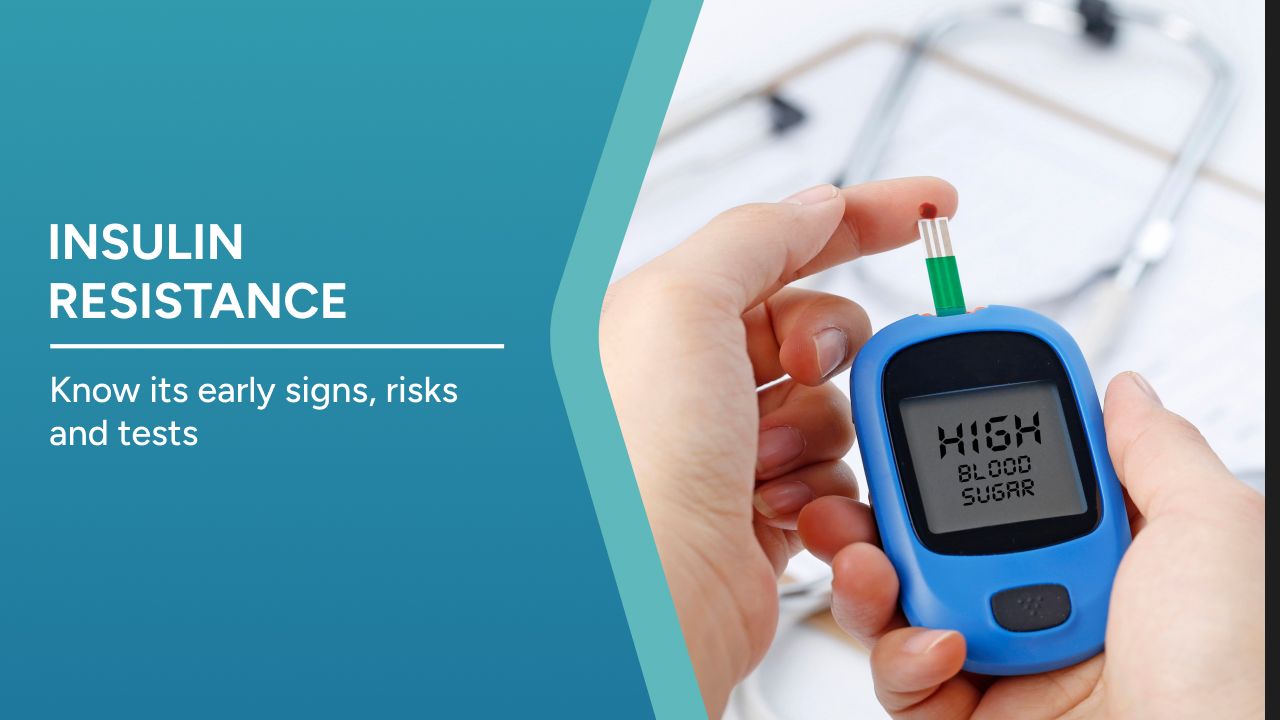
Insulin Resistance: Early Signs, Risks, and Testing Guidelines
By Dr. Girish Parmar in Endocrinology
Sep 10 , 2026 | 8 min read

Insulin resistance is becoming increasingly common across all age groups, especially in urban India. That is why timely evaluation can make a significant difference. Identifying the condition early can lower the chances of developing type 2 diabetes, heart problems, and other metabolic issues. With prompt testing and healthy lifestyle habits, this metabolic condition can be managed well, supporting better long-term health.
The challenge is that insulin resistance is often silent. It develops over years before any symptoms emerge, and by the time a diagnosis of prediabetes or type 2 diabetes is made, the metabolic imbalance has often been present for a decade or more.
Understanding Insulin Resistance
Insulin resistance happens when the body's cells stop responding effectively to insulin, the hormone that regulates blood sugar. To balance glucose levels, the pancreas begins producing extra insulin. Over time, this extra effort may not be enough, leading to high blood sugar and increasing the risk of metabolic problems.
Insulin resistance develops through a combination of lifestyle, hormonal, genetic, and medical factors. Key contributors include:
- Excess body fat - especially visceral (belly) fat: Fat stored around internal organs releases inflammatory chemicals that interfere directly with insulin signalling. This is the single strongest modifiable risk factor.
- Physical inactivity: Muscles that are regularly exercised are more insulin-sensitive. A sedentary lifestyle reduces the body's ability to use glucose efficiently.
- Diet high in refined carbohydrates and processed foods: Frequent blood sugar spikes from sugary foods, white bread, and processed snacks drive up insulin demand over time.
- Poor sleep quality or sleep apnoea: Chronic sleep deprivation disrupts cortisol and insulin regulation. Obstructive sleep apnoea - common in people who are overweight - significantly increases insulin resistance risk.
- Chronic stress and elevated cortisol: Persistently high cortisol levels directly oppose the action of insulin at the cellular level.
- Smoking and excessive alcohol: Both increase oxidative stress and inflammation, impairing cellular insulin response.
- Family history of type 2 diabetes or PCOS: A genetic predisposition exists, though lifestyle factors determine whether it is expressed.
- Age 45 and above: Insulin sensitivity naturally decreases with age due to hormonal changes and reduced muscle mass.
- History of gestational diabetes: Women who develop diabetes during pregnancy (gestational diabetes) face a significantly higher lifetime risk of insulin resistance and Type 2 diabetes.
- South Asian / Indian ethnicity: Indians develop insulin resistance and metabolic complications at lower body mass indices than Western populations, making vigilance especially important in this context.
Read More about the Type of Diabetes
Hormonal conditions associated with insulin resistance:
- Cushing's syndrome: Excess cortisol in the body counteracts the effects of insulin.
- Hypothyroidism: An underactive thyroid slows metabolism, reducing insulin sensitivity.
- Acromegaly: High growth hormone levels impair insulin action.
- PCOS (Polycystic Ovary Syndrome): Hormonal imbalance drives insulin resistance; up to 70% of women with PCOS have some degree of IR.
Early Signs and Symptoms of Reduced Insulin Sensitivity
The condition often develops quietly, and many people may not notice symptoms in the early stages. However, certain signs may suggest an underlying imbalance. Feeling unusually tired after meals, gaining weight around the abdomen, or experiencing frequent cravings for sugary foods can sometimes be associated with insulin resistance. Some people may notice dark, thickened skin patches around the neck or under the arms, known as acanthosis nigricans.
Simple blood tests can also reveal early changes. Raised blood sugar, higher triglycerides, or lower levels of good cholesterol may suggest a metabolic imbalance. Identifying these signs early helps doctors guide treatment and prevent further complications through lifestyle changes.
Health Risks Linked to Poor Insulin Response
Untreated problems in blood sugar regulation can raise the risk of type 2 diabetes. The pancreas works harder to release more insulin, but over time, this balance may weaken, leading to higher blood sugar levels.
It can also strain the heart and blood vessels. Increased insulin resistance may be associated with higher blood pressure, elevated triglycerides, and lower levels of good cholesterol. Together, these changes can increase the chance of heart disease.
In some people, this concern is linked with fatty liver and metabolic syndrome. These conditions make it harder for the body to manage sugar and fat, adding to long-term health risks.
Recommended Read: Diabetes And Fatty Liver: Causes & Treatment
Testing and Diagnosis for Insulin Imbalance
Types of Tests
Several blood tests can help assess insulin resistance and related metabolic risk. Common tests include fasting blood glucose, HbA1c, fasting insulin, and lipid profile. When fasting glucose and fasting insulin are reviewed together, doctors may use the HOMA-IR, or Homeostatic Model Assessment of Insulin Resistance, to estimate insulin sensitivity. However, HOMA-IR cut-offs can vary, so results should always be interpreted by a doctor.
Another commonly used test is the oral glucose tolerance test, which measures how your blood sugar responds after drinking a glucose solution. This may be advised when the doctor wants to assess how the body handles glucose over time.
When to Get Tested
Testing may be advised for adults with risk factors such as excess weight, abdominal obesity, family history of type 2 diabetes, PCOS, high blood pressure, abnormal cholesterol levels, fatty liver, or limited physical activity. People who experience unexplained tiredness, frequent cravings, weight gain around the abdomen, or darkened skin patches around the neck or underarms should also consider medical evaluation.
The frequency of diabetes testing depends on individual risk factors and previous test results. Your doctor can recommend whether annual testing or more frequent monitoring is needed.
Preparing for the Test
Most fasting tests require fasting for 8 to 12 hours before your sample is taken. Avoid strenuous exercise and excessive stress before the test, as both may affect readings. Your doctor will guide you about eating, drinking, and any medicines before the test.
After the results are available, your doctor will explain what the numbers mean. A high insulin level with normal glucose may suggest early insulin resistance, but the result should be interpreted along with symptoms, risk factors, and other blood tests. Early action helps prevent it from progressing into a serious condition.
Managing Insulin Sensitivity Issues
Managing this condition does not always require medication. Often, healthy food and simple lifestyle changes are enough. Limiting refined sugar and processed foods helps balance blood sugar. Include more whole grains, fruits, vegetables, and proteins such as lentils, paneer, eggs, fish, or lean meats. Small steps such as eating smaller portions, avoiding frequent sugary snacks, and reducing late-night meals may also help.
Daily physical activity is equally important. Brisk walking for 30 minutes, yoga, or light strength training can improve insulin response and overall metabolism. In some cases, doctors may prescribe medications such as metformin, especially when there is prediabetes, PCOS, or other risk factors.
Regular follow-ups matter. After testing, review progress with your doctor and stay consistent. With early care and effort, type 2 diabetes can often be delayed or prevented.
Can Insulin Resistance Be Reversed? What to Expect
The answer depends on the stage and underlying cause:
Early insulin resistance (Stage 1): Highly reversible with lifestyle changes alone. Studies show that consistent dietary improvement, regular exercise, weight loss, and better sleep can restore normal insulin sensitivity within weeks to months.
Prediabetes (Stage 2): Lifestyle intervention can prevent or significantly delay progression to Type 2 diabetes in the majority of people. The landmark Diabetes Prevention Program (DPP) study found that lifestyle changes reduced T2D progression by 58%.
When caused by genetic conditions or irreversible hormonal disorders: Not all causes are fully reversible. However, lifestyle optimisation and medical management can still substantially reduce complications and slow progression.
The most important message is that insulin resistance is rarely 'too late' to act on. Even modest improvements in lifestyle - a 5-7% reduction in body weight, 150 minutes of weekly moderate exercise - consistently show measurable improvements in insulin sensitivity and metabolic markers.
Frequently Asked Questions
1. What is an insulin resistance test, and why is it done?
There is no single standard test for insulin resistance in all patients. Doctors may use a combination of fasting blood glucose, HbA1c, fasting insulin, lipid profile, HOMA-IR, or an oral glucose tolerance test to assess insulin resistance and related diabetes risk. Detecting it early helps prevent diabetes and other metabolic conditions.
2. How accurate is the test?
The combination of fasting insulin and HOMA-IR can provide useful information, but it should be interpreted along with medical history, symptoms, body weight, waist measurement, blood sugar levels, and cholesterol profile. Test interpretation may vary between individuals.
3. Can lifestyle changes reverse insulin resistance?
Yes. A healthy diet, regular exercise, weight management, good sleep, and stress control can often improve insulin resistance, especially when addressed early. In some people, medication may also be required.
Read More about the Healthy Lifestyle Tips for Preventing Lifestyle Diseases
4. How often should you get tested?
People with risk factors may need testing once a year or as advised by their doctor. People with prediabetes, PCOS, metabolic syndrome, or abnormal previous results may need more frequent checks.
5. Are there any risks?
It is a safe, routine blood test. Some people may have minor bruising or slight discomfort at the needle site.
6. What is the difference between insulin resistance and prediabetes?
Insulin resistance is a physiological state in which cells respond poorly to insulin - but blood sugar levels are still within the normal range because the pancreas compensates with extra insulin production. Prediabetes occurs when blood sugar begins to rise above normal (fasting glucose 100-125 mg/dL or HbA1c 5.7-6.4%) but is not yet high enough to diagnose Type 2 diabetes.
7. Can hormonal conditions cause insulin resistance?
Yes. Several hormonal disorders can cause or significantly worsen insulin resistance: Cushing's syndrome (excess cortisol), hypothyroidism (underactive thyroid), acromegaly (excess growth hormone), and PCOS (polycystic ovary syndrome). If insulin resistance does not respond well to lifestyle changes, your doctor may investigate for an underlying hormonal cause.
Conclusion
Insulin resistance is not a diagnosis to fear - it is an opportunity to act. Unlike Type 2 diabetes, early-stage insulin resistance is highly reversible. With the right combination of dietary changes, physical activity, better sleep, stress management, and targeted testing, most people can significantly improve their insulin sensitivity and prevent or delay the development of serious metabolic complications.
At Nanavati Max Super Speciality Hospital, our endocrinology and diabetology team offers comprehensive metabolic evaluation, including advanced insulin resistance testing, personalised dietary and lifestyle guidance, and evidence-based medical management. If you have any risk factors or concerns about your metabolic health, book a consultation today - and take control of your health before it controls you.
Read More about the Indian Diet Chart for Diabetic Patients
References
- American Diabetes Association. Understanding Insulin Resistance (https://diabetes.org/health-wellness/insulin-resistance).
- Centers for Disease Control and Prevention (U.S.). About Insulin Resistance and Type 2 Diabetes (https://www.cdc.gov/diabetes/about/insulin-resistance-type-2-diabetes.html).
- Freeman AM, Acevedo LA, Pennings N. Insulin Resistance (https://www.ncbi.nlm.nih.gov/books/NBK507839/). 2023 Aug 17. In: StatPearls [Internet]. Treasure Island (FL): StatPearls Publishing; 2024 Jan.
- National Institute of Diabetes and Digestive and Kidney Diseases (U.S.). Insulin Resistance & Prediabetes (https://www.niddk.nih.gov/health-information/diabetes/overview/what-is-diabetes/prediabetes-insulin-resistance).
- The American Academy of Family Physicians. Insulin Resistance (https://familydoctor.org/condition/insulin-resistance/).

Written and Verified by:

Related Blogs

Dr. Girish Parmar In Endocrinology
Aug 05 , 2026 | 7 min read
Dr. Girish Parmar In Endocrinology
Aug 05 , 2026 | 4 min read

Dr. Girish Parmar In Endocrinology
Aug 05 , 2026 | 7 min read
Blogs by Doctor

Top 10 Vitamin D Foods You Can Include in Your Daily Diet
Dr. Girish Parmar In Internal Medicine
Aug 19 , 2026 | 9 min read

Sources of Vitamin D: Natural Ways to Boost Your Levels
Dr. Girish Parmar In Internal Medicine
Aug 12 , 2026 | 6 min read
Hypothyroidism (Underactive Thyroid): Symptoms, Causes, Types and Diet to Follow
Dr. Girish Parmar In Endocrinology
Aug 05 , 2026 | 7 min read
Most read Blogs



Related Blogs
Dr. Girish Parmar In Endocrinology
Aug 05 , 2026 | 7 min read
Dr. Girish Parmar In Endocrinology
Aug 05 , 2026 | 4 min read
Dr. Girish Parmar In Endocrinology
Aug 05 , 2026 | 7 min read
Blogs by Doctor
Top 10 Vitamin D Foods You Can Include in Your Daily Diet
Dr. Girish Parmar In Internal Medicine
Aug 19 , 2026 | 9 min read
Sources of Vitamin D: Natural Ways to Boost Your Levels
Dr. Girish Parmar In Internal Medicine
Aug 12 , 2026 | 6 min read
Hypothyroidism (Underactive Thyroid): Symptoms, Causes, Types and Diet to Follow
Dr. Girish Parmar In Endocrinology
Aug 05 , 2026 | 7 min read
Most read Blogs