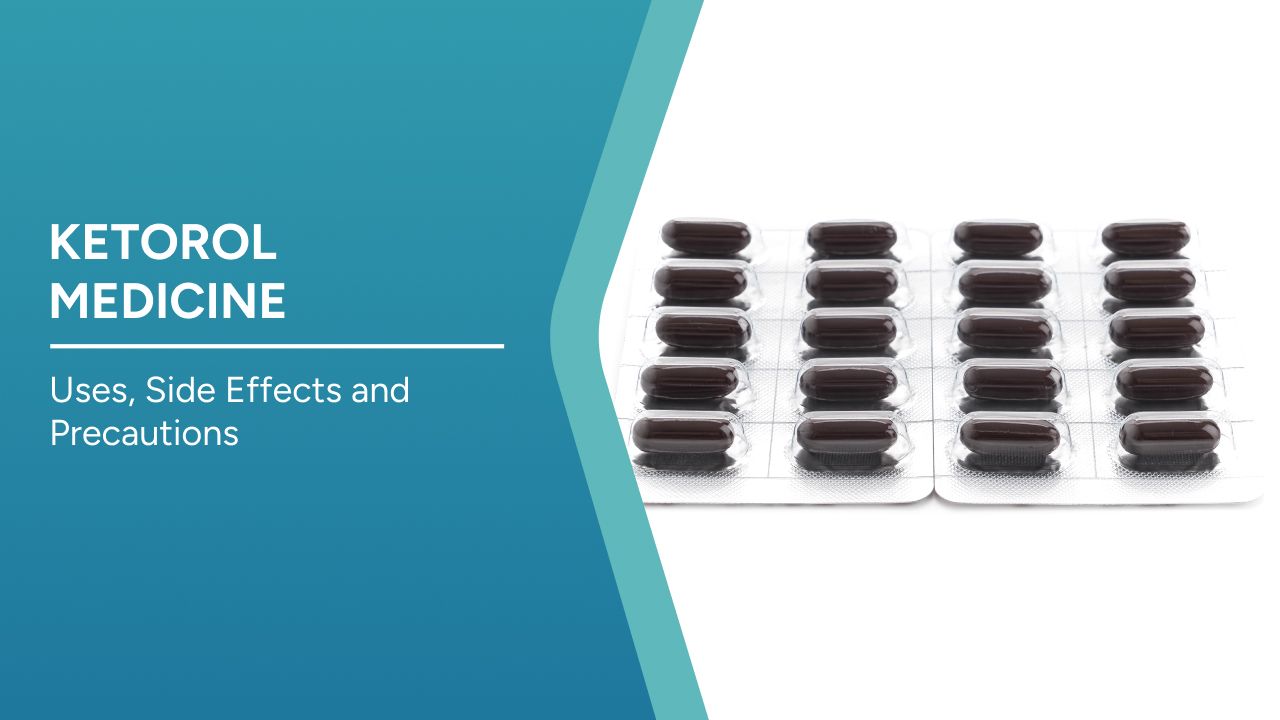
Ketorol Side Effects: Stomach, Kidney, and Bleeding Risks
By Medical Expert Team
Aug 05 , 2026 | 6 min read

Ketorol (Ketorolac Tromethamine) is a powerful prescription NSAID (nonsteroidal anti-inflammatory drug) specifically designed for short-term management of moderate to severe acute pain. The DT formulation (dispersible tablet) means it dissolves quickly on your tongue without requiring water, making it convenient for immediate pain relief.
Ketorol works by reducing substances in the body that cause pain and inflammation. While it can be effective, it also has a higher risk of side effects compared to many other NSAIDs. This is why physicians usually prescribe it for a limited period. Ketorol is commonly prescribed when a person needs strong pain relief for a short time and when the doctor wants to avoid stronger opioid medicines.
Key Characteristics:
- Potent pain reliever - Stronger than ibuprofen or naproxen for acute pain
- Anti-inflammatory - Reduces swelling and inflammation
- Short-term use only - Never intended for chronic conditions
- Prescription required - Cannot be bought without a doctor's recommendation
- Higher risk profile - Demands careful monitoring and adherence to guidelines
Uses of Ketorol
1. Post-Operative Pain (Most Common)
- Pain following surgery
- Severe post-operative discomfort
- Typically given as injection first, then tablets
- Usually limited to first 3-5 days after surgery
2. Post-Dental Pain
- Pain after tooth extraction
- Severe toothache when other options are insufficient
- Pain following oral surgery
- Typically short duration (1-3 days)
3. Post-Traumatic Pain
- Severe pain from injuries
- Fracture-related acute pain
- Acute musculoskeletal trauma
- Short-term relief while healing begins
4. Severe Acute Pain (Other Conditions)
- When pain is:
- Moderate to severe intensity
- Expected to resolve within days
- Not chronic/ongoing
- Requiring short-term intensive relief
5. Pain Where Opioids Should Be Avoided
- Situations requiring strong pain relief but:
- Opioids carry unacceptable risks
- Patient unable to tolerate opioids
- Drug interaction concerns with opioids
- Addiction history contraindicates opioids
How Ketorol Works
Ketorolac reduces inflammation by inhibiting enzymes that synthesize prostaglandins, which are endogenous compounds produced by the enzyme cyclooxygenase (COX) responsible for pain, swelling, and inflammation. Prostaglandins play a role in pain and swelling, but they also protect the stomach lining, support kidney blood flow, and promote normal platelet function.
Why Ketorol Should Be Used for a Limited Duration
Ketorol is usually prescribed for no more than 5 days total (including injections and tablets). Using it longer increases the risk of serious complications, especially:
- Stomach ulcers and bleeding
- Kidney injury
- Excessive bleeding
Common Side Effects of Ketorol
Common Side Effects (Occur in 1-10% of Users)
Gastrointestinal Side Effects:
- Nausea or mild vomiting
- Indigestion or heartburn
- Stomach discomfort or cramping
- Loss of appetite
- Diarrhea or constipation
Read More about the Home Remedies for Stomach Pain
Neurological Side Effects:
Other Common Side Effects:
- Mild swelling in legs/feet
- Rash (typically mild)
- Tinnitus (ringing in ears)
Management: Most resolve within 1-2 days of stopping medication. Take with food. Stay hydrated.
Recommended to read Types of Headaches and Best Ways to Relieve Migraine Pain
Moderate Side Effects (Occur in 0.1-1% of Users)
These require contact with doctor:
- Persistent nausea or vomiting
- Moderate stomach pain or cramping
- Mild heartburn not relieved by antacids
- Unusual bruising appearing
- Persistent mild rash
- Moderate swelling in feet/ankles
- Fatigue or weakness
- Difficulty concentrating lasting days
Action: Contact doctor; may need to stop medication
When Common Ketorol Side Effects Need Attention
You should contact a doctor if side effects:
- Feel severe
- Do not improve
- Affect eating, sleeping, or hydration
- Come with weakness, faintness, or unusual swelling
Who Is at Higher Risk of Ketorol Side Effects
Some people need extra caution with Ketorol, including:
- Elderly individuals (side effects may be stronger)
- People with a history of stomach ulcers or bleeding
- People with kidney disease, heart disease, or uncontrolled high blood pressure
- People who smoke or drink alcohol regularly
- Those taking blood thinners, steroids, aspirin, or other NSAIDs
Long-term or high-dose use increases risks, which is why Ketorol should never be taken longer than prescribed.
Learn More about the Ways to Manage High Blood Pressure
Safety Guidelines While Using Ketorol
Dosage and Duration Guidelines for Ketorol
- Ketorol is typically used for up to 5 days only
- Do not take extra doses or extend use on your own
- Follow the exact schedule given by your doctor
Precautions to Reduce Ketorol Side Effects
- Avoid taking other NSAIDs (like ibuprofen or naproxen) while on Ketorol
- Avoid alcohol during the course, as it can increase stomach bleeding risk
- Stay hydrated unless your doctor advises fluid restriction
- Inform your doctor about all medicines and supplements you take
At Nanavati Max Hospital, doctors assess your health history and current medicines before prescribing Ketorol to reduce avoidable risks and ensure safe pain relief.
Comparing Ketorol vs Other Painkillers
|
Medication |
Strength |
Safety Profile |
Best Used For |
|
Ketorol |
Very High |
Short-term only (max 5 days) |
Post-surgery, acute trauma |
|
Opioids |
Extreme |
High risk of respiratory depression and addiction |
Severe chronic pain; palliative care; major surgery |
|
Ibuprofen |
Moderate |
Safer for short-medium term |
Period pain, minor injury |
|
Paracetamol |
Mild/Moderate |
High (safe for most) |
Fever, mild headache |
Storage, Handling and Disposal
Storage Conditions
Temperature: 15-30°C (59-86°F); avoid extreme heat/cold.
Light: Store away from direct sunlight
Humidity: Keep in original blister pack to protect from moisture
Location: Cool, dry place (NOT bathroom medicine cabinet-humidity issues)
Accessibility: Keep in locked cabinet away from children and pets
Storage Duration After Opening
- Once blister strip is opened, use tablets within 1-2 months
- Check for discoloration or damage before use
- If color changes or appearance is altered, don't use-discard
Expiration
- Never use after expiration date
- Check expiry date before taking
- Expired Ketorol may be less effective or unstable
Disposal
- Return to pharmacy - Safest, most responsible method
- DO NOT flush down toilet (environmental concerns)
- DO NOT throw in household trash
- Some pharmacies have medication take-back programs
- Never leave accessible to children/pets
Travel Storage
- Keep in original packaging
- Store in cool compartment of luggage
- Protect from extreme heat (car trunk in summer = destroy)
- Check regulations if traveling internationally (controlled in some countries)
When to Seek Medical Help While Taking Ketorol
Stop Ketorol and seek urgent medical care if you have:
- Chest pain, sudden breathlessness, or severe weakness
- Signs of stroke, such as slurred speech or weakness on one side
- Severe headache with vision changes
- Black stools, vomiting blood, or severe stomach pain
- Sudden drop in urine output or severe swelling
These may indicate a serious side effect that requires immediate attention.
Disclaimer: This information is for educational purposes and is NOT a substitute for professional medical advice. Always consult your doctor, pharmacist, or healthcare provider before starting, stopping, or changing any medication. Individual responses to medications vary significantly
Frequently Asked Questions
1. Is Ketorol safe for long-term use?
No. Ketorol is meant for short-term use only, typically up to 5 days, because long-term use increases the risk of stomach bleeding, kidney injury, and other complications.
2. Is Ketorol DT safe in pregnancy?
Ketorol is generally not recommended during pregnancy, especially after the mid-pregnancy period, as NSAIDs may affect the baby and pregnancy outcomes. Always consult a doctor for safer options.
3. Is Ketorol DT safe in breastfeeding?
Ketorol use during breastfeeding should only be considered if a doctor believes it is necessary. Your doctor may suggest an alternative based on your condition and the baby’s age.
4. For how long does the effect of Ketorol-DT last?
Pain relief usually begins within a short time after administration, and the effect typically lasts for several hours. The exact duration can vary depending on the dose, the person’s health, and the type of pain.
5. Can I take Ketorol with food?
Yes -always take with food
Why It Matters:
- Food creates a protective layer in the stomach
- Dramatically reduces gastric irritation
- Reduces nausea and heartburn risk
- Doesn't significantly slow absorption (despite some misconception)
6. What if I miss a dose?
- Take as soon as you remember, unless it's almost time for your next scheduled dose
- Never double-dose to "make up" for a missed dose
- Continue regular schedule
7. Can I drink alcohol while taking Ketorol?
No, you should not take alcohol while taking Ketorol; this multiplies the risk of
- GI bleeding risk multiplied 10x
- Liver damage risk significantly increased
- Severe gastric irritation
- Interaction in multiple body systems
8. Is Ketorol safe for elderly patients?
Elderly patients should use with extreme caution
Why Elderly Are at Higher Risk:
- Age-related kidney decline (even if "normal")
- Common cardiovascular disease
- Multiple medications increasing interactions
- Higher baseline bleeding risk
- Stomach lining more fragile
- Recovery from surgery slower
Elderly can take Ketorol, but require more careful monitoring and lower doses
References
DailyMed - KETOROLAC TROMETHAMINE injection. (n.d.). https://dailymed.nlm.nih.gov/dailymed/drugInfo.cfm?setid=419cf756-3c96-4bb8-ae96-6aea5a5f3afd
NCI Drug Dictionary. (n.d.). Cancer.gov. https://www.cancer.gov/publications/dictionaries/cancer-drug/def/ketorolac-tromethamine?
Sharma, P. (2024). Overview of oral dispersible tablets. International Journal Of Pharmaceutical Sciences And Research, 15(5), 1340-1345. https://ijpsr.com/bft-article/overview-of-oral-dispersible-tablets/
Fan, X., Cheng, D., Niu, B., Wang, X., & Zhang, P. (2025). Current research status, applications and challenges of ketorolac-based sustained-release and controlled-release formulations. International Journal of Pharmaceutics, 670, 125162. https://doi.org/10.1016/j.ijpharm.2024.125162

Related Blogs

Dr. Girish Parmar In Internal Medicine
Jul 17 , 2026 | 9 min read


Medical Expert Team
Mar 21 , 2025 | 11 min read
Blogs by Doctor

Understanding the Different Grades and Stages of Brain Cancer
Medical Expert Team
Jun 10 , 2024 | 10 min read


Understanding Throat Cancer Symptoms: Everything You Need to Know
Medical Expert Team
Sep 08 , 2024 | 5 min read
Most read Blogs



Related Blogs
Dr. Girish Parmar In Internal Medicine
Jul 17 , 2026 | 9 min read
Medical Expert Team
Mar 21 , 2025 | 11 min read
Blogs by Doctor
Understanding the Different Grades and Stages of Brain Cancer
Medical Expert Team
Jun 10 , 2024 | 10 min read
Understanding Throat Cancer Symptoms: Everything You Need to Know
Medical Expert Team
Sep 08 , 2024 | 5 min read
Most read Blogs