Typhoid Diet Chart: Essential Foods for Quick Recovery
By Medical Expert Team
Aug 05 , 2026 | 7 min read

Typhoid fever is a serious bacterial infection that drains the body, weakens the digestive system, and leaves most patients with poor appetite for weeks. Alongside antibiotics, a carefully planned typhoid diet is one of the most important parts of recovery. The right foods restore energy, support tissue repair, and reduce the risk of complications; the wrong foods can prolong illness.
Importance of a Proper Diet for Typhoid Recovery
When you're down with typhoid, eating right isn't just good for your health - it's essential. The fact that you have a compromised immune system makes it tougher to fight. And what happens when you've already compromised digestion? Well, you have to be extra careful about what goes in your stomach. Also, avoid spicy or high-fibre foods, as your stomach might not handle them well while you're recovering.
Recommended Typhoid Diet Chart
When dealing with typhoid, consider your diet as part of your treatment plan. It's not just about avoiding discomfort, it's about speeding up your recovery.
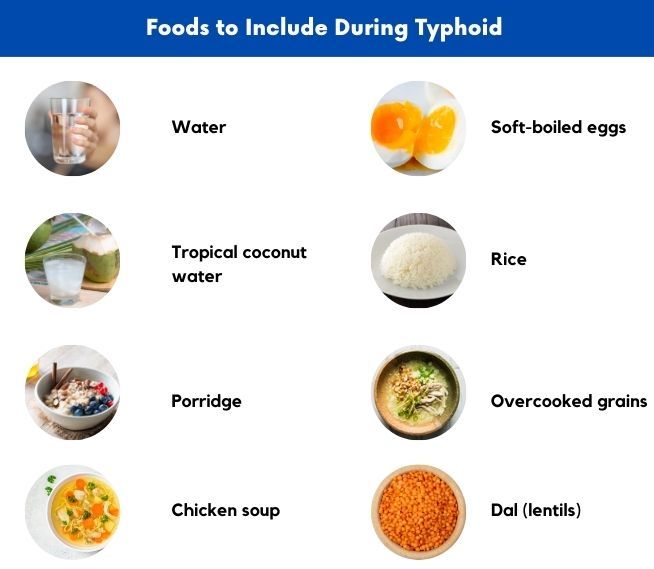
Foods to Eat in Typhoid for Fast Recovery
- Fluids and electrolytes: ORS, coconut water, plain water, dal water, light vegetable broth, lemon water (no added sugar in excess).
- Easily digestible carbohydrates: white rice, rice porridge, suji (semolina) upma, oatmeal, soft-cooked daliya, mashed potato.
- Soft proteins: moong and toor dal, soft-boiled eggs, paneer (Phase 2+), curd, soft chicken/fish (Phase 2+).
- Probiotic foods: fresh curd, lassi (lightly salted), buttermilk.
- Fruits: ripe banana, papaya, stewed apple, peeled grapes, watermelon — peeled and freshly cut.
- Cooked vegetables: lauki (bottle gourd), pumpkin, carrot, beetroot, beans — all very well cooked and mashed if needed.
Healthy fats in moderation: 1–2 tsp of ghee per day for calories, added to khichdi or rice.
Foods to Avoid During Typhoid Fever
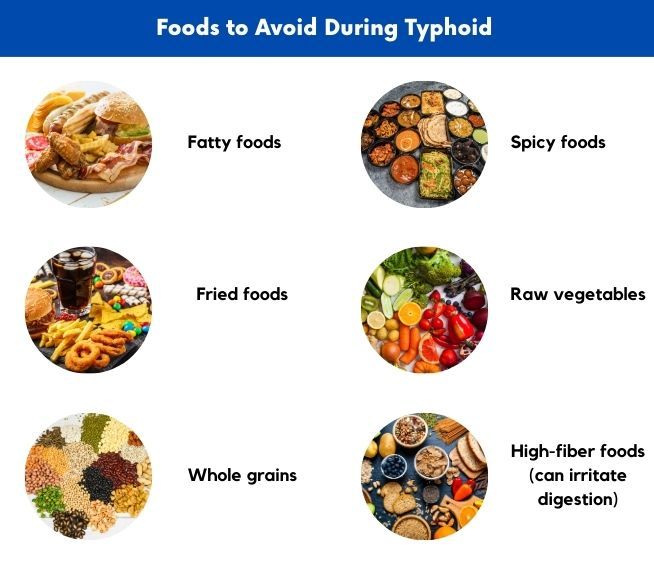
- Raw vegetables and salads - contamination and fibre risk.
- Whole grains and high-fibre cereals (brown rice in large amounts, whole-wheat bread, muesli) during Phase 1.
- Gas-producing foods: cabbage, cauliflower, broccoli, whole rajma or chana, raw onion.
- Fried, oily, and spicy foods: samosas, pakoras, biryani, fried chicken, chaat.
- Street food and outside food of all kinds — risk of re-infection.
- Unpasteurised milk and dairy.
- Caffeine and alcohol: coffee, strong tea, energy drinks, alcoholic beverages.
- Sugary drinks and packaged juices feed bacterial overgrowth and worsen diarrhoea.
- Reheated leftovers - freshly cooked meals only during the acute illness.
- Pickles, papad, and processed foods - very high salt and irritants.
Complete Diet Chart: Food to Eat and Avoid
The three phases of a typhoid diet
A clinical typhoid diet is built in three phases. As the patient improves, food becomes more solid and more nutrient-dense.
|
Phase |
Typical Timing |
Diet Goal |
Food Examples |
|---|---|---|---|
|
Phase 1: Acute Febrile |
Days 1–7 (high fever) |
Hydration, electrolytes, very easy digestion. Mostly liquid and semi-liquid. |
Coconut water, ORS, dal water, vegetable broth, rice gruel (kanji), curd-water, thin moong dal khichdi |
|
Phase 2: Improvement |
Days 8–21 (fever settling) |
Soft, semi-solid foods with more protein and calories. |
Soft khichdi, dahi rice, suji upma, soft idli, mashed potato, soft-boiled eggs, ripe banana, papaya, stewed apple, light chicken soup |
|
Phase 3: Convalescent |
Days 22 onwards |
Gradual return to balanced diet; rebuild lost weight and strength. |
Soft chapati, paneer, well-cooked vegetables, soft chicken/fish, dal, milk, yoghurt, fruits (peeled) |
7-Day Typhoid Diet Chart (Indian)
Here’s a simple typhoid diet chart. These meals are designed to be gentle on the digestive system while providing necessary nutrients.
|
Day |
Breakfast |
Mid-Morning |
Lunch |
Evening |
Dinner |
Phase |
|---|---|---|---|---|---|---|
|
Day 1 |
Rice porridge (kanji) with a pinch of salt |
Coconut water |
Moong dal khichdi (thin) with 1 tsp ghee |
ORS or buttermilk |
Chicken/vegetable broth with rice gruel |
P1 |
|
Day 2 |
Soft idli with coconut chutney |
Ripe banana |
Curd rice with a few pomegranate seeds |
Lemon water |
Light dal soup with soft mashed rice |
P1–P2 |
|
Day 3 |
Suji (semolina) upma with boiled peas |
Stewed apple |
Soft khichdi with curd |
Coconut water |
Soft chicken soup with mashed rice (veg: paneer cubes in tomato gravy, mild) |
P2 |
|
Day 4 |
Vegetable poha (mild, no peanuts) |
Ripe papaya |
Soft chapati with moong dal and lauki sabzi |
Buttermilk |
Tomato-dal soup with soft roti |
P2 |
|
Day 5 |
Besan chilla (thin) with curd |
Banana |
Curd rice with cooked carrot and beetroot |
Coconut water |
Light pumpkin soup with soft roti or soft-boiled egg with toast |
P2 |
|
Day 6 |
Oatmeal cooked with milk + a little honey |
Stewed apple |
Soft chapati with dal tadka and well-cooked beans |
Buttermilk |
Chicken stew (mild) with soft roti (veg: bottle gourd kofta in mild gravy) |
P2–P3 |
|
Day 7 |
Scrambled egg with soft toast (veg: paneer bhurji with soft toast) |
Papaya smoothie |
Soft chapati with palak paneer (mild) and dal |
Lassi (lightly salted) |
Light fish curry with soft rice (veg: mushroom soup with toast) |
P3 |
Benefits of Following a Proper Typhoid Diet
Following a proper diet when you have typhoid can really speed up your recovery. It helps you keep up your energy, avoid stomach problems, and lower the chance of complications.
When you choose the right foods, your body doesn’t have to work as hard to digest them, which can help you feel better sooner. This helps to prevent certain things such as bloating, cramping, and diarrhoea, especially at times you do not want those problems to add-on, since you already have typhoid.
Moreover, sticking to a gentle, nutritious diet reduces the risk of developing further health problems, helping you return to normal daily life more smoothly and quickly. This approach supports not only your physical health but also your overall well-being during what can be a challenging time.
Read more about - Chikungunya
Hydration and Fluid Intake During Typhoid
Don’t forget about fluids! Staying well-hydrated is very important. It helps flush out toxins and keeps your recovery on track. Along with lots of water, try including oral rehydration solutions, light soups, and maybe some diluted fruit juices for some variety.
Explore the various drinking warm water benefits and how it supports digestion, circulation, and immunity.
Tips for Caregivers
- Cook fresh meals for each main meal — do not reheat for the acute patient.
- Wash hands before food preparation and before serving the patient.
- Keep utensils, plates, and glasses for the patient washed separately in hot soapy water.
- Encourage small frequent meals; do not force a full plate.
- Track temperature, fluid intake, and urine output daily.
- Report any sudden change in abdominal pain or alertness to the doctor immediately.
Click here to read about - Types of Fever
When to see a Doctor
Typhoid can have serious complications. Seek immediate medical care if the patient develops any of the following:
- Sudden severe abdominal pain or tenderness — may signal intestinal perforation
- Vomiting blood or passing black, tarry, or bloody stools
- Persistent vomiting and inability to keep fluids down
- Confusion, drowsiness, or unusual behaviour
- Very rapid pulse, low blood pressure, or fainting
- Dehydration: dry mouth, sunken eyes, dark/no urine for 6–8 hours
- Fever returning after improving for several days
Conclusion
Following this typhoid diet chart can make your recovery from typhoid smoother and quicker. It's all about supporting your body as it fights the infection and helping you feel a little better every day. Keep in mind that while this diet plays a big part, following your doctor's advice is just as important. At Nanavati Max Super Speciality Hospital, we’re there to support you with personalised care and expert advice. Reach out to us for any help or information you need during your recovery.
Read more about - Everything About Typhoid
Disclaimer: The information provided in this blog is for educational purposes only and does not substitute for professional medical advice, diagnosis, or treatment. Always seek the advice of your physician or other qualified health providers with any questions you may have regarding a medical condition.
Frequently Asked Questions
1. What Should We Eat During Typhoid?
The best thing about typhoid is to stay on soft food that does not irritate the foofhe stomach. You can eat rice porridge, soft-boiled eggs, and well-cooked vegetables. Such foods are nourishing without putting much strain on the digestive system.
2. Is Milk Good for Typhoid Patients?
Yes, milk can be safely consumed by a typhoid patient, provided it is pasteurised to eliminate further chances of infection. Whole milk may be hard for some people to digest, and if that is the case, you may want to substitute it with a more easily digested form like yoghurt or buttermilk.
3. Can Typhoid Patients Eat Fruits?
Yes, fruits are very good for typhoid patients, but you must choose ones that are easy to digest. Bananas, cooked apples, and melons are good choices. Fruits that are too rich in fibre or acidic may irritate your stomach.
4. Which Foods Should Be Avoided During Typhoid?
Avoid foods that are hard on your stomach and intestines during typhoid. You should not consume spicy, fried, or fatty foods, nor should you eat raw vegetables and whole grains until you start recovering. These foods tend to worsen symptoms and slow down recovery.
5. How Long Should I Follow The Typhoid Diet Plan?
The duration of a typhoid diet depends on how fast you heal and how your body responds to the treatment. Usually, it is recommended that you continue following the diet until you no longer have symptoms and your doctor says it is safe to start eating normally again. Always follow your doctor's advice.
6. How Does an Internal Medicine Team Help With a Typhoid Diet Plan?
An internal medicine team provides dietary guidance to support recovery, recommending easily digestible foods, hydration, and nutrient-rich meals to boost immunity and prevent complications.

Related Blogs
Dr. Hemalata Arora In Internal Medicine
Oct 21 , 2026 | 4 min read

Medical Expert Team
Oct 06 , 2026 | 8 min read

Medical Expert Team
Oct 06 , 2026 | 9 min read
Most read Blogs



Related Blogs
Dr. Hemalata Arora In Internal Medicine
Oct 21 , 2026 | 4 min read
Medical Expert Team
Oct 06 , 2026 | 8 min read
Medical Expert Team
Oct 06 , 2026 | 9 min read
Most read Blogs