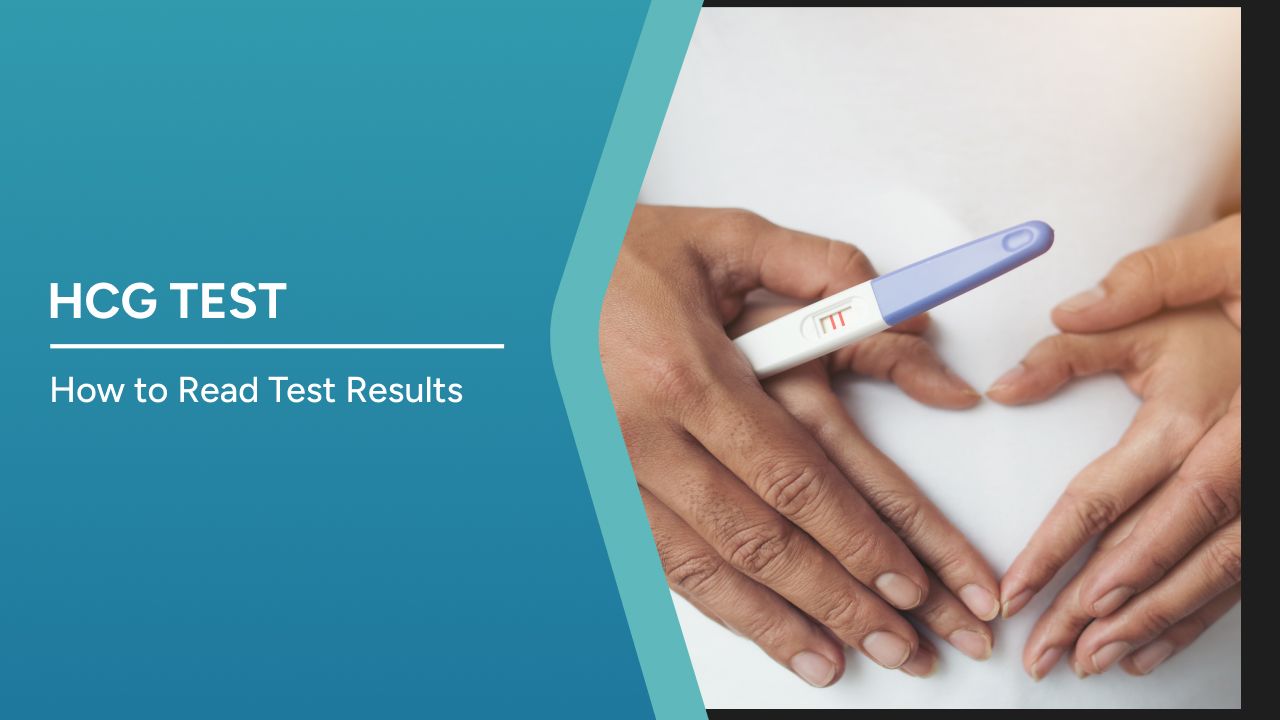
False Positive and False Negative hCG Test Results Explained
By Dr. Suruchi Desai in Gynaecology & Obstetrics
Sep 29 , 2026 | 9 min read

Receiving a pregnancy test result that does not match your symptoms or expectations can be confusing. For example, a positive result without pregnancy or a negative result despite missed periods may leave you uncertain about what to do next. Understanding the reasons behind these results is important for making informed decisions about your health.
A Human Chorionic Gonadotropin (hCG) Test detects the pregnancy hormone produced after implantation and is commonly used to confirm pregnancy. Although an hCG test is highly accurate when performed correctly, factors such as testing too early, certain medicines, or underlying medical conditions can occasionally lead to false positive or false negative results. Knowing when to repeat the test or seek medical advice can help ensure an accurate diagnosis.
What Is an hCG Test?
Human Chorionic Gonadotropin (hCG) hormone is produced by the trophoblast cells of the early embryo, which later develop into the placenta. hCG production begins soon after implantation of the embryo into the endometrial lining. At this stage, the placenta is not yet fully formed; placental development continues through the first trimester, with the placenta becoming well established by around 11–13 weeks of pregnancy.
A Human Chorionic Gonadotropin Test (hCG Test) measures the level of the hCG hormone in the body. This hormone is produced after a fertilised egg implants in the uterus and is commonly used to detect pregnancy. The test can be performed using a urine sample, as in most home pregnancy tests, or a blood sample, which is usually more sensitive and can detect lower levels of hCG. Doctors may also recommend an hCG test to monitor early pregnancy or investigate certain medical conditions.
How to Prepare for an hCG Test
For a blood hCG test: no special preparation is needed. You do not need to fast, and you can eat, drink, and take medicines normally before the blood draw.
For a urine hCG test at home: use your first morning urine if possible. Morning urine is the most concentrated and gives the most reliable result - hCG levels are highest relative to fluid intake at this time. Avoid drinking large amounts of fluid in the hours before testing, as this dilutes the urine and can reduce hCG concentration enough to cause a false negative result.
Recommended Read- Home Pregnancy Tests: When To Take and How To Do?
How Does the hCG Test Work?
hCG Hormone
After a fertilised egg implants in the uterus, the developing placenta begins producing the hCG hormone. Its levels usually rise rapidly during early pregnancy, allowing the test to detect its presence.
Test Accuracy
Blood hCG tests are generally more sensitive than urine tests and can detect pregnancy earlier. The accuracy of both tests depends largely on when they are performed and whether the instructions are followed correctly.
Read More about the Pregnancy Test: Types, Timing & How Accurate Are They?
What is a Positive hCG Test Result?
A positive hCG test is generally considered a sign of pregnancy. However, further evaluation may sometimes be needed to confirm the result.
- A positive hCG test usually indicates that the pregnancy hormone is present in the body, suggesting pregnancy. In most cases, the result is accurate, particularly when confirmed with a blood hCG test or repeat testing.
- Although uncommon, a positive hCG test does not always confirm an ongoing pregnancy. Certain medicines, recent pregnancy-related events or specific medical conditions can occasionally lead to a false positive result.
A doctor may recommend additional tests if the result is uncertain or does not match your symptoms.
What is a Negative hCG Test Result?
A negative hCG test usually indicates that pregnancy has not been detected. However, the result should be interpreted based on the timing of the test and your symptoms.
- A negative hCG test usually means that the pregnancy hormone was not detected or was present at a level below the test's detection limit. This generally indicates that pregnancy is unlikely, especially if the test is performed after a missed period.
- In some cases, a negative result may occur despite pregnancy, particularly if the test is performed too early or hCG levels are still low. Repeating the test after 48 hours or having a blood hCG test may help confirm the result.
If the result does not match your symptoms or menstrual history, consult a doctor for further evaluation.
What Is a False Positive hCG Test?
A false positive result means the test indicates pregnancy even though the person is not pregnant. Although this is uncommon, several factors may contribute to an incorrect result.
Common Causes
A false positive hCG test may occur due to:
- Fertility medicines that contain hCG.
- A recent miscarriage or chemical pregnancy, where hCG levels remain temporarily elevated.
- Certain ovarian conditions or rare tumours that produce hCG.
- Laboratory or testing errors, although these are uncommon.
False positive results are relatively rare. Your doctor may recommend further testing to confirm the diagnosis.
What Is a False Negative hCG Test?
A false negative result occurs when the test indicates that pregnancy is absent despite a person being pregnant. This is more common than a false-positive result, particularly during very early pregnancy.
Common Causes
A false negative hCG test may occur due to:
- Testing before enough hCG has been produced.
- Using a diluted urine sample, especially later in the day.
- Incorrect use of the test kit or using an expired kit.
- Naturally low hCG levels during very early pregnancy.
Repeating the test after a short interval or having a blood hCG test can help confirm the result.
Differences Between False Positive and False Negative hCG Test Results
Understanding the difference between false-positive and false-negative results can help avoid unnecessary anxiety and support timely medical evaluation. The table below highlights the key differences.
|
False Positive hCG Test |
False Negative hCG Test |
|
The test indicates pregnancy when a person is not pregnant. |
The test indicates that pregnancy is absent when a person is actually pregnant. |
|
Less common than false-negative results. |
More common, particularly during very early pregnancy. |
|
May occur due to certain medicines, a recent miscarriage, or specific medical conditions. |
Often occurs because the test is performed too early, urine is diluted, or the test is used incorrectly. |
|
Usually requires confirmation with additional tests. |
Repeating the test after 48 hours or having a blood hCG test may confirm the result. |
Although both results can be misleading, further evaluation by a healthcare professional can help determine the correct diagnosis.
What are normal hCG levels by week in pregnancy?
This chart shows how your hCG levels rise quickly and steadily in the first trimester before falling:
|
Weeks since last menstrual period |
hCG levels (mIU/mL) |
|
3 |
5-50 |
|
4 |
5-426 |
|
5 |
18-7,340 |
|
6 |
1,080-56,500 |
|
7 to 8 |
7,650-229,000 |
|
9 to 12 |
25,700-288,000 |
|
13 to 16 |
13,300-254,000 |
|
17 to 24 |
4,060-165,400 |
|
25 to 40 |
3,640-117,000 |
These numbers are just a guide. Your levels may rise differently. It’s not the number that matters as much as how the number changes. Your healthcare provider will let you know if your hCG levels need to be checked and what the test results mean for your pregnancy. Remember, healthy pregnancies may have lower-than-average hCG levels.
Factors That Affect hCG Test Accuracy
Several factors can influence the accuracy of an hCG test. Understanding these factors can help ensure more reliable and accurate results.
Timing of the hCG Test
Testing too early may result in hCG levels being too low to detect. Waiting until after a missed period or repeating the test later can improve accuracy.
Test Quality and Brand Sensitivity
The quality and sensitivity of the test kit can affect how accurately hCG is detected. Using a valid, unexpired test and following the manufacturer's instructions can help reduce errors.
Biological and Medical Conditions
Certain fertility medicines, recent pregnancy-related events and some medical conditions can influence hCG levels. Your doctor may recommend additional tests if these factors are likely to affect the result.
Following the recommended testing guidelines and seeking medical advice when needed can help ensure the correct interpretation of hCG test results.
How to Confirm hCG Test Results
If the result does not match your symptoms or you have concerns about its accuracy, additional evaluation may be recommended.
- Repeat the hCG test after 48 hours, especially if the first test was performed early.
- A blood hCG test can measure lower hormone levels and is generally more sensitive than a urine test.
- An ultrasound may be recommended to confirm an ongoing pregnancy when appropriate.
- Consult a doctor if the results remain unclear or symptoms continue.
Confirming the result with additional tests helps ensure appropriate diagnosis and timely medical care.
Understanding hCG Levels and the Role of Serial Testing in Early Pregnancy
A urine pregnancy test gives a Yes or no result, indicating whether the pregnancy test is positive or negative. When hCG is measured quantitatively through a blood test, an hCG level below 2 mIU/mL is generally considered negative. In a normally developing early pregnancy, hCG levels typically rise rapidly and approximately double every 48–72 hours.
If the hCG level does not rise appropriately, there may be a concern about an ectopic pregnancy, where the pregnancy develops outside the uterus. Therefore, serial (repeat) hCG testing along with an ultrasound scan at the appropriate time may be advised to assess the pregnancy and rule out an ectopic pregnancy.
When Should You See a Doctor After an hCG Test?
Medical advice should be sought if the test results are unexpected, symptoms persist, or you have concerns about your pregnancy. Prompt evaluation can help identify the underlying cause and determine the next steps.
You should consult a doctor if you experience:
- A positive hCG test with vaginal bleeding or severe abdominal pain.
- Pregnancy symptoms despite a negative hCG test.
- Repeated conflicting hCG test results.
- Heavy bleeding, dizziness, or fainting.
- Persistent abdominal pain or other concerning symptoms.
At Nanavati Max Super Speciality Hospital, specialists evaluate hCG test results alongside your symptoms and medical history. Additional investigations, such as blood tests and ultrasound, may be recommended to confirm the diagnosis and guide appropriate treatment.
Disclaimer: The information provided in this article is for educational and informational purposes only and is not intended as medical advice, diagnosis, or treatment. Always seek the advice of your physician or qualified healthcare provider with any questions you may have regarding a medical condition, procedure, or treatment.
Conclusion
An hCG test is a reliable method for detecting pregnancy, but false positive and false negative results can occasionally occur. Understanding what these results mean, the factors that affect test accuracy and the importance of proper timing can help you interpret the findings more confidently.
If the test result does not match your symptoms or remains uncertain, further evaluation with a repeat hCG test, a blood test or an ultrasound may be necessary. Seeking timely medical advice can help confirm the diagnosis, identify any underlying concerns and ensure appropriate care.
Frequently Asked Questions
1. Can Stress Affect hCG Test Results?
No, stress does not directly affect hCG levels or change the result of an hCG test. However, stress may influence the menstrual cycle, which can affect the timing of testing.
2. How Soon Can an hCG Test Detect Pregnancy?
A blood hCG test may detect pregnancy earlier than a urine test. Home pregnancy tests are generally more accurate after a missed period.
3. Are Home Pregnancy hCG Tests Reliable?
Yes, home pregnancy tests are generally reliable when used correctly and at the appropriate time. If the result is unclear or does not match your symptoms, consult a doctor for further evaluation.
4. Can Medications Interfere With hCG Test Accuracy?
Most medicines do not affect hCG test results. However, fertility medicines containing hCG may sometimes cause a false positive result.
References
- American Pregnancy Association. What are HCG Levels? (https://americanpregnancy.org/getting-pregnant/hcg-levels/)
- Canadian Cancer Society. Human chorionic gonadotropin (hCG or b-hCG) (https://cancer.ca/en/treatments/tests-and-procedures/human-chorionic-gonadotropin-hcg-or-b-hcg)
- Betz D, Fane K. Human Chorionic Gonadotropin (https://www.ncbi.nlm.nih.gov/books/NBK532950/)
- Ogino MH, Tadi P. Physiology, Chorionic Gonadotropin (https://www.ncbi.nlm.nih.gov/books/NBK556118/)

Written and Verified by:

Related Blogs

Medical Expert Team
Oct 12 , 2026


Blogs by Doctor

Fetal Heart Rate: Monitoring During Trimesters and Its Link to Baby Gender Myths
Dr. Suruchi Desai In Gynaecology & Obstetrics
Oct 06 , 2026 | 6 min read
Most read Blogs



Related Blogs
Medical Expert Team
Oct 12 , 2026
Blogs by Doctor
Fetal Heart Rate: Monitoring During Trimesters and Its Link to Baby Gender Myths
Dr. Suruchi Desai In Gynaecology & Obstetrics
Oct 06 , 2026 | 6 min read
Most read Blogs