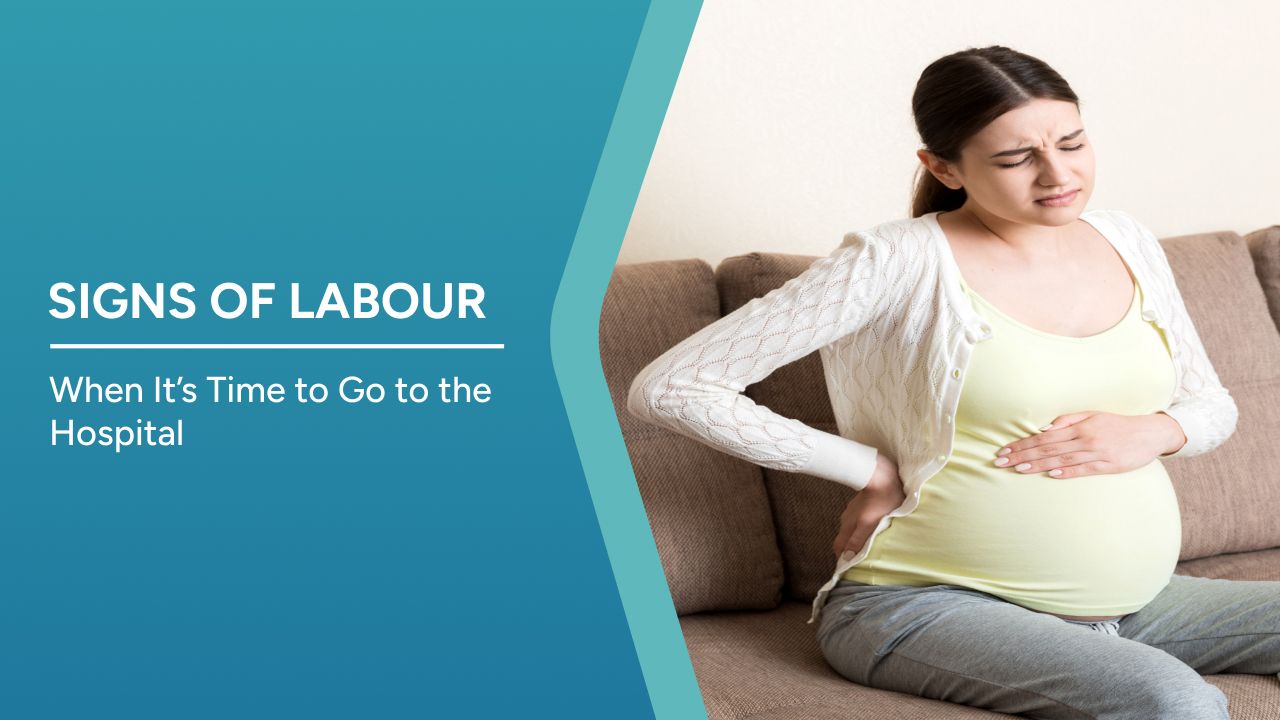
Signs of Labour: When It’s Time to Go to the Hospital
By Dr. Suruchi Desai in Gynaecology & Obstetrics
Nov 10 , 2026

Labour does not always begin with a sudden or unmistakable change. Contractions may start as mild menstrual-like cramps, occur at irregular intervals, and gradually become stronger and closer together. You may also notice a small amount of pink or blood-streaked mucus as the cervix begins to change.
Knowing whether these changes can be monitored at home or whether it is time to contact the maternity team can be difficult, particularly when labour is progressing gradually.
The signs of labour do not always appear in the same order or with the same intensity. Understanding the common changes, how true labour differs from Braxton Hicks contractions and which symptoms need prompt medical assessment can help you know when to seek care.
Quick AnswerThe main signs of labour include contractions that become regular, stronger and closer together, a bloody or mucus-like "show", lower-back or pelvic pressure and the waters breaking. Contact your maternity team or go to the hospital if your waters break, contractions become regular and increasingly strong, you have significant vaginal bleeding, your baby is moving less than usual, or you develop severe or unusual symptoms. Possible labour before 37 weeks also needs prompt medical assessment. |
What Are the Signs of Labour?
Labour often begins gradually rather than with one clear symptom. Common signs include:
- Regular Contractions: Become stronger, closer together, and continue despite rest.
- Bloody Show: Pink or blood-streaked mucus may appear as the cervix changes.
- Waters Breaking: Fluid may appear as a gush or persistent trickle.
- Pelvic or Back Pressure: Cramping, backache or increasing pressure may occur.
Labour becomes more likely when these changes develop together, and contractions form a consistent pattern.
Which Signs Suggest Labour May Be Starting?
Several changes can occur as labour approaches, but they do not all mean that delivery is imminent.
|
Sign |
What It May Mean |
|
Regular Contractions |
Labour becomes more likely when contractions form a pattern and become stronger and closer together. |
|
Waters Breaking |
The amniotic sac has ruptured. This can happen before or after contractions begin. |
|
Bloody Show |
Pink or blood-streaked mucus may appear as the cervix begins changing. |
|
Lower-Back Ache |
Labour contractions may be felt strongly in the back or pelvis. |
|
Increasing Pelvic Pressure |
The baby's head may be moving lower into the pelvis. |
|
Cervical Changes |
Dilation and effacement help confirm labour progression during examination. |
|
Baby Moving Lower |
Also called lightening, this may occur hours or weeks before labour. |
Losing the mucus plug does not necessarily mean you need to leave for the hospital immediately. Labour may still be hours or days away. Waters breaking is different. A gush or persistent trickle of fluid should be reported to your maternity team even when contractions have not begun.
What to Know?A "show" and heavy vaginal bleeding are not the same thing. A small amount of pink or blood-streaked mucus can occur as labour approaches. Bleeding that is heavy, bright red or similar to a menstrual period requires prompt medical assessment. |
True Labour or Braxton Hicks: How Can You Tell?
The pattern of contractions is usually more useful than how painful one contraction feels.
|
True Labour |
Braxton Hicks Contractions |
|
Develop a regular pattern |
Usually remain irregular |
|
Become closer together |
Do not steadily become closer |
|
Become stronger over time |
Often remain similar or become weaker |
|
Continue despite rest or movement |
May settle with rest or changing position |
|
Can cause progressive cervical change |
Do not cause progressive labour changes |
True labour contractions often build, peak and then ease. Braxton Hicks contractions can also feel uncomfortable, but they usually do not develop the same progressive pattern.
Practical TipTime contractions from the beginning of one contraction to the beginning of the next. Also note how long each contraction lasts. Tracking the pattern for a while can help you explain clearly what is happening when you contact your maternity team. |
When Is It Time to Go to the Hospital?
There is no single contraction rule that applies to every pregnancy. For many uncomplicated first pregnancies at term, contractions occurring regularly at about five-minute intervals may be a reason to contact the maternity unit. Your obstetrician may advise earlier assessment depending on pregnancy risks, previous births, travel time or how quickly labour appears to be progressing.
Do not wait for a particular contraction interval if:
- Your waters break
- You have significant vaginal bleeding
- Your baby is moving less than usual
- You have severe or continuous abdominal pain
- You feel faint, extremely unwell or breathless
- You have been advised to come earlier because the pregnancy is high-risk
- You are less than 37 weeks pregnant and have possible labour symptoms
Reduced fetal movement should not be assumed to be normal because labour is approaching. Your baby should continue to move during late pregnancy. A noticeable reduction or absence of usual movements needs prompt assessment.
Read More about the Types of high-risk pregnancy
Decision Point: If Your Waters BreakWaters may break as a gush or a slow, persistent trickle. Note when the leaking began and what the fluid looks like; use a sanitary pad and contact your maternity team. Greenish, brown, foul-smelling, or noticeably blood-stained fluid, or fever after the waters break, needs prompt assessment. |
When Should You Seek Help for Symptoms Other Than Labour Pain?
Not every urgent symptom near the end of pregnancy is caused by labour. Contact your healthcare provider promptly if you develop:
- Severe or persistent headache
- Blurred vision or flashing lights
- Sudden swelling of the face or hands
- Severe upper abdominal pain
- Fever
- Fainting or seizures
- Severe breathlessness
Severe headache, visual disturbances and upper abdominal pain can occur with severe pre-eclampsia and should not be dismissed as ordinary late-pregnancy discomfort.
Doctor's NoteDo not wait for "proper labour pains" when another pregnancy warning sign is present. Bleeding, reduced fetal movement, leaking fluid, severe headache, vision changes or significant illness need assessment even when contractions are absent. |
What Happens When You Reach the Hospital?
The maternity team will first assess whether labour has begun, how far it has progressed and how both mother and baby are doing. They may ask about contractions, leaking fluid, bleeding and fetal movements.
Assessment may include:
- Maternal blood pressure, pulse and temperature
- Baby's heart rate
- Contraction frequency and strength
- Whether the membranes have ruptured
- Cervical dilation and effacement when examination is appropriate
If labour is still in an early phase and both mother and baby are well, some women may be advised to continue early labour at home.
At Nanavati Max Super Speciality Hospital, obstetric care is supported by specialists in obstetrics, neonatology and anaesthesiology, along with adult intensive care and a Level III Neonatal Intensive Care Unit for pregnancies that require additional monitoring or support.
Key Takeaway
- The most useful signs of labour are changes that develop into a pattern rather than isolated symptoms.
- Regular contractions that become stronger and closer together suggest labour may be progressing.
- Water breaking requires contact with your maternity team even when contractions have not started.
- Reduced fetal movement, significant bleeding, or severe pregnancy warning symptoms should not wait for a particular contraction pattern.
- Possible labour before 37 weeks needs prompt medical assessment.
Conclusion
Recognising labour is not always as simple as waiting for contractions to reach a particular interval. Regular contractions that become stronger and closer together, a bloody show and water breaking can indicate that labour is approaching or progressing. The difference between true labour and Braxton Hicks contractions often becomes clearer by watching how the pattern changes over time.
However, contraction timing is only one part of deciding when to seek care. Water breaking, reduced fetal movement, significant bleeding, severe pain and symptoms such as severe headache or visual changes can require assessment even without established labour. Discussing when to call, when to leave for the hospital and any pregnancy-specific precautions with your maternity team before the due date can make these decisions easier when labour begins.
Frequently Asked Questions
1. Can Labour Start Without the Waters Breaking?
Yes. Labour contractions often begin while the amniotic sac is still intact. The waters may break later during labour or may need to be managed by the maternity team.
2. What Does a Bloody Show Look Like?
A bloody show usually appears as mucus that is pink, brownish or lightly streaked with blood. It is different from heavy or persistent bright-red bleeding, which requires medical assessment.
3. Can Contractions Stop After Labour Seems to Start?
Yes. Irregular contractions may settle with rest or a change in position, particularly when they are Braxton Hicks contractions or very early labour. True labour is more likely when contractions develop a regular pattern and progressively intensify.
4. Should I Go to the Hospital if My Baby Is Moving Less?
Reduced fetal movement needs prompt assessment and should not wait for contractions to begin. Contact your maternity team if your baby's usual movement pattern noticeably decreases or you stop feeling movement.
5. Can Labour Progress Faster in a Second Pregnancy?
It can. Labour may progress more quickly in someone who has previously given birth, although every labour is different. Your obstetrician may recommend earlier hospital assessment depending on your previous birth history and current pregnancy.
Disclaimer
This article is intended for educational purposes only. Labour and pregnancy complications can develop differently for each person. Follow the instructions provided by your obstetrician or maternity team and seek urgent medical care for concerning symptoms.

Written and Verified by:

Related Blogs

Medical Expert Team
Nov 01 , 2026 | 4 min read

Dr. Rekha Ambegaokar In Gynaecology & Obstetrics
Oct 27 , 2026 | 5 min read

Medical Expert Team
Oct 12 , 2026
Blogs by Doctor


Fetal Heart Rate: Monitoring During Trimesters and Its Link to Baby Gender Myths
Dr. Suruchi Desai In Gynaecology & Obstetrics
Oct 06 , 2026 | 6 min read
Most read Blogs



Related Blogs
Medical Expert Team
Nov 01 , 2026 | 4 min read
Dr. Rekha Ambegaokar In Gynaecology & Obstetrics
Oct 27 , 2026 | 5 min read
Medical Expert Team
Oct 12 , 2026
Blogs by Doctor
Fetal Heart Rate: Monitoring During Trimesters and Its Link to Baby Gender Myths
Dr. Suruchi Desai In Gynaecology & Obstetrics
Oct 06 , 2026 | 6 min read
Most read Blogs