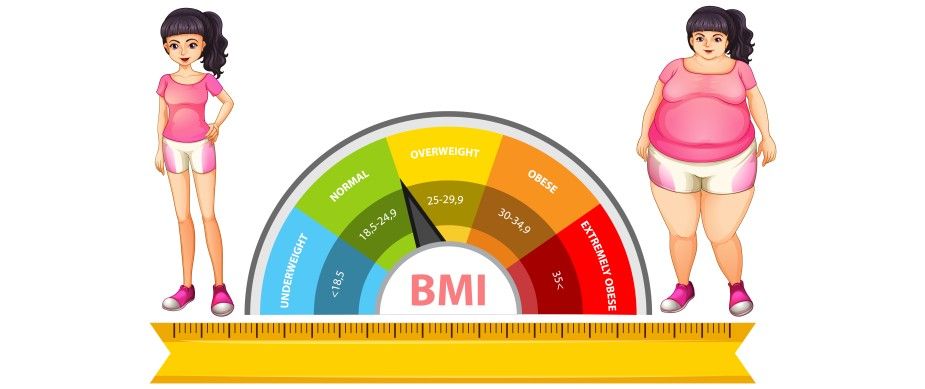
Body Mass Index Chart: BMI Ranges for Men, Women, and How to Calculate
By Dr Manoj Jain in Gastrointestinal Cancer Program
Oct 06 , 2026 | 6 min read

The body mass index chart is one of the ways to check if your weight is in a healthy range for your height. With a quick calculation, you can get a basic idea of where you stand health-wise - whether you're a college student juggling classes or a working parent managing a busy routine.
BMI helps flag early signs of potential health issues like diabetes, heart disease, or joint strain. Once calculated, it places you into one of four categories: underweight, normal, overweight, or obese. These categories offer a useful starting point to understand your current health status. In this post, let’s understand what your BMI says about your health.
Understanding the Body Mass Index Chart
The body mass index chart is a table that shows BMI ranges and the weight categories they fall into. You find your height on one axis, your weight on the other, and where they meet is your BMI range. It helps in:
- Simple health check: It’s quick and doesn’t need any special machines
- First step to know your risk: It shows whether your weight could be putting pressure on your heart, joints, or overall health
- Track progress: If you’re trying to gain or lose weight, BMI helps measure progress over time.
BMI Ranges for Men and Women
While the formula for BMI is the same for everyone, how we understand those numbers can differ between men and women. It is because body composition varies by gender.
Men typically carry more lean muscle, while women naturally store more fat, especially around the hips and thighs, due to hormonal functions. These physiological differences don't change the BMI categories, but they do affect how healthcare providers interpret them.
It’s also important to remember that the same BMI may not carry the same health implications across genders. That's why looking at BMI in isolation can sometimes miss the full picture, especially when factors like fitness levels, reproductive stages, and body shape come into play.
BMI Ranges for Adults (General Overview)
Doctors use set categories for BMI in adults. These apply to both men and women, though they might mean different things based on body type.
- Underweight: Below 18.5
- Normal weight: 18.5 to 24.9
- Overweight: 25 to 29.9
- Obesity: 30 or above
For example, someone is 5’9” tall and weighs 65 kg. Their BMI is around 21.5, which falls in the normal range. But if they gain 10 more kg, their BMI will rise to 25.7, tipping into the overweight range.
Gender Differences in BMI
You may wonder whether BMI works the same for men and women. Technically, the ranges are the same. Men usually have more muscle mass, so a slightly higher BMI in men may still be healthy.
On the other hand, women may carry more body fat naturally, which is normal and healthy, especially during and after pregnancy. Events like menopause, pregnancy, or PCOS can affect their weight and BMI as well.
So, while the body mass index chart stays the same, it’s wise to consider the bigger picture, especially for women.
How to Calculate Your BMI?
Knowing your BMI starts with a simple calculation, but getting it right matters. In India, people often guess their weight or height instead of measuring it, which can mess with the result.
Hence, it’s best to weigh yourself using a digital scale and measure your height without shoes against a flat wall. Also, your BMI should ideally be calculated using metric units (kilograms and metres), as the chart most widely used in Indian clinics follows this system.
Read More about How Healthy Weight Improve Your Heart Health
The Formula for BMI Calculation
Calculating BMI is easy. You just need two numbers: your weight in kilograms and your height in metres. The formula is:
BMI = weight (kg) / height² (m²)
For example, a girl weighs 68 kg and is 1.65 metres tall. Her BMI will be:
BMI = 68 ÷ (1.65 × 1.65) = 68 ÷ 2.7225 = 24.9
Using Online BMI Calculators
If math isn’t your thing, there are plenty of free BMI calculators online and in health apps. Enter your weight and height, and you’ll get your BMI results in seconds. These tools are quick, user-friendly, and often come with charts or visuals to help you understand your results.
That said, most calculators don’t calculate age, muscle mass, or fat distribution. So while they’re a good starting point, they don’t give the full picture of your health.
Interpreting Your BMI Results
If your body mass index chart is below 18.5, it could mean poor nutrition or an underlying illness. It may lead to issues like weak immunity, fatigue, or even fertility problems.
A rate of 18.5–24.9 means your weight is normal, and you are doing great. If it goes above 25–29.9, there’s a higher risk of blood pressure issues, cholesterol problems, and diabetes.
Lastly, if it is 30 or above, it means you are obese. This brings more serious heart disease, sleep apnoea, joint pain, and more.
To avoid it, you may modify your lifestyle. Healthy Diet, exercise, sleep, and stress management go a long way. If your BMI is too low or too high, see a doctor at once.
BMI for Children
BMI works differently for kids. Their bodies are still growing, and their fat levels change with age and gender. For kids, there are:
- Age-based charts: BMI is compared with other children of the same age and sex.
- Percentile system: Paediatricians use BMI percentiles instead of fixed numbers.
This percentile works from 0-100. If a kid is below the 5th percentile, they are underweight. If they are between the 5th and 84th percentiles, their weight is healthy. If they fall between the 85th and 94th percentiles, they are overweight. Anything above that is considered obesity.
Doctors and paediatricians usually track BMI over time to see how a child is growing and developing. This helps catch early signs of obesity or undernutrition.
Know More about Childhood Obesity: Causes, Effects & Prevention
Limitations of BMI and Other Tools for Health Assessment
As much as BMI is useful, it cannot tell how much of your weight is fat, muscle, or bone. It may falsely classify athletes with high muscle density as fat and never capture differences in where the fat distribution is.
Better alternatives or supplements to BMI include:
- Waist-to-hip ratio: Measures abdominal fat, which is a key risk factor for heart disease
- Body fat percentage: Gives a more accurate picture of fat content
- Waist circumference: A quick check to spot central obesity
Conclusion
The body mass index chart helps you understand where you stand in terms of weight and health. But use it as a starting point, not a final diagnosis. Always pair your BMI results with how you feel, your lifestyle, and your medical history. If you’re worried about your weight or health risks, speak to a qualified professional. At Nanavati Max Super Speciality Hospital, you’ll find personalised health assessments and body composition analysis for more accurate results.
Frequently Asked Questions
1. What is a normal BMI for adults?
A normal BMI ranges from 18.5 to 24.9. It suggests a healthy weight for your height.
2. How often should I check my BMI?
Checking it once every few months is fine unless you're actively working on weight loss or gain. Then, you might want to check monthly.
3. Can I have a high BMI and still be healthy?
Yes, in certain cases. If your BMI is high due to muscle mass (like in athletes), it doesn't mean you're unhealthy. However, it’s good to get a full health check to be sure.
4. Does BMI apply to children and teens?
Yes, but differently. BMI percentiles are used instead of fixed ranges. These take into account age and gender.
5. Should I be concerned if my BMI is above 30?
A BMI of 30 or above is classified as obese. It could increase your risk of health problems like diabetes, heart disease, or joint issues. It’s best to consult a doctor for proper guidance.

Written and Verified by:

Related Blogs

Dr. Ganesh Nagarajan In HPB Malignancies , Gastrointestinal Cancer Program
Aug 04 , 2026 | 3 min read
Blogs by Doctor

Robotic Thyroid Surgery: Benefits Over Traditional Thyroidectomy
Dr Manoj Jain In Centre for Robotic Surgery
Oct 06 , 2026 | 4 min read

Bariatric Surgery at Nanavati Max Hospital
Dr Manoj Jain In Bariatric Surgery
Oct 06 , 2026 | 6 min read
Most read Blogs



Related Blogs
Dr. Ganesh Nagarajan In HPB Malignancies , Gastrointestinal Cancer Program
Aug 04 , 2026 | 3 min read
Blogs by Doctor
Robotic Thyroid Surgery: Benefits Over Traditional Thyroidectomy
Dr Manoj Jain In Centre for Robotic Surgery
Oct 06 , 2026 | 4 min read
Bariatric Surgery at Nanavati Max Hospital
Dr Manoj Jain In Bariatric Surgery
Oct 06 , 2026 | 6 min read
Most read Blogs