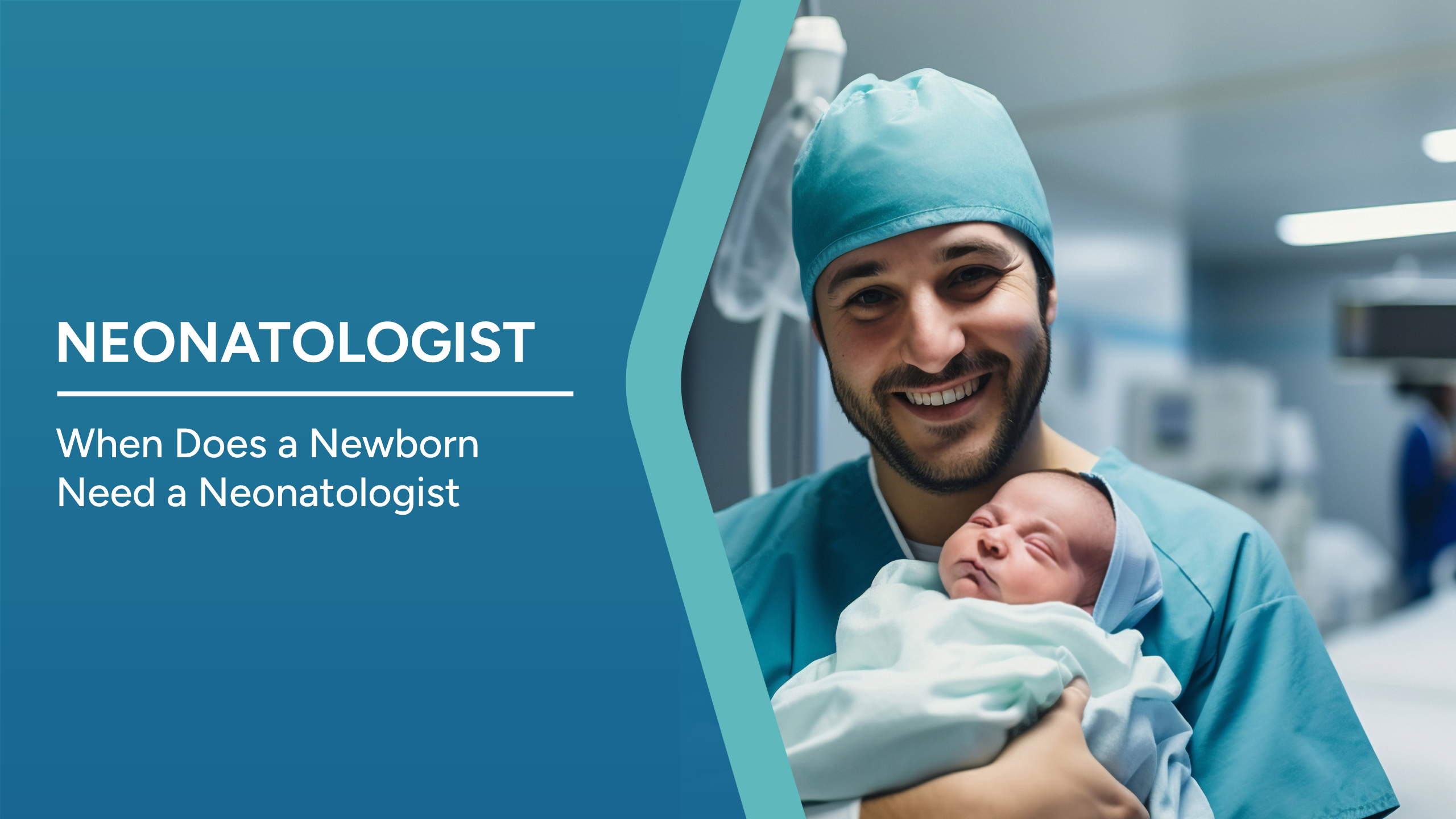
When Does a Newborn Need a Neonatologist? Common Medical Conditions Explained
By Dr. Tushar Maniar in Centre for Child Health
Sep 01 , 2026 | 8 min read

The arrival of a newborn is a joyful yet delicate phase that requires careful medical attention. A neonatologist is a specialised doctor trained to care for newborns, especially premature or critically ill babies. While most babies are healthy at birth, some may need expert intervention to ensure a safe start to life.
Specialised neonatal care plays a crucial role in identifying and managing complications early. Understanding when a neonatologist is needed can help parents make timely decisions and reduce risks to their newborn’s health and development.
Who Is a Neonatologist?
A neonatologist is a medical professional who specialises in the care of newborn infants, particularly those with complex or high-risk conditions. Unlike a general paediatrician, who treats children of all ages, a neonatologist focuses on newborns, especially during the early days and weeks of life. Once a baby's condition stabilises, care typically transitions back to a paediatrician for ongoing general health.
Their role includes managing premature births, congenital conditions, infections, and complications arising during or after delivery. They are also responsible for providing intensive care support when required.
What Special Training Do They Have?
A neonatologist undergoes extensive medical training, including paediatric training, followed by specialised training in neonatal medicine. This equips them with the expertise to handle fragile and high-risk newborns. In total, this path - medical school, a paediatric residency, a neonatology fellowship, and certification from the American Board of Pediatrics' Sub-board of Neonatal-Perinatal Medicine - takes at least 11 years and can take up to 14.
They are skilled in advanced life-saving procedures, monitoring vital functions, and managing complex neonatal conditions. Their training ensures that even critical situations are handled with precision and care.
When Does a Newborn Need a Neonatologist?
There are several situations in which the expertise of a neonatologist is essential. Early identification of high-risk cases can significantly improve outcomes for newborns.
Before Birth (Antenatal Risk Factors)
Certain pregnancies are considered high risk and may require monitoring by a neonatologist even before the baby is born. These include maternal conditions such as diabetes, hypertension, infections, or multiple pregnancies.
If complications are anticipated, a neonatologist works alongside obstetricians to plan immediate care after delivery.
At the Time of Birth
Complications during delivery, such as prolonged labour, foetal distress, or emergency caesarean section, may require immediate intervention from a neonatologist.
In such cases, the newborn may need resuscitation, breathing support, or close monitoring right after birth.
After Birth (Postnatal Concerns)
Some health issues appear after birth. Signs such as difficulty breathing, poor feeding, lethargy, or abnormal colour may indicate the need for a neonatologist. Delayed complications like infections or metabolic disorders also require specialised neonatal care.
Common Medical Conditions Treated by a Neonatologist
Premature Birth and Low Birth Weight
Premature babies often require intensive care due to underdeveloped organs. A neonatologist ensures proper growth, temperature regulation, and nutritional support. They closely monitor developmental milestones and provide interventions when necessary.
Breathing and Lung Problems
Respiratory distress is one of the most common issues in newborns. A neonatologist manages conditions such as underdeveloped lungs or breathing difficulties. Support may include oxygen therapy or advanced equipment in a neonatal intensive care setting.
Infections in Newborns
Newborns are highly vulnerable to infections, including sepsis. A neonatologist plays a critical role in early diagnosis and treatment, including the use of antibiotics and supportive care. Prompt intervention can prevent serious complications.
Jaundice and Liver-Related Issues
Jaundice is common in newborns, but severe cases require medical attention. A neonatologist monitors bilirubin levels and provides treatments such as phototherapy. Bilirubin levels are checked against the baby's age in hours and individual risk factors before deciding on treatment, following current paediatric guidelines. Timely care prevents long-term complications.
Birth Asphyxia and Oxygen Deprivation
Lack of oxygen during birth can lead to serious complications. A neonatologist provides immediate intervention to stabilise the baby and minimise damage. Long-term follow-up is often required to monitor development.
Congenital and Metabolic Disorders
Some babies are born with genetic or metabolic conditions that require early diagnosis. A neonatologist ensures prompt identification and management to improve outcomes. Ongoing care and monitoring are essential in such cases.
What Happens During the Consultation?
During a consultation, a neonatologist conducts a detailed assessment of the newborn's condition. This includes checking vital signs, physical examination, and reviewing medical history.
Diagnostic tests such as blood tests, imaging, or monitoring may be used to identify underlying issues. Based on the findings, a treatment plan is created, and parents are guided through every step.
Parental counselling is an important part of the process, helping families understand the condition and care requirements. At Nanavati Max Super Speciality Hospital, such consultations are designed to provide clarity and reassurance to parents during critical moments. Our neonatologists take the time to explain findings in plain language before any decisions are made.
Neonatologist and NICU Care
A newborn may require admission to a Neonatal Intensive Care Unit when specialised monitoring and treatment are needed. A neonatologist leads the care team in the NICU, ensuring that the baby receives round-the-clock attention. Advanced support systems such as ventilators, incubators, and monitoring devices are used to stabilise and treat the newborn.
NICUs are generally classified from Level I (basic care) through Level IV (the most complex, including surgical care). Nanavati Max Super Speciality Hospital's NICU provides Level III neonatal care.
At Nanavati Max Super Speciality Hospital, NICU care is structured to handle complex neonatal conditions with precision and compassion.
Read More about Paediatrician vs Pediatric Surgeon: Roles & When to Visit
How Parents Can Support Neonatal Care
Parents play a vital role in supporting their newborn's recovery. Working closely with a neonatologist helps ensure that the baby receives consistent and effective care.
Understanding treatment plans, asking questions, and staying informed can make a significant difference.
After discharge, follow-up visits are essential to monitor growth and development. Maintaining hygiene, proper feeding, and timely vaccinations also contribute to the baby's well-being.
When to Seek Immediate Help
Certain warning signs should never be ignored. These include:
- Difficulty breathing
- Bluish skin
- Persistent vomiting
- Seizures
- Refusal to feed
- Excessive sleepiness or poor responsiveness
- A rectal temperature of 100.4°F (38°C) or higher, which is always a medical emergency in a newborn.
Emergency situations require immediate attention from a neonatologist to prevent complications. Early intervention can be life-saving and ensures better long-term health outcomes.
Conclusion
A neonatologist plays a crucial role in ensuring the health and survival of newborns facing medical challenges. From managing premature births to treating complex conditions, their expertise provides a strong foundation for a baby's future well-being.
Early intervention and specialised care can make a significant difference in outcomes. Recognising when to seek help and staying informed empowers parents to make the best decisions for their newborn.
At Nanavati Max Super Speciality Hospital's Centre for Child Health, access to experienced neonatal specialists ensures that every newborn receives specialised care during this critical phase of life. To book a neonatologist consultation at Nanavati Max Super Speciality Hospital, call the number below or visit the appointment page.
Medical Disclaimer: This article is for general information and does not replace a consultation with your baby's own doctor. Always seek the advice of a qualified paediatrician or neonatologist for guidance specific to your baby.
Frequently Asked Questions
1. How long does a newborn stay under a neonatologist’s care?
The duration depends on the baby’s condition. Some may require only a few days of monitoring, while others may need extended care in the NICU.
2. Is a neonatologist needed for all premature babies?
Most premature babies benefit from the care of a neonatologist, especially if they are born significantly early or have complications.
3. Can a neonatologist provide long-term follow-up care?
Yes, many neonatologists offer follow-up care to monitor development and address any ongoing concerns after discharge.
4. What is a neonatologist?
A neonatologist is a doctor who specialises in caring for newborns, particularly those born prematurely or with complex or high-risk medical conditions. They complete paediatric training followed by additional specialised training in neonatal medicine.
5. What is the difference between a neonatologist and a paediatrician?
A paediatrician provides general medical care for children from birth through age 18. A neonatologist has additional specialised training and focuses only on newborns with complex or high-risk conditions, often working inside a NICU. Once a baby's condition stabilises, care typically transitions back to a paediatrician.
6. Does every newborn need a neonatologist?
No. Most healthy, full-term babies are cared for by a paediatrician. A neonatologist becomes involved when a baby is premature, has a low birth weight, or shows signs of a medical complication.
7. Is a neonatologist needed for all premature babies?
Most premature babies benefit from a neonatologist's care, especially if they are born significantly early or have complications. The degree of involvement depends on how early the baby was born and their specific condition.
8. What conditions does a neonatologist treat?
Common conditions include prematurity and low birth weight, breathing and lung problems, infections such as sepsis, jaundice, birth asphyxia, and congenital or metabolic disorders.
9. Can a neonatologist provide long-term follow-up care?
Yes. Many neonatologists offer follow-up care after discharge to monitor a baby's growth and development, particularly for babies who spent time in the NICU, before transitioning ongoing care to a paediatrician.
10. How long does a newborn stay under a neonatologist's care?
It depends on the baby's condition. Some newborns need only a few days of monitoring, while others - particularly those born very premature or with complex conditions - may need extended NICU care lasting weeks or months.
11. What determines the cost of a neonatologist consultation?
Cost depends on factors such as whether the baby needs NICU admission, the length of stay, and the specific tests or treatments required, rather than the consultation alone. Because these costs vary significantly by individual case, it's best to discuss expected costs directly with the hospital's admissions or billing team before or during treatment.
References
1. American Academy of Pediatrics. (n.d.). What is a neonatologist? HealthyChildren.org. https://www.healthychildren.org/English/family-life/health-management/pediatric-specialists/Pages/What-is-a-Neonatologist.aspx
2. American Academy of Pediatrics, Subcommittee on Hyperbilirubinemia. (2022). Clinical practice guideline revision: Management of hyperbilirubinemia in the newborn infant 35 or more weeks of gestation. Pediatrics, 150(3), Article e2022058859. https://publications.aap.org/pediatrics/article/150/3/e2022058859/188726/Clinical-Practice-Guideline-Revision-Management-of
3. American Academy of Pediatrics, Committee on Fetus and Newborn. (2012). Levels of neonatal care. Pediatrics, 130(3), 587–597. https://doi.org/10.1542/peds.2012-1999
4. WHO Collaborating Centre for Training and Research in Newborn Care. (n.d.). Danger signs in a newborn. https://www.newbornwhocc.org/pdf/dangersigns.pdf
5. Children's Hospital of Philadelphia. (2026). Newborn warning signs. https://www.chop.edu/health-resources/newborn-warning-signs

Written and Verified by:

Related Blogs

Dr. Tushar Maniar In Centre for Child Health
Aug 05 , 2026 | 10 min read

Dr. Tushar Maniar In Centre for Child Health
Aug 05 , 2026 | 7 min read

Dr. Tushar Maniar In Centre for Child Health
Aug 04 , 2026 | 2 min read
Blogs by Doctor

Fetal Development: Milestones from Conception to Birth
Dr. Tushar Maniar In Centre for Child Health
Aug 05 , 2026 | 10 min read
Childhood Obesity: Causes, Effects and Prevention
Dr. Tushar Maniar In Centre for Child Health
Aug 05 , 2026 | 7 min read
Most read Blogs



Related Blogs
Dr. Tushar Maniar In Centre for Child Health
Aug 05 , 2026 | 10 min read
Dr. Tushar Maniar In Centre for Child Health
Aug 05 , 2026 | 7 min read
Dr. Tushar Maniar In Centre for Child Health
Aug 04 , 2026 | 2 min read
Blogs by Doctor
Fetal Development: Milestones from Conception to Birth
Dr. Tushar Maniar In Centre for Child Health
Aug 05 , 2026 | 10 min read
Childhood Obesity: Causes, Effects and Prevention
Dr. Tushar Maniar In Centre for Child Health
Aug 05 , 2026 | 7 min read
Most read Blogs