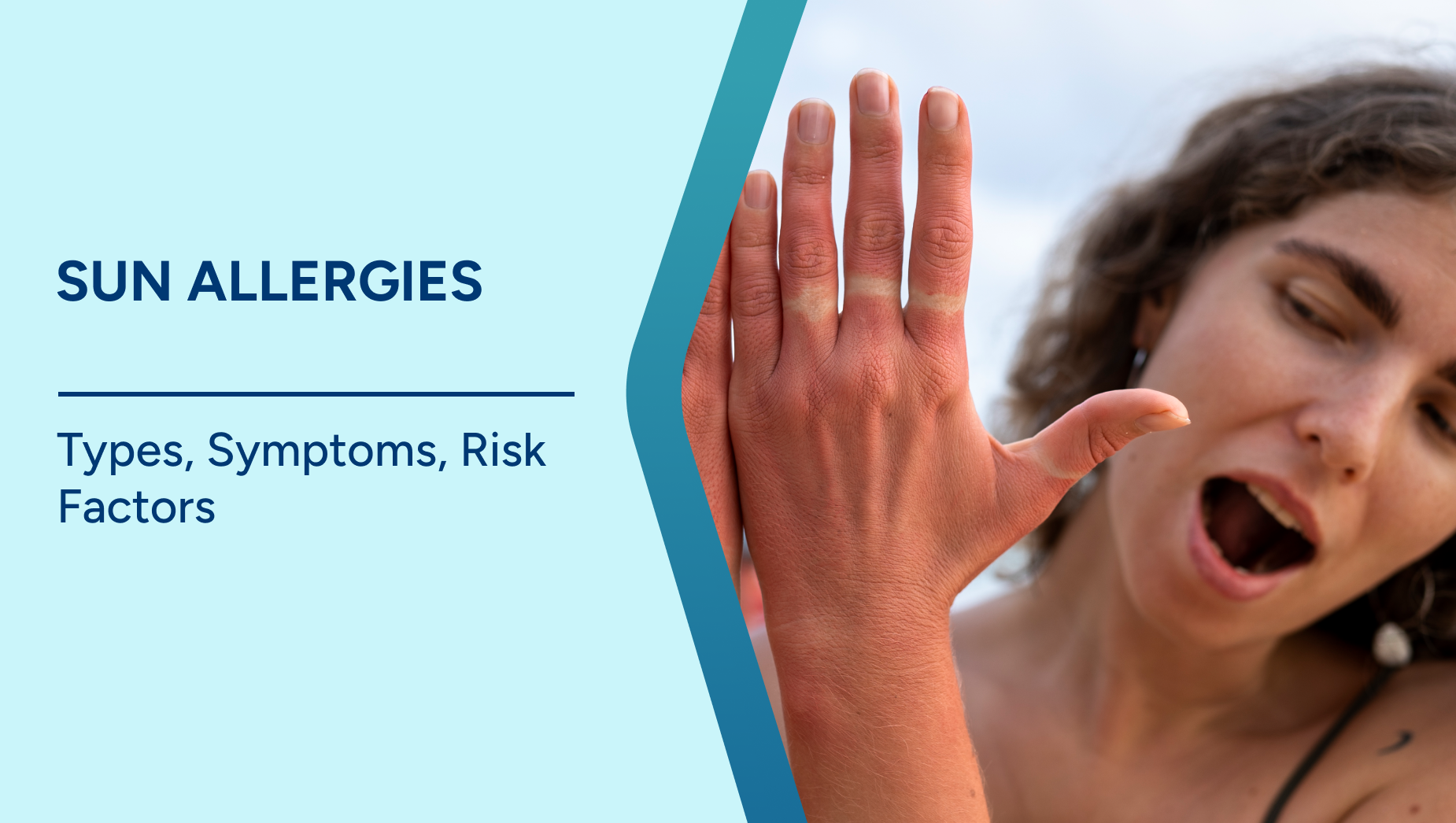
Sun Allergies: Types, Symptoms, Risk Factors, and When to Seek Help
By Dr. Raina N. Nahar in Dermatology
Aug 05 , 2026 | 6 min read

Sun allergies affect millions of people worldwide, yet most remain misdiagnosed or unaware they suffer from a genuine photosensitivity disorder. What many people dismiss as simple sunburn or heat rash is actually an abnormal immune response to ultraviolet (UV) radiation. The condition ranges from mild itching to severe, debilitating reactions that can force patients to avoid outdoor activities entirely.
What Is a Sun Allergy?
Sun allergy (also called photosensitivity) refers to a group of conditions where sun exposure triggers an immune reaction in the skin, causing symptoms such as an itchy rash, blisters, or hives that go beyond normal sunburn. This reaction can occur after prolonged exposure to the sun or may crop up even after an exposure that lasts for a shorter interval.
One of the most common forms of this condition is Polymorphous Light Eruption (PMLE), a skin reaction triggered by sun exposure, solar urticaria, and photoallergic/phototoxic reactions.
Types of Sun Allergies
There are different types of sun allergies, depending on the rash type, cause and people most often affected.
Polymorphous Light Eruption (PMLE)
This is the most common form of sun-related skin reaction.
After spending time in the sun, individuals may develop:
- An itchy rash
- Red patches
- Small bumps on the skin
The rash usually appears on sun-exposed areas such as:
- Arms
- Chest
- Neck
The appearance of the rash can vary from person to person, which is why the condition is called "polymorphous," meaning it can take many forms.
Actinic Prurigo
Actinic prurigo is a more persistent form of sun sensitivity.
It can cause:
- Intense itching
- Raised bumps on the skin
- Skin reactions that may extend beyond directly sun-exposed areas
The condition can significantly affect comfort and quality of life if left unmanaged.
Photoallergic Reactions
Photoallergic reactions occur when sunlight interacts with a substance applied to the skin.
Common triggers may include:
- Certain sunscreen ingredients
- Perfumes
- Cosmetic products
- Skincare products
In these cases, it is the combination of the product and sunlight that causes the reaction rather than sunlight alone.
Know More about the Types, Symptoms, Causes, and Treatment of Skin Rashes
Solar Urticaria (Sun Hives)
Solar urticaria is a less common but often dramatic reaction to sunlight.
Symptoms may appear within minutes of exposure and include:
- Raised itchy welts (hives)
- Redness
- Swelling
Even brief sun exposure may trigger symptoms in some individuals.
Drug and Chemical-Induced Sun Sensitivity
Some medications can increase the skin's sensitivity to sunlight.
Examples include certain:
- Antibiotics
- Pain-relieving medications
- Acne treatments
- Other prescription medicines
If skin reactions begin after starting a new medication, it is important to discuss this with a healthcare professional.
Sun-Aggravated Skin Conditions
In some cases, sunlight does not cause a new condition but worsens an existing one.
Conditions that may flare with sun exposure include:
- Lupus
- Rosacea
- Acne
- Other inflammatory skin disorders
Read More about the Symptoms and Causes of Skin Diseases
|
Type |
Prevalence |
UV Trigger |
Onset After Exposure |
Severity |
|
Polymorphous Light Eruption (PMLE) |
50-70% of photosensitivity cases |
UVA primary |
12-48 hours |
Mild to moderate |
|
Actinic Prurigo |
5-10% of photosensitivity cases |
UVB or UVA |
24-72 hours |
Moderate to severe |
|
Solar Urticaria (Hives) |
<1% of photosensitivity |
UVA (occasionally UVB) |
Minutes (15-30 min) |
Can be severe |
|
Photoallergic Reaction |
10-15% of photosensitivity |
UVA + chemical |
24-48 hours |
Mild to moderate |
|
Drug-Induced Photosensitivity |
Variable (5-10% of users) |
UVA or UVB |
12-48 hours |
Mild to severe |
Who Is More Likely to Develop Sun Allergies?
Sun allergies can affect anyone, regardless of age or background. However, some people may be at a higher risk, including:
- Individuals with lighter skin tones
- People with a family history of sun sensitivity
- Those taking medications that increase photosensitivity
- Individuals with certain autoimmune or skin conditions
Common Symptoms of Sun Allergy
Symptoms vary depending on the specific condition but may include:
- Itching or burning of the skin
- Redness
- Swelling
- Small bumps
- Blisters
- Hives
- Skin irritation after sun exposure
Symptoms most commonly affect areas exposed to sunlight, such as:
- Face
- Neck
- Forearms
- Hands
- Upper chest
In some cases, the rash may spread beyond sun-exposed areas.
Read More about the Role of a Dermatologist
Diagnosis and Tests
If you suspect a sun allergy, talk to your primary care provider or a dermatologist. They can diagnose the condition based on:
- Discussion of your symptoms – when the rash appears, how long it lasts, and which body areas are affected.
- Review of medications and skin products – since certain drugs, sunscreens, or cosmetics can make skin more sensitive to light.
- Light testing (phototesting) – small areas of skin are exposed to different light sources, wavelengths, and intensities to see what triggers a reaction.
- Patch testing – often combined with light testing; patches containing suspected chemicals are placed on the skin to check for a reaction when later exposed to light (called photopatch testing).
Management and Treatment
Depending on the type and severity of the condition, treatment may include:
- Using broad-spectrum sunscreen regularly
- Wearing protective clothing
- Limiting excessive sun exposure
- Avoiding known triggers
- Reviewing medications that may increase sun sensitivity
- Using prescribed treatments when necessary
Preventive measures can often help reduce flare-ups and improve comfort during outdoor activities.
Know More about the Sunburn: Causes, Symptoms, Treatment, and Prevention
When Should You See a Dermatologist?
It is advisable to seek medical attention if:
- Skin reactions occur repeatedly after sun exposure
- Symptoms are becoming more severe
- The rash is affecting daily activities
- Over-the-counter measures are not helping
- You suspect a medication may be triggering the reaction
A dermatologist can help identify the underlying cause and recommend appropriate treatment.
Conclusion
Sun allergies are more than just a temporary reaction to sunlight. They occur when the skin responds abnormally to sun exposure, leading to symptoms such as itching, redness, rashes, or hives. While these reactions can be uncomfortable, they can often be managed effectively with proper diagnosis, sun protection, and appropriate treatment.
Pay attention to recurring skin changes after sun exposure. Your skin often provides important signals, and seeking timely advice can help prevent symptoms from becoming a persistent problem.
If you are experiencing repeated or worsening sun-related skin reactions, consider consulting a specialist at Nanavati Max Hospital for expert dermatology care and personalized treatment options.
Disclaimer - This information is for general educational purposes only and is not a substitute for professional medical advice, diagnosis, or treatment. Sun allergy symptoms can overlap with other skin conditions, so please consult a qualified healthcare provider or dermatologist for an accurate diagnosis and personalized treatment plan.
Frequently Asked Questions
1. Can sun allergy develop suddenly?
Yes, sun allergies can appear without warning at any age, even after years of sun exposure. This sudden onset often occurs due to changes in immune function, medications, hormonal shifts, or increased UV intensity.
2. Does sunscreen prevent sun allergies?
Broad-spectrum sunscreen (SPF 50+) significantly reduces sun allergy reactions by blocking the UV rays that trigger them. However, some sunscreen ingredients can cause photoallergic reactions. Opt for mineral-based, fragrance-free formulas to minimize irritation while maintaining protection.
3. Is sun allergy worse in summer?
Yes, sun allergies typically flare during summer months due to intense UV exposure and longer days. Interestingly, gradual acclimatization (the "hardening effect") often reduces symptoms as the season progresses. Most people experience fewer reactions by late summer if they maintain consistent sun protection.
4. What should I do during a sun allergy flare?
Immediately move indoors, apply cool compresses, and avoid further sun exposure. Take an over-the-counter antihistamine if itching is severe. Apply fragrance-free moisturizer and avoid scratching to prevent infection.
5. Can vitamin D deficiency cause sun allergies?
No direct link exists between vitamin D deficiency and sun allergies. However, people with sun allergies often avoid sun exposure, leading to vitamin D deficiency. Discuss vitamin D supplementation with your doctor rather than increasing sun exposure, which could worsen reactions.
6. What's the fastest way to treat sun allergy symptoms?
Topical corticosteroid creams (prescribed by dermatologists) provide the fastest relief, reducing inflammation within 24-48 hours. Oral antihistamines offer quick itching relief. Cool compresses and fragrance-free moisturizers provide immediate soothing.
7. Can sun allergies be cured permanently?
Most sun allergies are lifelong but manageable. Photohardening can reduce severity by 50-70%. Some people experience spontaneous remission; others worsen with age.
8. Is sun allergy the same as sunburn?
No. Sunburn is direct UV damage to skin (thermal); sun allergy is an immune reaction. Different mechanisms, different treatment.
References
DermNet NZ. Phototesting https://dermnetnz.org/topics/phototesting
DermNet NZ. Solar urticaria https://dermnetnz.org/topics/solar-urticaria
National Health Service. Polymorphic light eruption https://www.nhs.uk/conditions/polymorphic-light-eruption/

Written and Verified by:

Related Blogs

Dr. Kalpana Sarangi In Dermatology
Oct 05 , 2026 | 5 min read

Blogs by Doctor

Medi-Facials: What is It & Types? Reason To Go For It?
Dr. Raina N. Nahar In Dermatology
Aug 05 , 2026 | 7 min read
How to Prevent Heat Rashes During Hot and Humid Weather
Dr. Raina N. Nahar In Dermatology
Aug 03 , 2026 | 7 min read
Most read Blogs



Related Blogs
Dr. Kalpana Sarangi In Dermatology
Oct 05 , 2026 | 5 min read
Blogs by Doctor
Medi-Facials: What is It & Types? Reason To Go For It?
Dr. Raina N. Nahar In Dermatology
Aug 05 , 2026 | 7 min read
How to Prevent Heat Rashes During Hot and Humid Weather
Dr. Raina N. Nahar In Dermatology
Aug 03 , 2026 | 7 min read
Most read Blogs