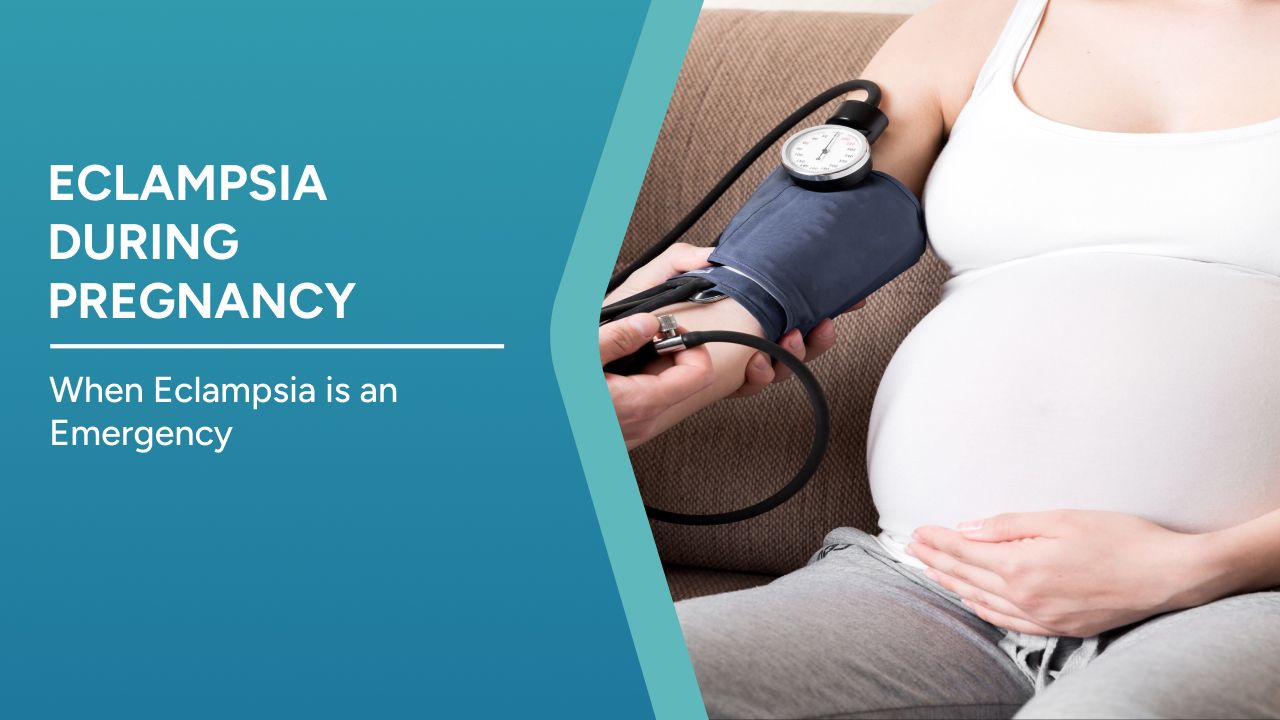
Eclampsia During Pregnancy: Symptoms, Risks, and Emergency Care
By Dr. Rekha Ambegaokar in Gynaecology & Obstetrics
Nov 11 , 2026

A routine antenatal visit may sometimes reveal higher-than-expected blood pressure. Later, symptoms such as a severe headache that does not improve with rest, changes in vision or persistent pain beneath the ribs can be warning signs that need prompt medical attention.
These symptoms may occur with severe preeclampsia. If a seizure develops in association with preeclampsia, it is known as eclampsia in pregnancy and requires emergency hospital treatment.
Recognising these warning signs is important because eclampsia can develop during pregnancy, labour or after delivery, and prompt treatment is needed to protect both mother and baby.
Quick AnswerEclampsia in pregnancy is the occurrence of seizures associated with preeclampsia that cannot be explained by another neurological cause. It can develop during pregnancy, labour or after delivery. Severe headache, vision changes, upper abdominal pain, very high blood pressure or sudden worsening of symptoms may occur before a seizure, although eclampsia can sometimes develop without clear warning. A seizure during pregnancy or soon after childbirth is a medical emergency and needs immediate hospital treatment. |
What Is Eclampsia in Pregnancy?
Preeclampsia is a pregnancy-related hypertensive disorder that usually develops after 20 weeks. It can affect several organs, including the brain, liver, kidneys, and placenta.
Eclampsia is a severe complication in which seizures occur in association with preeclampsia and cannot be explained by another condition. Preeclampsia does not mean a seizure has occurred. Eclampsia does. Although some women have warning symptoms or known high blood pressure beforehand, a seizure can occasionally be the first obvious sign of the condition.
Doctor's NoteA normal antenatal visit earlier in pregnancy does not make a new severe headache, visual disturbance or upper abdominal pain safe to ignore. Preeclampsia can develop or worsen as pregnancy progresses, so new warning symptoms need assessment. |
What Causes Eclampsia?
Preeclampsia is linked with abnormal placental development and changes affecting the maternal blood vessels. These changes can contribute to high blood pressure and reduced blood flow to different organs. When the brain becomes severely affected, seizures can occur.
Certain factors can increase the likelihood of preeclampsia and therefore eclampsia, including:
- First Pregnancy: Preeclampsia is more common during a first pregnancy.
- Multiple Pregnancy: Carrying twins or more can increase risk.
- Previous Preeclampsia: A history of the condition increases risk in later pregnancies.
- Chronic Hypertension: High blood pressure before pregnancy can increase risk.
- Diabetes or Kidney Disease: These conditions can increase the likelihood of preeclampsia.
- Obesity: Higher body weight is another recognised risk factor.
- Family History: Having close relativeRead More about the Types of High-Risk Pregnancies and their Managements with preeclampsia may increase risk.
Regular antenatal monitoring remains important even when none of these factors is present.
Read More about the Types of High-Risk Pregnancies and their Management
What Are the Warning Symptoms of Eclampsia?
The defining feature of eclampsia is a seizure. However, symptoms of severe preeclampsia may appear beforehand.
|
Warning Sign |
Why It Matters |
|
Severe or persistent headache |
May indicate neurological involvement |
|
Blurred vision or flashing lights |
Can occur with severe preeclampsia |
|
Upper abdominal pain |
Particularly concerning when felt beneath the ribs |
|
Unexpected nausea or vomiting |
May occur with severe disease later in pregnancy |
|
Severe high blood pressure |
A central feature of hypertensive pregnancy disorders |
|
Sudden swelling of the face or hands |
May occur with preeclampsia, although swelling alone is not diagnostic |
|
Reduced urine output |
May indicate kidney involvement |
|
Seizure |
Indicates eclampsia and requires emergency treatment |
Symptoms such as severe headache, visual problems, upper abdominal pain, reduced urine output and very high blood pressure can be important warning signs of severe preeclampsia and should be assessed promptly.
How Is Eclampsia Diagnosed?
When a seizure occurs during pregnancy or after delivery, immediate stabilisation comes first. Doctors then assess whether eclampsia is the likely cause while considering other possible reasons for a seizure.
Evaluation may include blood pressure measurement, urine testing and blood tests to assess kidney function, liver function and platelet count. The baby's heart rate and wellbeing are also monitored. Brain imaging or neurological investigations may be considered when symptoms are unusual or another cause of seizure is suspected.
What Happens During an Eclampsia Emergency?
A seizure during pregnancy should not be monitored at home. Emergency medical assistance is required.
While waiting for help:
- Protect the person from nearby objects that could cause injury.
- Place them on their side when it is safe.
- Do not restrain their movements.
- Do not put anything into their mouth.
- Do not give food, water or medicines by mouth.
- Note approximately how long the seizure lasts.
In hospital, treatment focuses on stabilising breathing and circulation, preventing further seizures and controlling severe hypertension. Magnesium sulphate is recommended for treating eclampsia and preventing recurrent seizures. Medicines may also be required to control severe blood pressure.
The baby is monitored because eclampsia can affect placental blood flow and fetal wellbeing. At Nanavati Max Super Speciality Hospital, obstetric specialists, adult intensive care, and a Level III Neonatal Intensive Care Unit support high-risk pregnancy care, allowing maternal stabilisation and neonatal needs to be considered together when serious pregnancy complications occur.
Recommended Read Placenta Previa: Symptoms, Causes & Pregnancy Guide
Emergency Decision PointDo not drive to a routine appointment after a seizure. A seizure during pregnancy, labour or the postpartum period requires emergency medical care. |
Does Eclampsia Mean the Baby Must Be Delivered Immediately?
Delivery is an important part of treating eclampsia, but the mother needs to be stabilised first. Seizures and severe hypertension are managed before the obstetric team determines the safest timing and method of delivery.
The decision depends on factors such as gestational age, maternal condition, cervical findings and the baby's wellbeing. Eclampsia also does not automatically mean that a caesarean section is required. The safest route depends on the clinical situation.
What Complications Can Eclampsia Cause?
Eclampsia can affect both mother and baby. Maternal complications may include stroke, placental abruption, kidney or liver injury, breathing problems, HELLP syndrome and recurrent seizures.
For the baby, reduced placental function may contribute to fetal distress, growth problems or premature delivery. Prompt treatment aims to control seizures and blood pressure while reducing the risk of further complications.
Can Eclampsia Happen After Delivery?
Yes. Eclampsia can occur after childbirth because the risk associated with hypertensive pregnancy disorders does not disappear immediately after delivery.
Women who have had severe preeclampsia or eclampsia may need continued blood-pressure monitoring after childbirth. A severe headache, visual changes, breathing difficulty, upper abdominal pain or seizure during the postpartum period requires urgent assessment.
What Does Recovery After Eclampsia Involve?
Blood pressure needs continued monitoring after delivery, and some women may require antihypertensive treatment for a period afterwards. Follow-up is important because blood pressure may not return to normal immediately.
A history of preeclampsia or eclampsia is also associated with a higher future risk of hypertension and cardiovascular disease. Before another pregnancy, discussing the previous episode with an obstetrician can help ensure earlier monitoring and appropriate preventive planning.
Key Takeaway
- Eclampsia means seizures have developed in association with preeclampsia and requires emergency treatment.
- Severe headache, vision changes, upper abdominal pain, severe hypertension or reduced urine output may occur before a seizure.
- Treatment focuses on stabilising the mother, preventing further seizures, controlling severe blood pressure, and monitoring the baby.
- Delivery is an important part of management, but maternal stabilisation comes first.
- Eclampsia can occur after childbirth, so concerning postpartum symptoms also require urgent assessment.
Conclusion
Eclampsia is a serious complication of preeclampsia that can develop during pregnancy, labour or after delivery. Severe headache, visual changes, upper abdominal pain, severe hypertension and reduced urine output can be warning signs, although seizures may sometimes occur without clear symptoms beforehand.
Once a seizure occurs, emergency hospital care is essential to stabilise the mother, prevent further seizures, control blood pressure and monitor the baby before planning delivery. Continued monitoring after childbirth is also important because eclampsia can occur postpartum and blood pressure may remain elevated. Regular antenatal care, prompt assessment of warning symptoms, and appropriate follow-up can help reduce the risk of severe complications.
Frequently Asked Questions
1. Can Eclampsia Occur Without Warning?
Yes. Some women have high blood pressure or symptoms of severe preeclampsia beforehand, while others may develop a seizure without clear warning signs. This is why regular antenatal monitoring remains important throughout pregnancy.
2. Does Having Preeclampsia Mean Eclampsia Will Develop?
No. Most people with preeclampsia do not necessarily progress to eclampsia. Appropriate monitoring and treatment help reduce the risk of severe complications.
3. Does Eclampsia Always Require a Caesarean Section?
No. Eclampsia requires delivery after the mother has been stabilised, but a caesarean section is not automatically necessary. The method of delivery depends on the maternal condition, baby's wellbeing, and obstetric circumstances.
4. Can You Have a Healthy Pregnancy After Eclampsia?
Yes, many women can have a subsequent pregnancy after eclampsia. However, the previous episode increases future risk, so pre-pregnancy consultation and early antenatal monitoring are important.
5. How Long Does Blood Pressure Stay High After Eclampsia?
The duration varies from person to person. Blood pressure may remain elevated after delivery, which is why monitoring and follow-up are important even after the pregnancy has ended.
Disclaimer
This article is intended for educational purposes only. Eclampsia is a medical emergency and requires immediate professional care. Do not use online information to delay emergency assessment or treatment.

Written and Verified by:

Related Blogs

Medical Expert Team
Nov 01 , 2026 | 4 min read

Dr. Rekha Ambegaokar In Gynaecology & Obstetrics
Oct 27 , 2026 | 5 min read
Blogs by Doctor
NIPT Test: How It Works, Accuracy & What It Detects in Pregnancy
Dr. Rekha Ambegaokar In Gynaecology & Obstetrics
Oct 27 , 2026 | 5 min read
Non-Stress Test (NST): What It Is And When It's Needed
Dr. Rekha Ambegaokar In Gynaecology & Obstetrics
Oct 01 , 2026 | 7 min read
FSH Test: What It Is and Why It Matters for Fertility
Dr. Rekha Ambegaokar In Gynaecology & Obstetrics
Aug 21 , 2026 | 8 min read
Most read Blogs



Related Blogs
Medical Expert Team
Nov 01 , 2026 | 4 min read
Dr. Rekha Ambegaokar In Gynaecology & Obstetrics
Oct 27 , 2026 | 5 min read
Blogs by Doctor
NIPT Test: How It Works, Accuracy & What It Detects in Pregnancy
Dr. Rekha Ambegaokar In Gynaecology & Obstetrics
Oct 27 , 2026 | 5 min read
Non-Stress Test (NST): What It Is And When It's Needed
Dr. Rekha Ambegaokar In Gynaecology & Obstetrics
Oct 01 , 2026 | 7 min read
FSH Test: What It Is and Why It Matters for Fertility
Dr. Rekha Ambegaokar In Gynaecology & Obstetrics
Aug 21 , 2026 | 8 min read
Most read Blogs