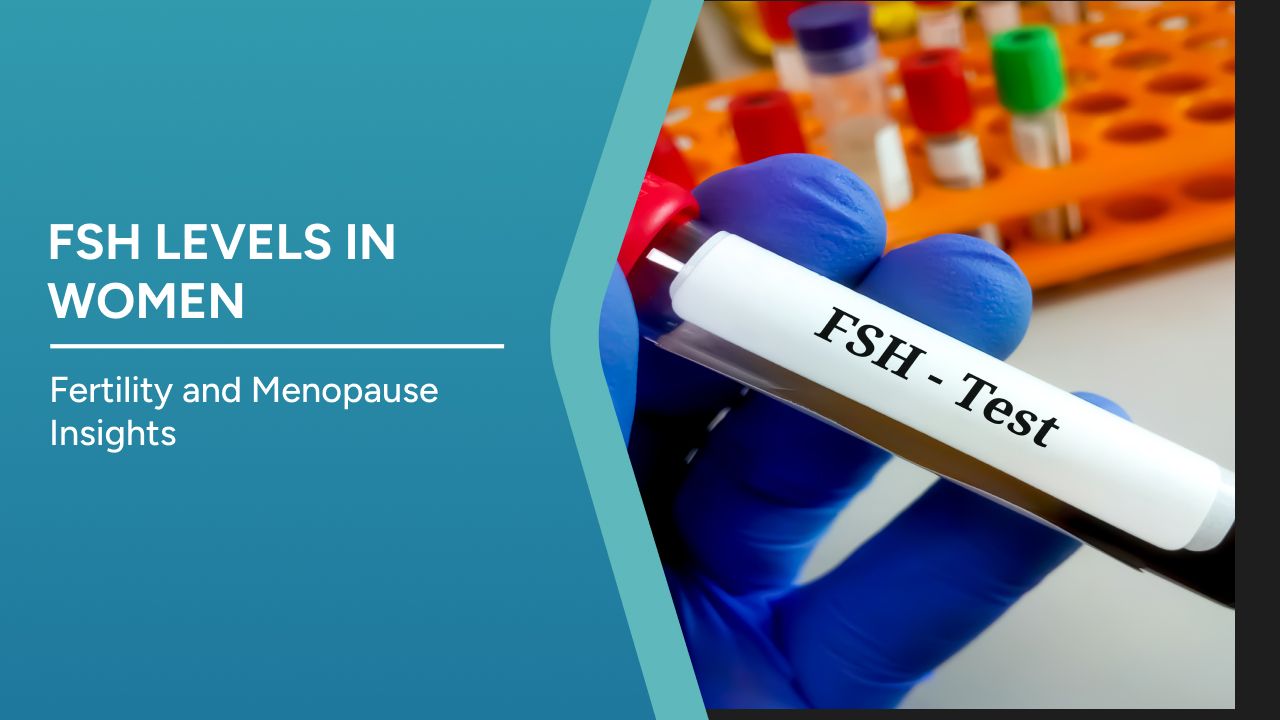
Understanding FSH Levels in Women: Fertility and Menopause Insights
By Dr. Gayatri Deshpande in Gynaecology & Obstetrics
Oct 12 , 2026

Your body often gives subtle signals when hormone levels begin to change. A menstrual cycle that suddenly becomes irregular, increasing difficulty in conceiving, or symptoms such as hot flushes and disturbed sleep may seem unrelated at first. However, these changes can sometimes point to shifts in reproductive hormone activity.
For women trying to understand their fertility, planning a pregnancy, or approaching menopause, identifying the cause of these changes is an important step. This is where hormone testing can offer valuable clues. Among the various tests available, the FSH test is commonly used to assess reproductive function and provide insights into ovarian health.
But what exactly does this test do, what do the results mean, and when should you consider getting tested? Continue reading to learn more about it.
What Is an FSH Test?
An FSH test is a blood test that measures the level of follicle-stimulating hormone (FSH) in your body. FSH is a hormone that plays an important role in the menstrual cycle and reproductive health by supporting the growth and development of eggs in the ovaries. Because FSH levels can change at different stages of life, the test can provide useful information about ovarian function and hormonal changes. The results are usually considered alongside factors such as age, menstrual history, symptoms, and other test findings. The levels naturally rise and fall during the menstrual cycle, so the timing of the test may sometimes be important.
Why Is the FSH Test Important for Women?
FSH plays an important role in regulating the menstrual cycle and supporting reproductive health. Measuring FSH levels can provide useful information about ovarian function, hormonal balance, fertility, and menopause-related changes.
Evaluating Reproductive Health
A regular menstrual cycle depends on the coordinated function of the brain, pituitary gland, ovaries, and reproductive hormones. An FSH test can help assess whether this hormonal communication is working as expected.
Assessing Ovarian Function
When the ovaries are not responding as effectively as expected, the body may produce more FSH to stimulate them. For this reason, a raised FSH level may sometimes point towards reduced ovarian function. However, a single result does not provide a complete picture, as FSH levels can vary between menstrual cycles and across different stages within the same cycle.
Identifying Hormonal Imbalances
Higher or lower FSH levels may sometimes indicate that further evaluation is required. Doctors may assess related hormones and consider whether the ovaries, pituitary gland, or hypothalamus are involved.
Supporting Fertility Evaluations
An FSH test may be included in a fertility assessment, particularly when ovarian reserve needs to be evaluated. While the test cannot predict whether pregnancy will definitely occur, it can provide useful information about how the ovaries may respond as part of a broader fertility evaluation.
Read More about Pregnancy Test: Types, Timing & How Accurate Are They?
When Should a Woman Consider an FSH Test?
An FSH test may be recommended when changes in your menstrual cycle, fertility, or reproductive health require further evaluation. The test can provide useful information about hormonal function and may help doctors understand whether additional assessment is needed.
Difficulty Conceiving
A fertility specialist may recommend an FSH Test if you have been trying to conceive without success. The timing of a fertility evaluation depends on factors such as age, medical history, and how long you have been trying.
Irregular Menstrual Cycles
Periods that become unusually irregular, very infrequent, or absent may require medical evaluation. An FSH Test can help explore whether ovarian or hormonal changes may be contributing to the problem.
Symptoms of Perimenopause
Perimenopause is the transition period leading up to menopause. During this time, periods may become irregular. Symptoms such as hot flushes, night sweats, sleep changes, and mood changes may also occur.
Early Signs of Menopause
Testing may be considered when menopause-related symptoms appear earlier than expected, particularly before the age of 45. Symptoms before the age of 40 may require an evaluation for primary ovarian insufficiency.
Recommendations from Fertility Specialists
A specialist may also request the test before planning certain fertility treatments. In such cases, the result is usually assessed alongside other investigations.
How Does the FSH Test Work?
The FSH test is a simple blood test that helps measure the level of follicle-stimulating hormone in your body. Understanding how the test is performed and when it is usually scheduled can help you feel more prepared.
- Blood Sample Collection: A healthcare professional collects a small blood sample from a vein in your arm. The procedure usually takes only a few minutes.
- Timing of the Test: FSH levels change throughout the menstrual cycle, so the test may be scheduled on specific days depending on the reason for testing.
- Preparation Requirements: The test usually requires little preparation, but you should inform your healthcare provider about any medicines, supplements, contraceptives, or hormonal treatments you are taking.
Timing of the Test: FSH levels change throughout the menstrual cycle, so the test may be scheduled on specific days depending on the reason for testing. For fertility assessment, the test is typically done on Day 2 or Day 3 of the menstrual cycle (Day 1 being the first day of the period). This timing provides the most accurate baseline measurement of ovarian reserve.
The results are then analysed alongside factors such as your age, symptoms, menstrual history, and other test findings to provide a clearer understanding of your reproductive health.
FSH Test in Fertility Evaluation and Ovarian Health
The FSH test is often used as part of fertility evaluation to understand how well the ovaries are functioning and responding to signals from the pituitary gland, which helps regulate the menstrual cycle and egg production. It can provide an indication of ovarian reserve, meaning the number of eggs remaining in the ovaries. Higher levels may suggest that the ovaries require more stimulation for egg development. However, ovarian reserve is only one part of fertility assessment, and many people can still conceive across a wide range of FSH levels. Doctors usually interpret FSH results alongside other tests, such as AMH levels, ultrasound scans, and antral follicle count. Age and medical history are also considered. At Nanavati Max Hospital, a specialist consultation can help assess these factors together and determine whether further evaluation is required.
At-home urine-based FSH test kits are available and may help women identify whether elevated FSH levels could be related to perimenopause or menopause. However, these tests only detect higher-than-normal FSH and should not be used to assess fertility or confirm pregnancy potential. Results should always be discussed with a healthcare provider.
FSH Test and Hormonal Changes During Menopause
The FSH test is sometimes used when assessing menopause-related changes, as it helps doctors observe how hormone levels shift during this stage of life. In many cases, especially for women aged 45 and above with typical symptoms, menopause or perimenopause may be identified through menstrual history and reported symptoms, while a blood test may be used for additional clarity. As menopause approaches, hormone levels gradually change, and the body may release more FSH, which can lead to higher levels. During perimenopause, these levels may fluctuate along with changes in menstrual cycles and related symptoms. A raised FSH level is considered alongside age, symptoms, and overall health to support a complete view of hormonal changes during menopause.
Interpreting FSH Test Results
An FSH test helps assess reproductive hormone levels in the body. The results may fall into low, normal, or high ranges, and they are always interpreted alongside age, symptoms, and overall health for a complete understanding.
- Low FSH levels may suggest reduced hormonal signalling from the pituitary gland or hypothalamus. They may also be seen due to factors such as weight changes or high physical activity.
- Normal FSH levels generally indicate balanced hormonal signalling and regular ovarian function, depending on the menstrual cycle phase.
- Higher FSH levels may indicate that the body is producing more hormone to support ovarian activity. These levels are commonly seen during perimenopause and menopause.
|
Life Stage |
Approximate FSH Range (mIU/mL) |
Interpretation |
|
Before puberty |
0 – 4.0 |
Normal |
|
Reproductive years |
3 – 10 |
Normal baseline |
|
Borderline high (fertility) |
10 – 15 |
Borderline; further assessment advised |
|
High (fertility concern) |
>15 |
Possible diminished ovarian reserve |
|
Perimenopause |
10 – 30 |
Ovarian function declining |
|
After menopause |
25 – 135 |
Ovaries no longer cycling |
Overall, FSH test results are best viewed in context, helping doctors understand hormonal patterns as part of a broader reproductive health assessment.
Symptoms of High FSH Levels
There may not always be direct symptoms linked specifically to high FSH. Symptoms usually arise from the underlying hormonal imbalance affecting the ovaries. Common presentations include:
- Irregular, infrequent, or absent menstrual periods
- Difficulty conceiving naturally
- Hot flashes and night sweats
- Vaginal dryness and discomfort during intercourse
- Mood swings, irritability, or mild anxiety
- Sleep disturbances and fatigue
Key Factors Affecting FSH Test Results
FSH test results can vary due to several biological and medical factors. These factors are usually taken into account while interpreting the report to ensure an accurate understanding of hormone levels.
- Age and reproductive stage
- Medications and hormonal treatments
- Menstrual cycle timing
- Existing medical conditions
These factors are considered alongside the test result to provide a complete view of hormonal health.
Conclusion
An FSH test offers important insights into reproductive health, including ovarian function, fertility assessment, menstrual cycle changes, and menopause-related transitions. It is often recommended when there are concerns such as irregular periods, difficulty conceiving, or symptoms that suggest hormonal changes at different stages of life.
The results are always interpreted as part of a wider evaluation that includes age, symptoms, menstrual history, and other hormone tests or scans. Since FSH levels naturally fluctuate, the test helps build a broader understanding of hormonal patterns rather than providing a standalone conclusion, supporting a more complete view of reproductive health and next steps.
Frequently Asked Questions
1. What Is the Purpose of an FSH Test?
The test measures follicle-stimulating hormone levels in the blood. It may help assess ovarian function, fertility concerns, irregular periods, or possible menopause-related changes.
2. Is an FSH Test Painful?
The test involves a standard blood sample. You may feel a brief sting when the needle is inserted. Mild bruising may occur, but it usually settles quickly.
3. How Long Does It Take to Receive FSH Test Results?
The time required depends on the laboratory and healthcare facility. Your healthcare provider can confirm when the report is likely to be available.
4. Can an FSH Test Confirm Menopause?
Not always. Menopause is often assessed based on symptoms, age, and menstrual history. An FSH Test may be helpful in selected situations, such as when symptoms begin earlier than expected, or the diagnosis is unclear.
5. Can an FSH Test Predict Fertility?
No. The test may provide information about ovarian response or ovarian reserve, but it cannot predict whether pregnancy will occur. Fertility depends on several factors and requires a broader evaluation.
6. What FSH Level Is Considered Normal for Fertility or IVF?
For fertility assessment, FSH is typically tested on Day 3 of the menstrual cycle. Levels below 10 mIU/mL are generally considered normal, while levels above 15 mIU/mL may suggest reduced ovarian reserve. Research indicates that women with Day 3 FSH below 15 mIU/mL tend to have better outcomes in IVF cycles. However, FSH level is just one factor - a fertility specialist should interpret results alongside AMH, antral follicle count, and age.
- Can FSH Levels Change From Month to Month?
Yes. FSH levels can fluctuate from cycle to cycle, especially in women approaching perimenopause. A single elevated result is not always conclusive, which is why doctors may recommend repeat testing or combine FSH with AMH and antral follicle count for a more reliable assessment of ovarian reserve.

Written and Verified by:

Related Blogs


Dr. Gayatri Deshpande In Gynaecology & Obstetrics
Oct 06 , 2026 | 9 min read
Dr. Gayatri Deshpande In Gynaecology & Obstetrics
Oct 06 , 2026 | 7 min read
Blogs by Doctor
Double Marker Test in Pregnancy
Dr. Gayatri Deshpande In Gynaecology & Obstetrics
Oct 06 , 2026 | 9 min read
Negative Pregnancy Test: What It Means and What to Do Next
Dr. Gayatri Deshpande In Gynaecology & Obstetrics
Oct 06 , 2026 | 7 min read

What to Expect in the Third Trimester: Physical and Emotional Changes
Dr. Gayatri Deshpande In Gynaecology & Obstetrics
Sep 03 , 2026 | 12 min read
Most read Blogs



Related Blogs
Dr. Gayatri Deshpande In Gynaecology & Obstetrics
Oct 06 , 2026 | 9 min read
Dr. Gayatri Deshpande In Gynaecology & Obstetrics
Oct 06 , 2026 | 7 min read
Blogs by Doctor
Double Marker Test in Pregnancy
Dr. Gayatri Deshpande In Gynaecology & Obstetrics
Oct 06 , 2026 | 9 min read
Negative Pregnancy Test: What It Means and What to Do Next
Dr. Gayatri Deshpande In Gynaecology & Obstetrics
Oct 06 , 2026 | 7 min read
What to Expect in the Third Trimester: Physical and Emotional Changes
Dr. Gayatri Deshpande In Gynaecology & Obstetrics
Sep 03 , 2026 | 12 min read
Most read Blogs