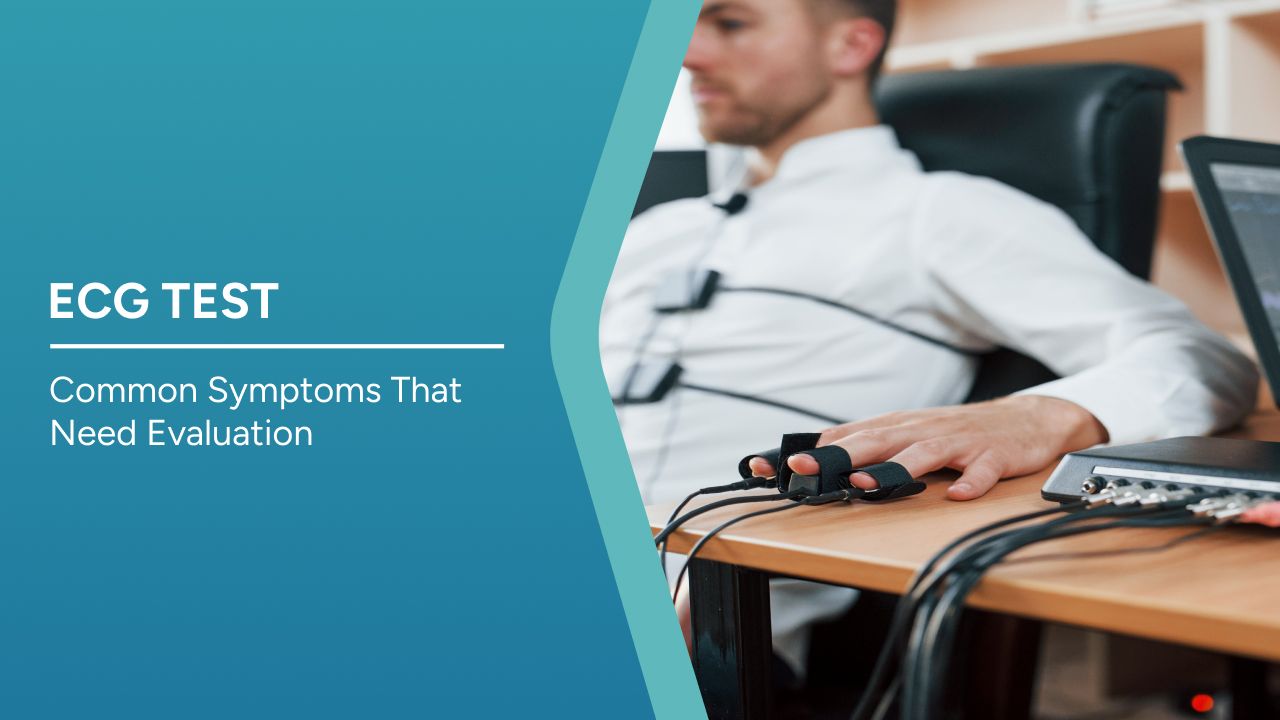
ECG Test: When Should You Get One? Common Symptoms That Need Evaluation
By Dr. Sameer Pagad in Invasive Interventional Cardiology Unit
Nov 20 , 2026

A fluttering heartbeat after a stressful day may not seem unusual. Neither may feeling slightly breathless after climbing stairs. But when these symptoms start happening repeatedly, or appear with chest discomfort, dizziness, or fainting, they become harder to dismiss.
This is often when a doctor may recommend an ECG. The test takes only a few minutes, but it can provide useful information about the heart's rate and rhythm and help determine whether further evaluation is needed.
Quick AnswerAn ECG, or electrocardiogram, records the electrical activity of the heart. A doctor may recommend one for chest pain, palpitations, breathlessness, dizziness, fainting or an unusually fast or slow heartbeat. It can identify abnormal heart rhythms and changes associated with a heart attack. However, a normal ECG cannot rule out every heart problem, particularly when symptoms occur intermittently. |
What Is an ECG Test?
An electrocardiogram records the electrical signals produced each time the heart beats. Small adhesive electrodes placed on the chest and limbs detect these signals and send them to the ECG machine, which displays them as a tracing.
An ECG can show:
- Heart Rate: How fast or slowly the heart is beating
- Heart Rhythm: Whether the heartbeat is regular or irregular
- Electrical Conduction: How signals travel through the heart
- Certain Heart Changes: Patterns that may occur with heart muscle damage or strain
The test records only the electrical signals the heart produces naturally. It does not send electricity into the body. You can read the difference between ECG and ECHO.
Why Might Your Doctor Recommend an ECG Test?
An ECG is often one of the first investigations used when symptoms may be related to the heart. It can help assess a new symptom, an abnormal pulse or a known heart condition. Doctors may also use ECG testing to monitor medicines that affect heart rhythm or as part of selected pre-operative assessments. However, an ECG is not automatically required as a routine annual test for every healthy adult.
Which Symptoms May Mean You Need an ECG?
Whether an ECG is appropriate depends on the symptom, how often it occurs, and whether other warning signs appear alongside it.
|
Symptom |
Why It May Need Evaluation |
|
Chest Pain or Pressure |
Can occur when the heart muscle is not receiving enough blood |
|
Palpitations |
A racing, pounding, or fluttering heartbeat may occur with an arrhythmia |
|
Shortness of Breath |
Can occur with rhythm problems, heart failure, and non-cardiac conditions |
|
Dizziness or Lightheadedness |
May occur when an abnormal rhythm affects blood flow |
|
Fainting |
Can sometimes be associated with significant rhythm disturbances |
|
Unexplained Fatigue |
May accompany some slow or abnormal heart rhythms |
|
Very Fast or Slow Pulse |
May indicate tachycardia, bradycardia, or another rhythm abnormality |
|
Pain Spreading to the Arm, Neck or Jaw |
Can occur during a heart attack and needs urgent assessment |
Doctors may have a lower threshold for cardiac evaluation when these symptoms occur alongside diabetes, hypertension, known heart disease, previous heart attack or a concerning family history.
You can read more about the Hypertension in Young Adults and ways to manage high blood pressure.
Doctor's NoteAn ECG should answer a clinical question. Having diabetes, hypertension or increasing age alone does not mean everyone requires regular ECG screening. Symptoms, examination findings and individual cardiovascular risk help determine when testing is appropriate. |
What Can an ECG Detect?
An ECG can identify or provide clues to several heart problems.
|
ECG May Help Detect |
What It Can Show |
|
Abnormally fast, slow or irregular heart rhythms |
|
|
Heart Attack |
Electrical changes that may occur during or after myocardial injury |
|
Conduction Problems |
Delays or blocks in the heart's electrical pathways |
|
Heart Strain or Enlargement |
Patterns that may suggest increased workload or enlargement |
|
Some Heart Muscle Disorders |
Electrical abnormalities that may require further investigation |
|
Medicine or Electrolyte Changes |
Certain disturbances can alter the ECG pattern |
An ECG does not diagnose every heart condition. Coronary artery disease or structural heart problems may still be present despite a normal resting ECG, so further testing may sometimes be required.
Which Type of ECG Might You Need?
A resting ECG records only a short period of heart activity. When symptoms occur intermittently, a longer form of monitoring may be more useful.
|
Test |
When It May Be Useful |
|
Resting ECG |
Records electrical activity while you are resting |
|
Stress ECG |
Assesses the heart while it is working harder during exercise |
|
Holter Monitor |
Records heart rhythm continuously over a longer period |
|
Event Monitor |
Helps capture symptoms that occur less frequently |
For example, someone experiencing palpitations twice a week may have a normal resting ECG if the abnormal rhythm is not occurring during the test. Longer monitoring may then help connect symptoms with heart rhythm. At the Nanavati Max Heart Institute, non-invasive cardiac services include Holter monitoring, treadmill stress testing and echocardiography, alongside dedicated arrhythmia services.
How Should You Prepare for an ECG?
A routine resting ECG requires very little preparation. You can usually eat and drink normally beforehand.
Wear clothing that allows easy access to the chest and avoid applying oily creams or lotions there before the test, as these can interfere with electrode adhesion. Tell your doctor about medicines or supplements you take because some can affect heart rate or rhythm.
What Happens During an ECG Test?
You will usually lie down while small adhesive electrodes are placed on your chest, arms, and legs. Wires connect these electrodes to the ECG machine.
You need to remain still while the electrical tracing is recorded. The recording itself usually takes only a few minutes and is painless. After a routine resting ECG, there is no recovery period, and you can generally return to normal activities immediately.
What Does an Abnormal ECG Mean?
An abnormal ECG does not automatically mean that you have serious heart disease. Changes in the tracing can occur for different reasons, so the result is interpreted alongside your symptoms, examination findings and medical history.
Depending on the findings, further evaluation may include:
- Blood tests
- Echocardiography
- Holter monitoring
- A stress test
- Cardiac imaging
- Specialist evaluation
A normal ECG also does not rule out every cardiac problem. Intermittent rhythm disturbances may not occur during the few minutes when a resting ECG is being recorded.
Practical TipIf palpitations, dizziness or breathlessness keep returning, note when they happen, how long they last and what you were doing at the time. This information can help your doctor decide whether a resting ECG or longer rhythm monitoring is more appropriate. |
When Should You Seek Emergency Care Instead of Waiting for an ECG?
Some symptoms require immediate medical assessment rather than waiting for a routine ECG appointment.
Seek urgent care for new or severe chest pain or pressure, particularly when it:
- Lasts for several minutes or repeatedly returns
- Spreads to the arm, shoulder, neck, jaw or back
- Occurs with sweating
- Is accompanied by breathlessness
- Occurs with nausea or vomiting
- Is associated with fainting or near-fainting
An ECG is an important part of the initial assessment when a heart attack is suspected, particularly when symptoms suggest an acute coronary problem.
Key Takeaway
- An ECG records the electrical activity of the heart and provides information about heart rate, rhythm and conduction.
- Chest discomfort, recurrent palpitations, unexplained breathlessness, dizziness, fainting or a very fast or slow pulse may warrant evaluation.
- A resting ECG captures only a short period, so intermittent rhythm problems may require Holter or other longer monitoring.
- An abnormal ECG does not automatically mean serious heart disease, while a normal ECG cannot exclude every cardiac condition.
- Severe chest pain, particularly with breathlessness, sweating, nausea or fainting, requires urgent medical assessment.
Conclusion
An ECG is a quick, non-invasive test that can provide important information when symptoms such as chest discomfort, palpitations, breathlessness, dizziness or fainting raise concern about the heart's electrical activity. It can identify abnormal rhythms, conduction problems and changes associated with heart muscle injury, but the result needs to be interpreted alongside symptoms, examination findings and medical history.
A normal resting ECG may not capture a problem that occurs only occasionally, which is why longer rhythm monitoring or other cardiac investigations may sometimes be needed. More importantly, severe or persistent chest pain and other emergency warning signs should never be delayed while waiting for a routine ECG. The value of the test lies in using the right type of cardiac assessment for the symptoms and clinical situation.
Frequently Asked Questions
1. How Long Does an ECG Test Take?
The electrical recording itself usually takes only a few minutes. Some additional time is needed to position the electrodes and prepare for the test.
2. Do You Need to Fast Before an ECG?
Fasting is generally not required for a routine resting ECG. Preparation may differ if the ECG is being performed as part of another cardiac test.
3. What Is the Difference Between an ECG and an Echocardiogram?
An ECG records the electrical activity and rhythm of the heart. An echocardiogram uses ultrasound to examine the heart's structure, valves, and movement.
4. Can a Normal ECG Miss a Heart Problem?
Yes. Some heart conditions may not produce abnormalities on a short resting ECG. Further testing may be recommended when symptoms persist despite a normal result.
5. Can an ECG Detect an Irregular Heartbeat That Comes and Goes?
Only if the abnormal rhythm occurs while the ECG is being recorded, when symptoms happen intermittently, longer monitoring such as a Holter or event monitor may be more useful.
Disclaimer
This article is intended for educational purposes only. It should not replace professional medical advice, diagnosis, or treatment. Seek immediate medical attention for symptoms that may indicate a medical emergency.

Written and Verified by:

Related Blogs


Dr. Sushant C Patil In Invasive Interventional Cardiology Unit
Oct 06 , 2026 | 7 min read

Dr. Praveen Kulkarni In Invasive Interventional Cardiology Unit
Sep 29 , 2026 | 7 min read
Blogs by Doctor

Managing Low Blood Pressure with Simple Remedies
Dr. Sameer Pagad In Invasive Interventional Cardiology Unit
Aug 05 , 2026 | 5 min read
Stress Test: What It Reveals About Your Heart Health
Dr. Sameer Pagad In Invasive Interventional Cardiology Unit
Aug 05 , 2026 | 8 min read
Most read Blogs



Related Blogs
Dr. Sushant C Patil In Invasive Interventional Cardiology Unit
Oct 06 , 2026 | 7 min read
Dr. Praveen Kulkarni In Invasive Interventional Cardiology Unit
Sep 29 , 2026 | 7 min read
Blogs by Doctor
Managing Low Blood Pressure with Simple Remedies
Dr. Sameer Pagad In Invasive Interventional Cardiology Unit
Aug 05 , 2026 | 5 min read
Stress Test: What It Reveals About Your Heart Health
Dr. Sameer Pagad In Invasive Interventional Cardiology Unit
Aug 05 , 2026 | 8 min read
Most read Blogs