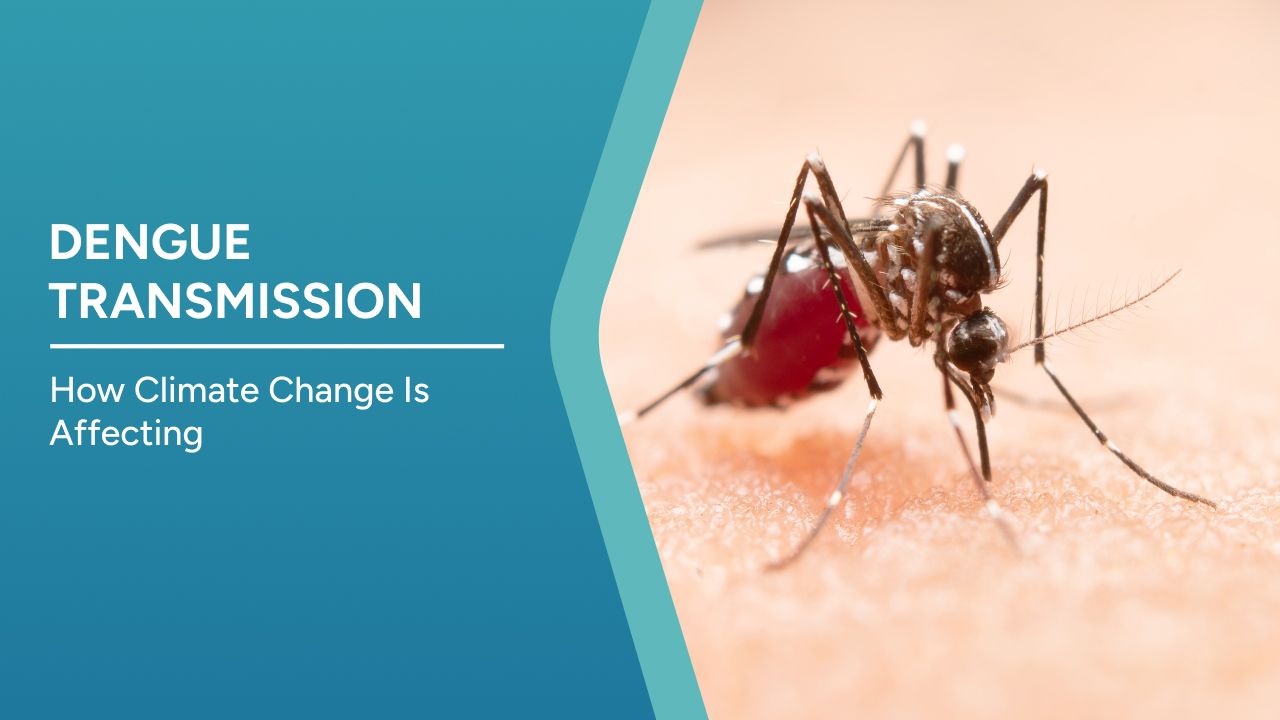
How Climate Change Is Affecting Dengue Transmission Patterns
By Dr. Harshad Limaye in Internal Medicine
Aug 03 , 2026 | 5 min read

Dengue is no longer behaving like a strictly seasonal or limited tropical infection. Across many regions, doctors and public health teams are seeing dengue appear earlier, last longer, and reach areas where it was once uncommon. One major reason for this shift is climate change. In India alone, the National Centre for Vector Borne Diseases Control recorded over 2.33 lakh dengue cases and 297 deaths in 2024, and health officials have noted that transmission is increasingly extending beyond the traditional monsoon window.
Dengue spreads through the bite of infected Aedes mosquitoes. These mosquitoes thrive in warm, humid environments and breed in clean, stagnant water found in:
- Buckets
- Flowerpots
- Tyres
- Terraces
- Construction sites
- Coolers
- Drains
- Uncovered containers
As temperatures rise and rainfall patterns become more unpredictable, the conditions around us are becoming more suitable for mosquito breeding and virus spread.
How Rising Temperatures Influence Dengue Spread
Warmer weather affects dengue in several ways. It can help mosquitoes:
- Grow faster
- Bite more often
- Survive long enough to pass the virus from one person to another
It can also shorten the time the virus needs to develop inside the mosquito. Research on climate and dengue ecology has linked warmer temperatures to a shorter viral development period inside the mosquito, which can accelerate community-level spread when other conditions are also favourable. This means that during favourable weather, dengue transmission can become faster and outbreaks can grow more quickly.
Changing Rainfall Patterns and Dengue Risk
Rainfall is equally important. Earlier, dengue was largely associated with the monsoon and post-monsoon months. Now, irregular rain, sudden heavy showers, flooding, and even dry spells can increase the risk.
Heavy rain may leave behind pockets of stagnant water. Droughts can also increase dengue risk because families may store water in containers, which can become mosquito breeding sites if left uncovered.
How Climate Change Is Expanding Dengue-Prone Areas
Climate change is also altering the geography of dengue. Warmer temperatures are allowing dengue-carrying mosquitoes to survive in places that were previously too cool, including some higher-altitude and temperate regions. A large-scale analysis of four decades of climate data found that the global population living in areas climatically suitable for dengue transmission has grown substantially, with new suitability emerging in parts of North America, East Asia, and the Mediterranean basin.
This does not mean dengue will increase everywhere in the same way. In some very hot areas, mosquito survival may be reduced. But overall, the risk zones are shifting, and more communities may become vulnerable.
Know More about What is Vertical Transmission.
Urbanisation and Its Role in Dengue Transmission
Urbanisation adds another layer to the problem. Crowded cities, construction activity, poor drainage, unreliable water supply, and waste accumulation create ideal mosquito habitats.
Human travel and daily movement can then carry the virus from one area to another, allowing outbreaks to spread beyond their original location.
Preventing Dengue in a Changing Climate
For the public, the message is simple: dengue prevention must begin before cases rise, not after hospitals start seeing patients.
Steps to Reduce Mosquito Breeding
Homes, housing societies, schools, offices, and construction sites must be checked weekly for stagnant water.
Important preventive measures include:
- Covering water storage containers
- Removing discarded items that can collect water
- Maintaining proper drainage
- Using mosquito protection during the day
- Keeping surroundings clean and dry
Aedes mosquitoes are active during daylight hours, making daytime protection especially important.
Read More about the Monsoon and Viral Infection: Causes, Symptoms & Prevention.
When to Seek Medical Attention
Seek medical advice immediately if fever is accompanied by any of the following warning signs:
- Severe body ache (arthralgia/myalgia)
- Headache
- Pain behind the eyes (retro-orbital pain)
- Maculopapular Rash
- Persistent Vomiting
- Abdominal pain
- Fluid accumulation or clinical bleeding (e.g., from gums or nose)
- Drowsiness or lethargy
- Sudden weakness
These warning signs can indicate progression toward severe dengue and warrant prompt evaluation rather than a wait-and-watch approach. If you notice any of these symptoms in yourself or a family member, consult a physician at Nanavati Max Hospital or your nearest emergency care centre without delay.
Conclusion
Climate change is influencing when, where, and how dengue spreads, making prevention more important than ever. While global environmental changes may be difficult to control individually, reducing mosquito breeding sites and recognising symptoms early can help protect individuals, families and communities from dengue. Small, consistent preventive measures remain one of the most effective ways to reduce the risk of infection.
Know More about Low Platelet Count Thrombocytopenia
Disclaimer: This article is for general health awareness and does not replace professional medical advice, diagnosis, or treatment. If you or a family member develop symptoms of dengue, please consult a qualified doctor promptly.
Frequently Asked Questions
1. Does climate change mean dengue will become a year-round disease?
In some regions, changing weather patterns may extend the dengue transmission season, leading to cases being reported outside the traditional monsoon and post-monsoon months.
2. Can a person get dengue more than once?
Yes. Dengue has four different virus types (serotypes). A person can be infected more than once, and a subsequent infection with a different serotype may increase the risk of severe dengue.
3. Is dengue contagious from person to person?
No. Dengue does not spread through casual contact. It is transmitted when an Aedes mosquito bites an infected person and then bites someone else.
4. Are children and older adults at higher risk of severe dengue?
Yes. Young children, older adults, pregnant women, and people with weakened immune systems or certain underlying health conditions may have a higher risk of developing severe dengue and should seek timely medical care if symptoms appear.
5. Can dengue mosquitoes breed only in dirty water?
No. Aedes mosquitoes commonly breed in clean or relatively clean stagnant water, making regular inspection of water-holding containers important.
6. Can climate change affect other mosquito-borne diseases as well?
Yes. Changes in temperature and rainfall can also influence the spread of diseases such as malaria, chikungunya, and Zika by affecting mosquito populations and their habitats.
7. Why is dengue transmission increasing in areas that didn't use to report cases?
Warmer average temperatures are allowing Aedes mosquitoes to survive and breed in regions that were previously too cool for them, including some higher-altitude and temperate areas. Combined with rising urbanisation and human travel, this has expanded the map of places where dengue transmission is possible, though the increase is not uniform everywhere.
8. Does hot weather always increase dengue transmission risk?
Not necessarily. Moderate warming can speed up mosquito breeding and shorten the time the virus needs to develop inside the mosquito, which raises risk. But in already very hot regions, extreme heat can reduce mosquito survival, so the relationship between temperature and dengue transmission isn't a straight line - it depends on the local climate baseline.
References
[1] National Centre for Vector Borne Diseases Control. (2024). Dengue situation in India. Ministry of Health and Family Welfare, Government of India. https://ncvbdc.mohfw.gov.in/
[2] World Health Organization. (2025). Dengue and severe dengue [Fact sheet]. https://www.who.int/news-room/fact-sheets/detail/dengue-and-severe-dengue
[3] Morin, C. W., Comrie, A. C., & Ernst, K. C. (2013). Climate and dengue transmission: Evidence and implications. Environmental Health Perspectives, 121(11–12), 1264–1272. https://doi.org/10.1289/ehp.1306556
[4] Franklinos, L. H. V., Jones, K. E., & Redding, D. W. (2024). Population at risk of dengue virus transmission has increased due to coupled climate factors and population growth. Communications Earth & Environment, 5, Article 494. https://www.nature.com/articles/s43247-024-01639-6
[5] World Health Organization. (2025). Dengue and severe dengue [Fact sheet]. https://www.who.int/news-room/fact-sheets/detail/dengue-and-severe-dengue

Written and Verified by:

Related Blogs

Medical Expert Team
Oct 06 , 2026 | 8 min read

Medical Expert Team
Oct 06 , 2026 | 9 min read

Blogs by Doctor

Chickenpox Home Care Tips: How to Relieve Itching and Fever Safely
Dr. Harshad Limaye In Internal Medicine
Oct 06 , 2026 | 4 min read
Chicken Pox Symptoms and Causes: What You Need to Know
Dr. Harshad Limaye In Internal Medicine
Oct 06 , 2026 | 6 min read

Cholera in Children: Symptoms Parents Should Never Ignore
Dr. Harshad Limaye In Internal Medicine
Oct 06 , 2026 | 4 min read
Most read Blogs



Related Blogs
Medical Expert Team
Oct 06 , 2026 | 8 min read
Medical Expert Team
Oct 06 , 2026 | 9 min read
Blogs by Doctor
Chickenpox Home Care Tips: How to Relieve Itching and Fever Safely
Dr. Harshad Limaye In Internal Medicine
Oct 06 , 2026 | 4 min read
Chicken Pox Symptoms and Causes: What You Need to Know
Dr. Harshad Limaye In Internal Medicine
Oct 06 , 2026 | 6 min read
Cholera in Children: Symptoms Parents Should Never Ignore
Dr. Harshad Limaye In Internal Medicine
Oct 06 , 2026 | 4 min read
Most read Blogs