ACL Injuries: Key Symptoms and Common Causes
By Dr. Gautam JK. Tawari in Arthroscopy and Sports Medicine
Aug 04 , 2026 | 5 min read

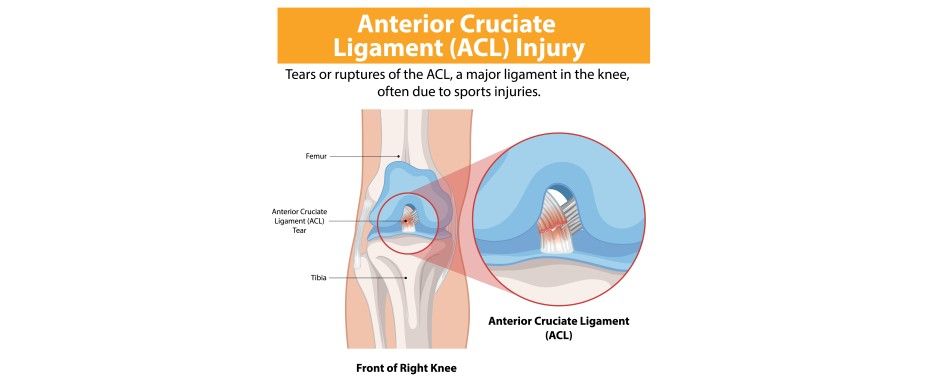
The anterior cruciate ligament (ACL) is a vital knee ligament that provides stability. When injured, it can cause significant pain, swelling, and limited mobility. Understanding ACL injuries' common symptoms and causes can help individuals take preventive measures and seek appropriate medical attention. In this post, we will explore the key signs of an ACL tear injury and discuss the factors that can contribute to its occurrence.
What is an ACL Injury?
The Anterior Cruciate Ligament, or ACL, is more than just a mouthful - it's a crucial part of your knee that keeps everything moving smoothly. It connects your thigh bone to your shinbone and helps stabilise your knee. Understanding the ACL’s role can help you look after your knees better if you're into sports or just a bit clumsy.
Symptoms of ACL Injury
When it comes to ACL injuries, the signs are pretty hard to ignore. Whether it's a sharp pain that comes on suddenly during a game or persistent issues that make daily activities challenging, ACL injuries send clear signals that something's wrong. Let's dive into the specific symptoms you might encounter, from the immediate aftermath of the injury to the lingering effects that can complicate your daily life if left unchecked.
Acute Symptoms
- Sudden Pain: Picture this: you're playing football, make a sharp turn, and then - ouch! The pain hits you like a brick. It's sharp, and it's strong. It tells you something's definitely not right.
- Swelling: Within a few hours, your knee becomes like a balloon. It's your body's way of saying, 'Hey, pay attention here!'
- Limited Range of Motion: Trying to move your knee after a sprain? Good luck. It feels stiff, and bending it? Forget about it.
Chronic ACL Injury Symptoms
If you don't get that sprain checked out, here’s what might follow:
- Recurring Pain: It comes and goes, but it's worse after you've been active.
- Weakness or Instability: Have you ever felt your knee suddenly give out while walking or climbing stairs? That's what we're talking about.
Explore Knee Sports Injuries Treatment
Causes of ACL Injury
If you learn the reasons behind the occurrence of an ACL injury, it is easier to know when to get assistance and how these injuries can be avoided. Common ACL Injury causes include:
Sports-Related Causes
Exercises with great energy and speed, particularly involving the knees, are known to cause Sports Injuries to the ACL and other parts of the knee.
- Sudden Stops or Changes in Direction: Fast sharp turns are usually present in sports such as basketball, soccer, and football. This kind of movement creates tension on the ACL that tries to hold the knee in place.
- Landing from Jumps Incorrectly: While playing sports like basketball and volleyball, most players make a lot of jumps that can result in an athlete tearing an ACL if the player does not land properly. A poorly executed landing causes impact to the knee, quite often resulting in the tearing of the ACL due to excessive force.
Non-Sports-Related Causes
Not all ACL injuries result from athletic activities; everyday actions can also pose risks.
- Accidental Trauma: Simple accidents like tripping down a flight of stairs or a collision can twist or bend the knee in an unnatural way, leading to a Knee ACL tear.
- Genetic Predispositions: Certain genetic traits may predispose individuals to ACL injuries. People with naturally more flexible joints or those with a familial history of ACL tears might have an increased risk. Additionally, the overall alignment and anatomy of the knee can play a significant role in how forces are distributed across the knee, potentially making some individuals more susceptible to injuries than others.
Explore: Joint Pain Treatment
Diagnosis and Treatment of ACL Injury
Diagnosis
Getting to the bottom of ACL injury causes starts with a thorough diagnosis:
- Physical Examination: Your doctor will check your knee by moving it in different positions to determine the extent of the injury. This might be uncomfortable, but it's crucial for an accurate diagnosis.
- Imaging: To get a clearer picture of what's happening inside your knee, your doctor will likely order an MRI or X-ray. These scans show the details of the knee's internal structure, helping to pinpoint the exact nature of the injury.
ACL Injury Treatment Options
Once the injury is confirmed, here are certain ACL injury treatment options your doctor might follow:
- Conservative Treatments: Dealing with non-serious injuries may often involve simply sitting down for a while. This involves lots of rest, icing to cut down swelling, keeping the joint in a knee-high position, and letting the injured area heal naturally. These measures are usually prescribed with light movement to ensure that the muscles and joints are not deprived of action.
- Surgical Options: More invasive procedures may be needed for more severe injuries or in cases when the knee does not respond to treatment modalities. In ACL reconstruction surgery, a ligament that is torn is covered by a graft taken either from the knee's own tendons or from a cadaver. The aim of this surgery is to restore the knee's normal function, and this is often preceded by months of rehabilitation to restore proper strength and range of motion at the joint.
Frequently Asked Questions
1. How can ACL injuries be prevented?
If one wants to avoid ACL or Knee Ligament Injuries, one must begin to embrace a few good habits. This involves exercises that strengthen the legs and core, as well as proper techniques of training and correct utilization of sports gear. Also, warming up before plunging into the full activity could prove helpful.
2. What is the typical recovery time for an ACL injury?
Recovery from an ACL injury, really and literally, very much depends on the degree of injury and even your treatment plan. In general, it could take anywhere from six months to over a year. Plus, that will include rehabilitation time to regain strength and mobility if surgical intervention is required.
3. Can ACL injuries heal without surgery?
In some cases, partial tears of the ACL can heal with therapy and adequate care; however, tears that are completely torn may require surgical intervention to fully recover full function of your knee.
4. Who deals with ACL injuries?
Orthopedic specialists are the experts in regard to a tear to the ACL. They work with sports medicine physicians and physical therapists to plan an effective treatment for your needs.
5. How to treat a grade 2 ACL injury?
A grade 2 ACL injury, which is essentially a partial tear of the ligament, usually requires resting, icing, compressing, and elevating the knee, followed by Physical Therapy for ACL Injury, as it aims at improving the strength of the muscles around the knee and its overall stability. Based on your case, your physician may advise you to wear a brace to stabilize your knee during the rehabilitation phase.

Written and Verified by:

Related Blogs

Dr. Gautam JK. Tawari In Arthroscopy and Sports Medicine
Aug 04 , 2026 | 5 min read
Blogs by Doctor
Understanding The Reasons for Dizziness
Dr. Gautam JK. Tawari In Arthroscopy and Sports Medicine
Aug 04 , 2026 | 5 min read
Most read Blogs



Related Blogs
Dr. Gautam JK. Tawari In Arthroscopy and Sports Medicine
Aug 04 , 2026 | 5 min read
Blogs by Doctor
Understanding The Reasons for Dizziness
Dr. Gautam JK. Tawari In Arthroscopy and Sports Medicine
Aug 04 , 2026 | 5 min read
Most read Blogs