Mammogram Screening by Age: When Should You Get Tested?
By Dr. Garvit Chitkara in Breast Cancer Program
Oct 12 , 2026

Changes in breast health are not always easy to notice in the early stages, and many people may feel completely well even as subtle changes develop. It can often feel uncertain when or how to begin thinking about routine screening, especially in the absence of any visible symptoms or discomfort. This is where preventive care becomes an important part of staying mindful of long-term health.
One of the commonly used screening tools in this context is a Mammogram, an imaging method that helps detect early breast changes before they can be felt or seen. It may be recommended as part of routine screening or when a doctor needs to investigate a specific concern. The right time to begin screening can vary based on age, personal and family medical history, and individual risk factors. It is ideal to discuss a personalised screening plan with a healthcare provider rather than relying only on general age-based recommendations.
What Is a Mammogram Test?
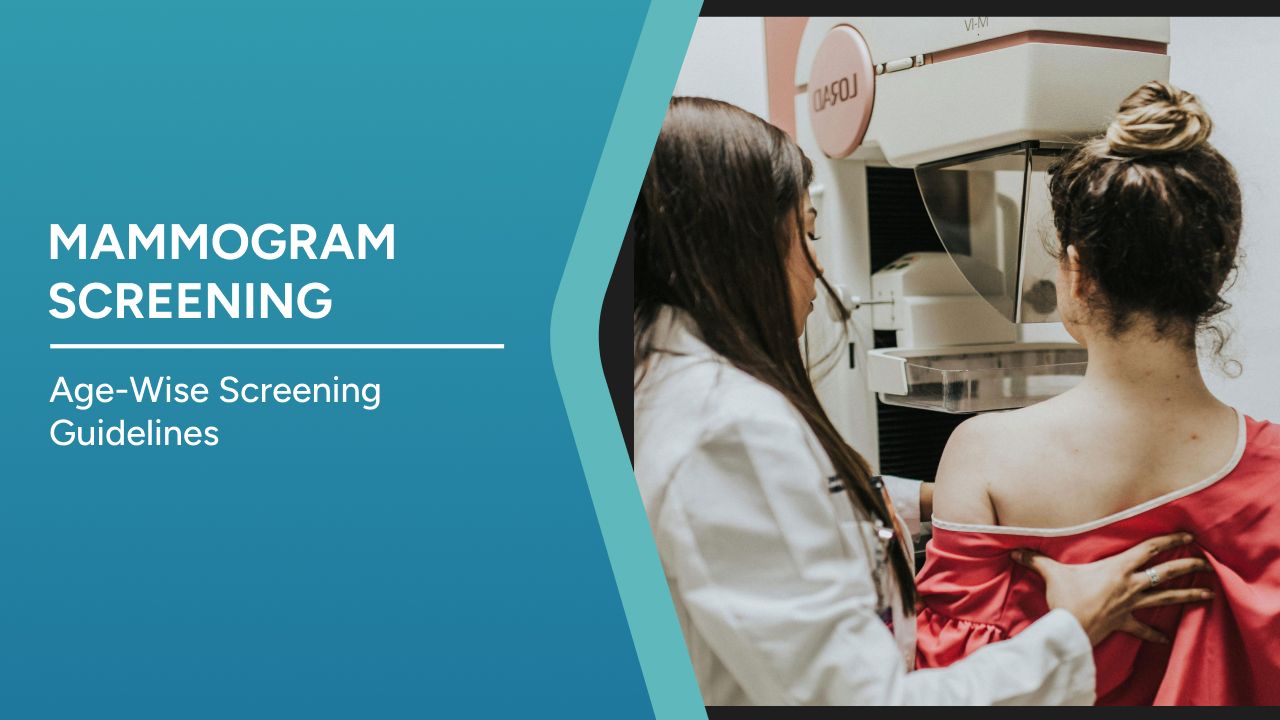
A Mammogram Test is an X-ray examination of the breast. It creates detailed images that help doctors identify changes in breast tissue. These may include lumps, unusual areas, or other findings that require closer evaluation. During the test, each breast is positioned carefully between two plates. The breast tissue is briefly compressed to obtain clear images from different angles. These images are then reviewed by a radiologist.
There are two main types of Mammograms:
- Screening Mammogram: This is usually recommended for women without noticeable breast symptoms. It is used as part of routine breast health monitoring.
- Diagnostic Mammogram: This may be advised when a symptom is present or when a previous screening result requires further investigation. It may involve additional images of a specific area.
A Mammogram does not confirm every diagnosis on its own. However, it can help identify whether further tests are needed.
When Might a Mammogram Test Be Recommended?
The timing of a Mammogram depends on whether the test is being used for routine screening or to investigate a symptom.
Routine screening is generally considered based on age and overall risk. Different screening guidelines may recommend different intervals. Your healthcare provider can help identify a suitable schedule based on your medical history.
- A new lump in the breast or underarm area.
- A noticeable change in breast shape or size.
- Nipple discharge that is not breast milk.
- Skin dimpling, irritation, or redness.
- Changes around the nipple.
- Persistent breast pain or swelling.
These symptoms do not always indicate breast cancer. However, they should not be ignored while waiting for a routine screening appointment.
Earlier or additional screening may also be advised if you have a family history of breast cancer, certain inherited genetic changes, a previous breast condition, or a personal history of breast cancer.
Mammogram Test: Age-Wise Screening Considerations
Breast Screening requirements can change at different stages of life. The following age-wise guidance provides a general overview for women at average risk. Your individual schedule may differ based on your health and risk factors.
In Your 20s
Routine Mammograms are not usually recommended for most women at average risk in their 20s, but awareness of breast health is still important. Any unusual changes, such as a new lump, nipple discharge, skin changes, or persistent pain, should be evaluated by a healthcare provider. For those with a strong family history of breast cancer or known genetic risk factors, doctors may suggest earlier risk assessment and a personalised screening plan based on individual risk.
We recommend beginning monthly breast self-examinations (BSE) in your 20s. Perform BSE a few days after your period ends when breasts are least tender. Familiarity with your own breast texture helps you notice any unusual changes early.
In Your 30s
In the 30s, most women at average risk still do not require routine Mammograms, but this stage is important for reviewing personal risk factors. A healthcare provider should be informed about any close family history of breast cancer, especially if diagnosed at a younger age, as well as past breast conditions, genetic changes, or chest radiation exposure. Depending on the risk level, doctors may recommend mammography, ultrasound, or MRI, with the type and frequency of screening determined after clinical evaluation.
From Ages 40 to 49
Routine breast screening often becomes more relevant from age 40, although recommended intervals can vary across guidelines. Some suggest a Mammogram every two years, while others recommend annual screening depending on individual risk factors and medical history. If any breast symptom appears, it should not be ignored, as a diagnostic test may be needed even if a routine screening is not yet due.
From Ages 50 to 74
Regular screening is generally important between the ages of 50 and 74, with frequency ranging from once every year to once every two years, depending on guidelines and personal risk. Staying consistent with scheduled screenings helps in early detection, and keeping previous reports is useful for comparison over time. If earlier results showed any findings that needed monitoring, follow-up schedules may be more specific and closely supervised.
From Age 75 Onwards
After the age of 75, screening decisions are usually individualised based on overall health, medical history, previous screening outcomes, and personal preferences. Some women may continue to benefit from regular screening, while for others it may be less necessary depending on their health status. A healthcare provider can help determine the most appropriate approach for ongoing breast health monitoring.
Factors That May Affect Mammogram Test Timing
Screening decisions for breast health are not based on age alone. Some of the key factors that may influence when a Mammogram Test should be done include family history, breast density, and previous medical history. Understanding these factors helps ensure a more personalised and appropriate screening approach.
- Family History and Genetic Risk Factors
A close family history of breast cancer or the presence of certain inherited genetic mutations may lead doctors to recommend earlier or more frequent screening. - Dense Breast Tissue
Dense breast tissue can make it harder to detect abnormalities on a Mammogram and may require additional imaging for clearer evaluation. Dense breasts have more glandular and fibrous tissue relative to fatty tissue. On a mammogram, both dense tissue and tumours appear white, making small cancers harder to spot. Women with dense breasts may be advised to have a breast ultrasound in addition to their routine mammogram to improve detection accuracy. - Previous Medical History
A personal history of breast cancer, abnormal results, benign breast conditions, or chest radiation can influence how often and what type of screening is recommended.
These factors are considered together to create a screening plan that is tailored to individual risk and ensures timely and appropriate breast health evaluation.
Read More about the Early Symptoms of Breast Cancer
Interpreting Mammogram Test Results
After the test, a radiologist reviews the breast images. A normal result generally means that no concerning changes were identified. You should continue screening according to the schedule recommended by your healthcare provider. Additional tests may include:
- A diagnostic Mammogram with more detailed images.
- An ultrasound scan.
- An MRI scan in selected cases.
- A biopsy is used to examine a small tissue sample.
Mammograms are an important screening tool, but they may not detect every breast abnormality. Factors such as dense breast tissue can sometimes affect image interpretation. At Nanavati Max Hospital, Mammogram findings are reviewed alongside your symptoms, medical history, and any additional investigations where required. Timely follow-up is important as it helps clarify results and determine the appropriate next steps.
Conclusion
A Mammogram Test plays an important role in detecting early breast changes, often before any noticeable symptoms appear. While routine screening typically becomes relevant at age 40, the ideal timing and frequency depend on individual factors such as age, medical history, family history, symptoms, and overall risk profile.
Across different stages of life, screening needs may vary, and factors such as breast density or prior medical conditions can also influence recommendations. Mammography is most effective when combined with a personalised approach to breast health, and regular consultation with a healthcare provider helps ensure timely screening, appropriate follow-up, and a clearer understanding of results.
Recommended Reading: Ways to Prevent Breast Cancer
Frequently Asked Questions
1. At What Age Should I Get My First Mammogram Test?
Routine screening typically starts around age 40 for women at average risk, but the ideal starting age may vary based on personal and family risk factors. Your healthcare provider can help determine the most appropriate time to begin based on your individual health profile.
2. How Often Should a Mammogram Test Be Done?
A Mammogram is usually recommended once a year or every 2 years, depending on your age, risk level, and previous results. Your doctor may adjust the frequency to ensure appropriate monitoring of your breast health.
3. Do I Need a Mammogram Test If I Have No Symptoms?
Routine screening is still important because it can detect early breast changes even before symptoms appear. It is advisable to follow a screening plan suggested by your healthcare provider based on your risk factors.
4. Is a Mammogram Test Safe?
A Mammogram Test uses a very low dose of radiation and is considered safe when done at recommended intervals. The benefits of early detection generally outweigh the minimal risks associated with the procedure.
5. What Should I Do If My Result Is Abnormal?
An abnormal result does not mean cancer, but it indicates that further evaluation may be needed to understand the finding better. You should attend follow-up tests and consultations so your healthcare provider can guide the next steps.

Written and Verified by: