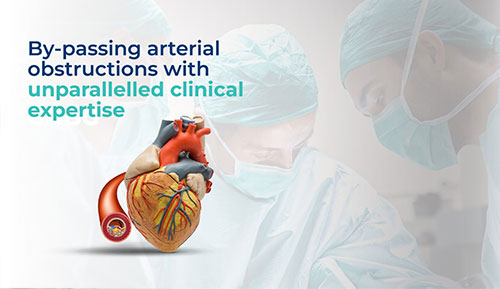
Coronary artery disease, commonly referred to as CAD, is quite common in India and the prevalence of the same has increased significantly,over the past 6 decades, predominantly owing to unhealthy lifestyle choices and reduced activity levels. The condition is marked by an obstruction or blockage in the coronary artery, which happens to be one of the major arteries, owing to excessive accumulation of plaque. Coronary artery disease can affect people of any age group, including small children, however the mortality rate is higher in people who are diabetic. The condition can be managed effectively with CABG. Here’s everything you need to know about the procedure.
CABG stands for coronary artery bypass grafting, a surgical modality that aims at creating a separate route for restoring blood flow that had been restricted by a blockage in the coronary artery. This new route helps to bypass the obstructed section of the artery. It is a gold standard treatment option for patients suffering from CAD or coronary artery disease.
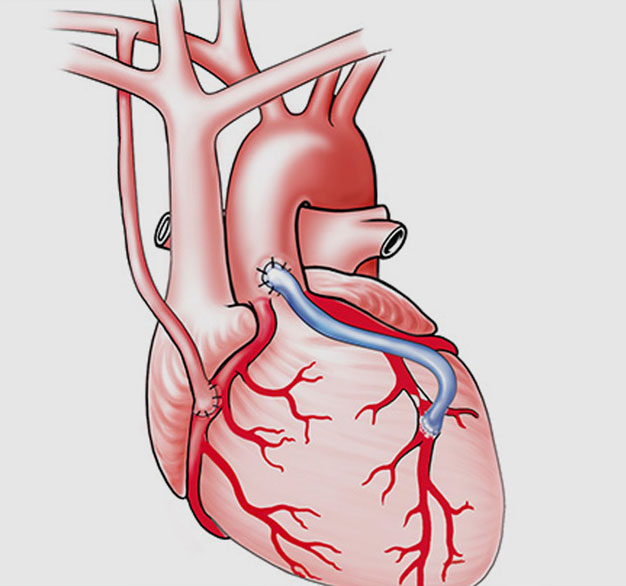
Coronary artery disease is a result of the excess build up of plaque in the coronary artery. It is a waxy substance, made up of tiny cholesterol particles, that tend to accumulate overtime and stick together to block the artery, thereby restricting normal blood flow. This results in atherosclerosis, which eventually leads to CAD.
It is usually recommended to see a doctor if you are experiencing symptoms like breathlessness, fatigue or chest pain (angina). These symptoms are associated with a wide range of medical issues and may not necessarily mean that you have angina. You will be required to undergo a series of tests for proper assessment and to confirm the diagnosis, depending upon which your treatment will be planned.
The risks of coronary artery disease are significantly high in people who
Depending upon the surgical approach, CABG can be broadly classified into the following 3 types:

Director & Head - CVTS & Heart & Lung Transplant

Director - Intervention Cardiology
Director - Intervention Cardiology

Director Heart Institute, Invasive Interventional Cardiology Unit, Arrhythmia Services

Director Heart Institute, Invasive Interventional Cardiology Unit, Arrhythmia Services